EN
EN
 AR
AR
 HR
HR
 DA
DA
 NL
NL
 FR
FR
 DE
DE
 EL
EL
 HI
HI
 IT
IT
 JA
JA
 KO
KO
 NO
NO
 PL
PL
 PT
PT
 RO
RO
 RU
RU
 ES
ES
 TL
TL
 IW
IW
 ID
ID
 SR
SR
 SK
SK
 UK
UK
 VI
VI
 TH
TH
 TR
TR
 AF
AF
 MS
MS
 IS
IS
 HY
HY
 AZ
AZ
 KA
KA
 BN
BN
 LA
LA
 MR
MR
 MY
MY
 KK
KK
 UZ
UZ
 KY
KY

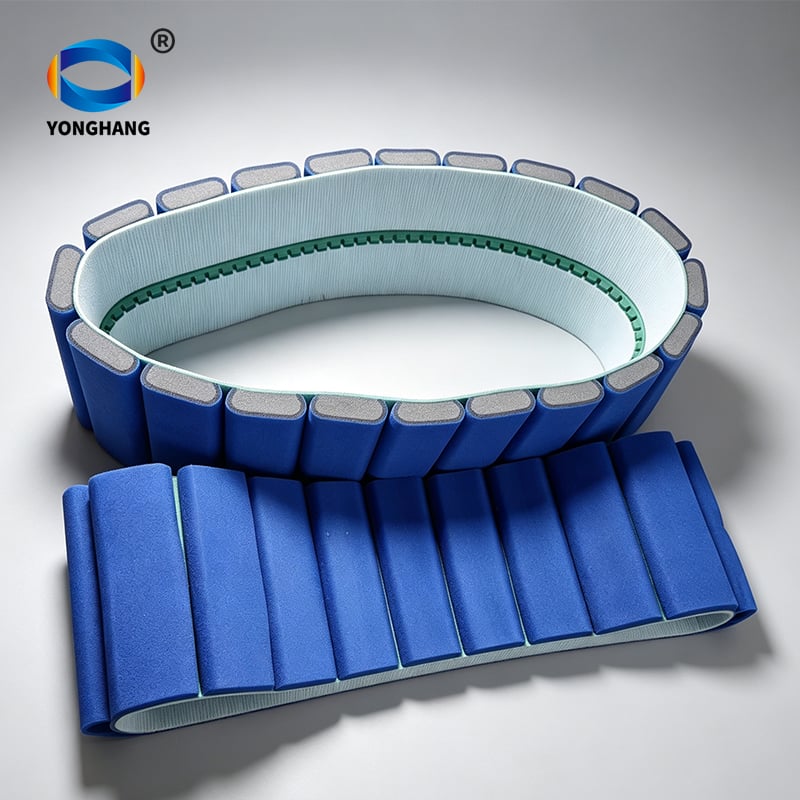
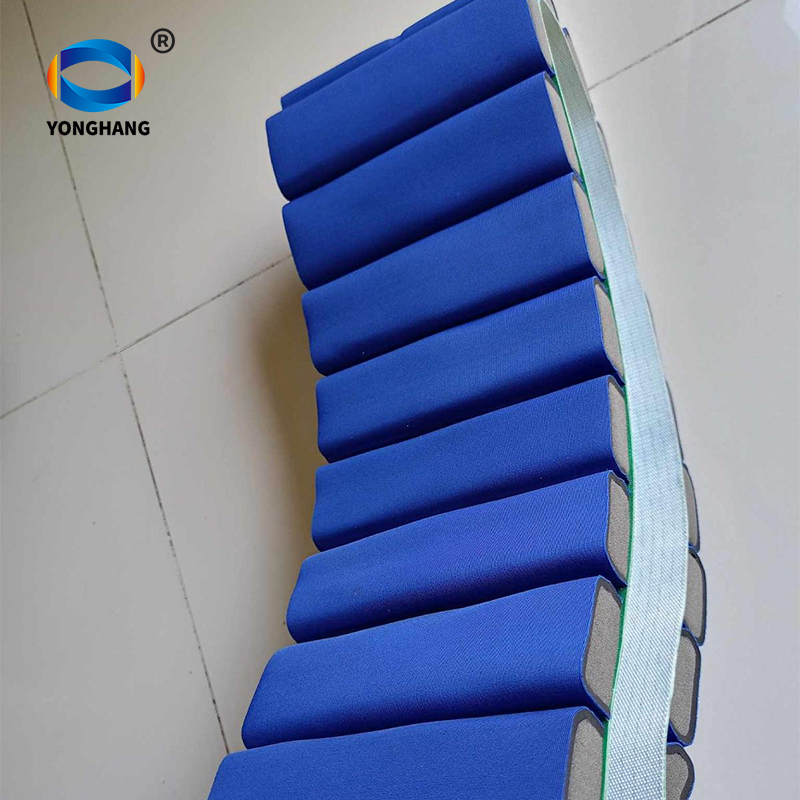
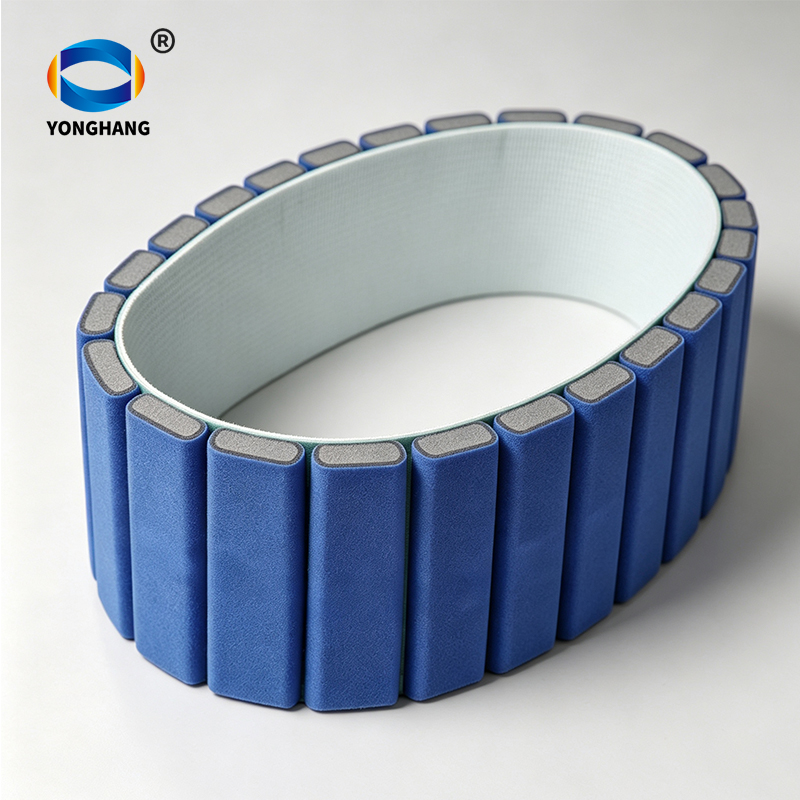
Foam Cleat Conveyor Belt – Custom Foam Block Conveyor Belt for Industrial Material Handling
Custom foam cleat conveyor belts with tailored block sizes, spacing, and belt dimensions for product positioning, cushioning, and industrial material handling. Contact Yonghang for a quote.
- Introduction
Introduction
Product Overview
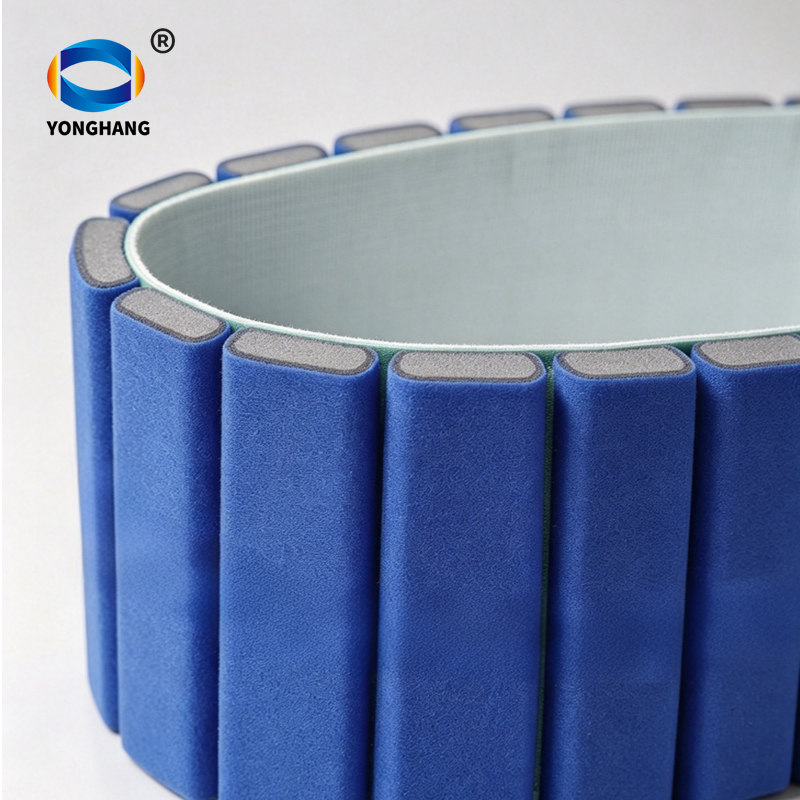
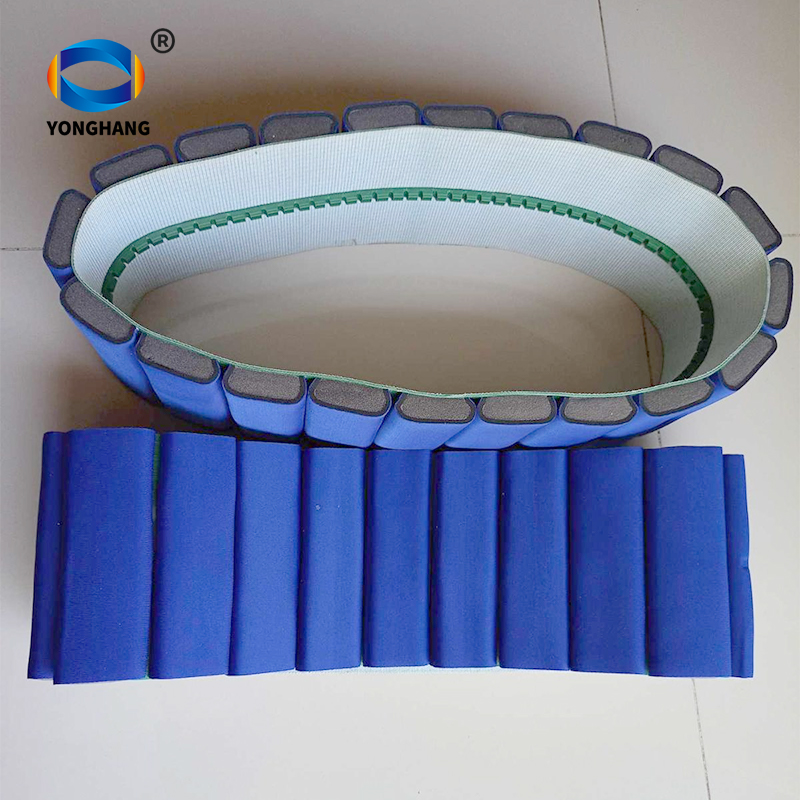
The Foam Cleat Conveyor Belt is a specially designed conveying belt equipped with foam blocks or foam cleats on its surface. These raised foam components help support, separate, position, and transport products during automated conveying operations. Compared with conventional flat conveyor belts, a foam block conveyor belt provides additional contact points that can help prevent products from sliding, shifting, or coming into direct contact with one another.
Yonghang Transmission Belt provides customized foam cleat conveyor belt solutions for industrial equipment manufacturers and material handling applications. The foam blocks can be designed according to the shape, size, spacing, and positioning requirements of different products and conveying systems.
Depending on the application, the belt can be manufactured with a suitable base belt and customized foam blocks to meet specific requirements for flexibility, cushioning, grip, and conveying stability. Foam block dimensions, belt width, belt length, and cleat arrangement can be discussed according to your equipment design.
Whether you need a replacement belt for existing machinery or a custom conveyor belt for a new production line, Yonghang can help you select a suitable configuration for your application.
Key Features of Foam Block Conveyor Belts
1. Customized Foam Block Design
Foam blocks can be produced in different shapes, heights, widths, and thicknesses to accommodate different product dimensions. Their arrangement can be adjusted to match the conveying direction, product spacing, and operating requirements of the machine.
2. Cushioning and Product Protection
The foam surface provides a softer contact area than a conventional rigid cleat. Depending on the foam material and its hardness, it can help cushion products during conveying and reduce the risk of surface scratches, impact marks, or damage caused by direct contact with harder components.
3. Improved Product Positioning
Raised foam blocks create physical boundaries that help keep products in their intended positions. This is particularly useful when products need to be separated, aligned, or transported through a machine with limited clearance.
4. Stable Material Conveying
The combination of a suitable belt base and appropriately designed foam blocks can improve product support and conveying stability. The correct block geometry and spacing help accommodate different product sizes and reduce unwanted movement during operation.
5. Flexible Belt Customization
Different conveying systems require different belt specifications. Custom options may include belt width, total length, base belt material, foam block dimensions, block spacing, attachment method, and surface configuration.
6. Integration with Automated Equipment
Foam cleat conveyor belts can be designed for integration into selected automated production lines, product handling equipment, packaging systems, and other machinery that requires controlled product positioning.
Product Specifications
The following specifications are available for discussion and customization. Final specifications depend on the application and the selected belt construction.
Product Name: Foam Cleat Conveyor Belt
Alternative Name: Foam Block Conveyor Belt
Belt Structure: Base conveyor belt with attached foam blocks
Belt Width: Customizable according to equipment requirements
Belt Length: Custom-made to the required dimensions
Foam Block Shape: Customized according to product geometry
Foam Block Height and Thickness: Customizable
Block Spacing: Adjustable according to conveying requirements
Base Belt Material: Selected according to the application
Foam Material and Hardness: To be confirmed according to the required cushioning and mechanical properties
Application: Product positioning, separation, cushioning, and industrial material handling
Please provide a drawing, sample, or detailed dimensions when requesting a quotation so that the belt structure can be evaluated accurately.
Applications of Foam Cleat Conveyor Belts
Foam block conveyor belts can be used in various applications where products require gentle support, positioning, or separation during transportation.
Packaging and Product Handling
Foam blocks can help position selected products as they move through packaging equipment, inspection stations, or automated handling processes. The block arrangement can be designed to suit the product dimensions and the required conveying sequence.
Industrial Automation
In customized automation equipment, foam cleats can serve as product supports or positioning elements. They can help maintain consistent product spacing during transfer between different processing stages.
Fragile or Surface-Sensitive Products
For suitable products that require a softer contact surface, foam blocks can help reduce direct contact with harder conveyor components. The appropriate foam density and hardness should be selected according to the product's weight, shape, and surface sensitivity.
Sorting and Transfer Systems
Depending on the machine design, foam block conveyor belts can assist with controlled product movement, separation, and positioning before or after sorting and transfer operations.
Customized Manufacturing Equipment
OEM equipment manufacturers may use foam cleat belts in specialized machinery where standard flat belts cannot provide the required product support or positioning function.
The suitability of the belt for a particular application depends on the product characteristics, operating environment, belt speed, load, and installation design.
How to Choose the Right Foam Cleat Conveyor Belt
Selecting the correct foam block conveyor belt requires more than specifying the belt width and length. The foam configuration and the base belt must work together with the equipment.
1. Identify the product being conveyed.
Provide the product's dimensions, weight, shape, and surface characteristics. These details help determine the required foam block size and positioning.
2. Confirm the belt dimensions.
Specify the belt width, total length, and any relevant pulley or tracking requirements.
3. Determine the foam block configuration.
The block height, thickness, shape, spacing, and layout should match the product and the machine's operating cycle.
4. Select suitable materials.
The base belt and foam should be selected according to the required flexibility, cushioning, wear resistance, environmental conditions, and expected service life.
5. Explain the operating conditions.
Information about conveying speed, product load, temperature, cleaning procedures, and continuous operating time can help identify a suitable construction.
6. Provide a drawing or sample if available.
A technical drawing, photograph with dimensions, or existing belt sample can help reduce specification errors during customization.
Why Choose Yonghang for Custom Conveyor Belt Solutions?
Yonghang Transmission Belt focuses on customized industrial belt solutions for different machinery and conveying requirements. For foam cleat conveyor belt projects, the objective is to match the belt construction and foam block arrangement to the customer's actual equipment.
Customers can discuss belt dimensions, block geometry, spacing, base belt selection, and other project-specific requirements before production. This customization approach helps equipment manufacturers, maintenance teams, and industrial buyers identify a configuration suited to their application.
Whether you are developing new equipment or sourcing a replacement belt, providing complete technical information helps the Yonghang team evaluate your requirements and recommend an appropriate solution.
Frequently Asked Questions
What is a foam cleat conveyor belt?
A foam cleat conveyor belt is a conveyor belt fitted with raised foam blocks. These blocks help support, position, separate, or cushion products during transportation.
Can the foam block size and spacing be customized?
Yes. The foam block dimensions, shape, height, and spacing can be discussed according to the product size and the requirements of the conveying equipment.
Can I order a foam block conveyor belt according to a drawing?
A drawing or technical specification is useful for evaluating a custom belt. Please include the belt dimensions, foam block layout, material requirements, and operating conditions when requesting a quotation.
Is a foam cleat belt suitable for fragile products?
It may be suitable when the foam material, hardness, and block arrangement provide the required support and cushioning. The final configuration should be evaluated according to the product's weight and surface sensitivity.
How do I request a quotation?
Contact Yonghang Transmission Belt with your required belt width and length, foam block dimensions, block spacing, application details, and estimated order quantity. Photographs, drawings, or samples can help clarify the requirements.
Request a Quote for a Custom Foam Cleat Conveyor Belt
Looking for a custom foam block conveyor belt for your industrial equipment?
Yonghang Transmission Belt welcomes inquiries from manufacturers, distributors, maintenance teams, and industrial buyers. Share your application details and technical requirements so that the appropriate belt structure can be evaluated for your project.
Contact Yonghang today to discuss your foam cleat conveyor belt requirements and request a customized quotation.