
 EN
EN
 AR
AR
 HR
HR
 DA
DA
 NL
NL
 FR
FR
 DE
DE
 EL
EL
 HI
HI
 IT
IT
 JA
JA
 KO
KO
 NO
NO
 PL
PL
 PT
PT
 RO
RO
 RU
RU
 ES
ES
 TL
TL
 IW
IW
 ID
ID
 SR
SR
 SK
SK
 UK
UK
 VI
VI
 TH
TH
 TR
TR
 AF
AF
 MS
MS
 IS
IS
 HY
HY
 AZ
AZ
 KA
KA
 BN
BN
 LA
LA
 MR
MR
 MY
MY
 KK
KK
 UZ
UZ
 KY
KY
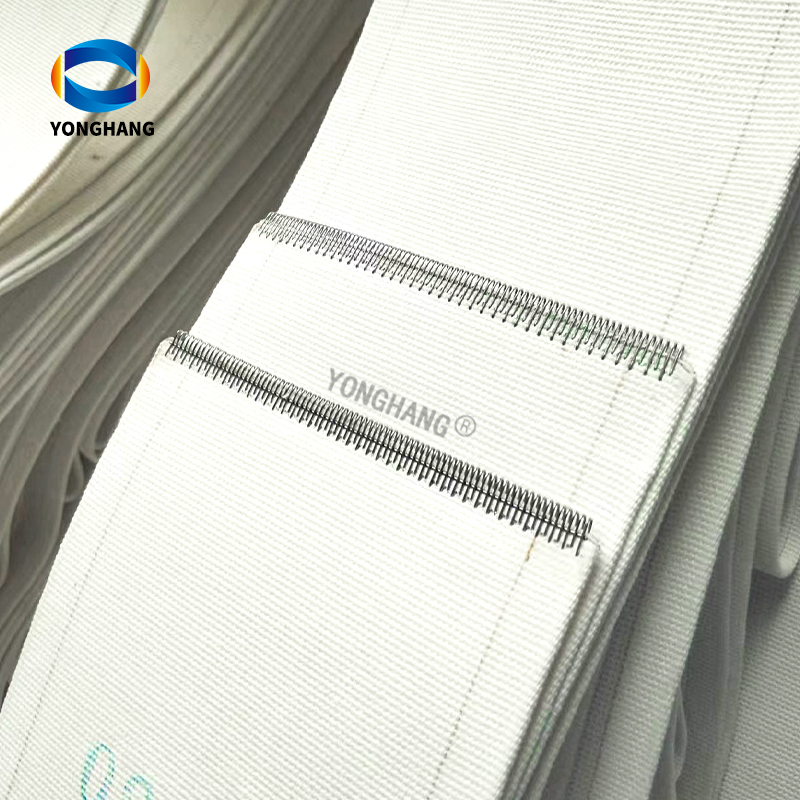
A commercial laundry depends on reliable equipment to turn washed textiles into smooth, presentable and professionally finished linen. Among the many components inside a flatwork ironing system, the polyester laundry ironer belt may appear simple, but it has a direct influence on textile transportation, ironing consistency, machine stability and maintenance requirements.
A properly designed laundry ironer belt must operate under continuous heat, repeated bending, mechanical tension, steam exposure and friction. It must also move linen smoothly through the ironing process without creating unnecessary tracking or feeding problems.
Yonghang Transmission Belt produces a 180°C heat-stabilized polyester laundry ironer belt with a calibrated 2.3mm thickness, standard widths from 50mm to 193mm, and customizable lengths and widths for different commercial laundry machines. The belt is designed for applications such as hotel laundries, hospital linen processing and industrial flatwork ironing systems.
What Is a Polyester Laundry Ironer Belt?
A polyester laundry ironer belt is a woven conveyor belt designed to transport flat textiles through a heated ironing machine.
Unlike a standard conveyor belt used at room temperature, a laundry ironer belt operates in a demanding environment where heat, moisture, pressure and continuous mechanical movement occur at the same time.
Its main functions are to:
-
Transport sheets and other flat textiles through the ironing zone
-
Maintain stable contact between the textile and ironing system
-
Support consistent fabric movement
-
Help maintain smooth tracking around cylinders and rollers
-
Allow heat and moisture to pass through the belt structure
-
Operate continuously in commercial laundry environments
For this reason, selecting an ironer belt is not simply a question of choosing a polyester belt with the correct width. The construction, heat treatment, thickness, weave, belt dimensions and installation method all matter.
Why Polyester Is Used for Laundry Ironer Belts
Polyester is widely used in laundry equipment because it can provide a useful combination of mechanical strength, dimensional stability and practical operating performance.
For an ironer belt, the material must remain stable while repeatedly passing through rollers and heated sections.
The Yonghang polyester laundry ironer belt uses high-tenacity continuous polyester filament yarns together with a precision heat-setting process. According to the product specification, this construction is designed for continuous operation up to 180°C.
The result is a belt intended to resist the dimensional changes that can occur when a textile belt is exposed to heat over long production cycles.
Key Features of Yonghang Polyester Laundry Ironer Belt
1. 180°C Continuous Operating Rating
The belt is specified for continuous operation up to 180°C.
This makes it suitable for commercial steam-heated flatwork ironing applications where the belt must remain dimensionally stable during prolonged exposure to heat.
A continuous operating rating is particularly important in commercial laundries because the belt may run repeatedly for many hours instead of experiencing short, occasional heating cycles.
2. Uniform 2.3mm Thickness
Yonghang specifies a 2.3mm calibrated thickness for this polyester laundry ironer belt.
A consistent belt gauge helps maintain stable contact and pressure while the belt passes around rollers and through the ironing section. It also helps create more predictable belt tracking and textile transportation.
The product page also notes a 2mm/2.3mm thickness option for the 147mm width, so the final specification should always be confirmed for the machine being serviced.
3. Multiple Standard Widths
The belt is available in seven standard widths:
50mm, 72mm, 89mm, 95mm, 98mm, 147mm and 193mm.
This range covers many common flatwork ironer configurations.
Custom widths and endless-loop lengths can also be manufactured for specific machine requirements.
That is particularly useful when replacing an original belt whose dimensions are not available as a standard off-the-shelf size.
4. Open-Weave Construction
The open-weave structure allows steam and moisture to move through the belt rather than creating a completely closed barrier.
In a flatwork ironing application, this characteristic can help support efficient heat transfer and moisture dissipation while textiles move through the heated section. Yonghang specifies the belt as having an optimized open-weave construction for this purpose.
This is one of the important differences between a specialized laundry ironer belt and a conventional solid conveyor belt.
5. Anti-Static Surface Treatment
Static electricity can create feeding problems when textiles cling to the belt or move unpredictably.
The Yonghang belt includes an anti-static surface finish designed to reduce static buildup and help prevent linen from sticking or misfeeding during continuous processing.
For high-speed commercial laundry operations, stable textile movement can be an important part of maintaining consistent production.
6. Reinforced Selvedges
The belt edges are especially vulnerable to repeated friction from guides, rollers and tracking hardware.
Yonghang specifies abrasion-reinforced selvedges to help reduce edge fraying and wear during continuous operation.
This construction is particularly relevant for laundries running large volumes of linen every day.
7. Stainless Steel Clip Joint Option
For replacement applications, installation time can be just as important as belt material.
Yonghang offers a stainless steel clip joint option designed for quick installation and length adjustment. The product description specifies a low-profile splice intended to reduce the possibility of marks or snags on delicate linen.
This can be useful for maintenance teams that need to replace belts without unnecessarily extending machine downtime.
Where Are Polyester Laundry Ironer Belts Used?
Polyester laundry ironer belts are commonly associated with flat textile finishing equipment.
Typical applications include:
Hotel Laundries
Hotels process large quantities of bed sheets, pillowcases, duvet covers, towels and other linen.
An appropriate ironer belt helps transport these textiles consistently through the finishing process.
Hospital and Healthcare Laundries
Healthcare facilities require reliable linen processing for high volumes of sheets, covers and other washable textiles.
Stable belt operation can help reduce interruptions in continuous laundry production.
Industrial Laundry Plants
Industrial laundry companies often process textiles for hotels, restaurants, healthcare facilities and other commercial customers.
For these environments, belt durability, dimensional stability and predictable tracking can become important factors in controlling maintenance costs.
Flatwork Ironers and Linen Finishing Lines
The Yonghang product is intended for commercial laundry ironing machines, including steam-heated flatwork ironers, chest ironers and linen-finishing production lines.
Polyester Ironer Belt vs. Nomex Ironer Belt
One common question from laundry equipment users is:
Should I choose polyester or Nomex for my ironer belt?
The answer depends on the machine and operating conditions.
Polyester can be a practical choice when the operating temperature and mechanical requirements fall within the polyester belt's specification.
Nomex or aramid-based belts may be preferred for applications requiring different high-temperature characteristics.
The correct comparison should therefore be based on:
-
Actual operating temperature
-
Belt position
-
Machine design
-
Belt thickness
-
Required flexibility
-
Moisture and steam exposure
-
Required service life
-
Manufacturer's original belt specification
A more expensive material is not automatically a better replacement if it is not matched to the actual machine.
How to Select the Correct Polyester Laundry Ironer Belt
Replacing an ironer belt is easiest when the original dimensions and machine information are known.
Before ordering, check the following factors.
Belt Width
Measure the original belt carefully.
For Yonghang's polyester laundry ironer belt, standard widths include:
50 / 72 / 89 / 95 / 98 / 147 / 193mm
Custom widths are also available.
Belt Thickness
The standard specification is 2.3mm, with a thickness option noted for the 147mm model.
Thickness affects the belt's mechanical behavior, flexibility and relationship with the original machine components.
Belt Length
Length depends on the machine design.
Yonghang states that belt length can be customized, including endless loop configurations.
Operating Temperature
Temperature should always be checked before ordering.
This model is specified for continuous operation at up to 180°C.
The machine's actual operating conditions should be evaluated rather than relying only on a general machine category.
Joint Type
A belt can be supplied as an endless loop or with an appropriate joining solution depending on the machine design.
For replacement installations, the joint method should match the original equipment and maintenance procedure.
Signs That a Polyester Ironer Belt Needs Replacement
A laundry belt does not always fail suddenly.
Several warning signs can indicate that a replacement should be considered:
Edge fraying
Damaged edges may indicate excessive friction, misalignment or long-term wear.
Visible stretching
Changes in belt length or tension can affect tracking and transportation.
Surface damage
Worn or damaged areas can affect textile movement.
Tracking problems
A belt that repeatedly moves sideways may indicate belt wear, installation problems or machine alignment issues.
Uneven textile movement
Sheets may begin to feed inconsistently or shift during the ironing cycle.
Repeated emergency adjustments
If operators must frequently re-tension or re-align the belt, the belt or related machine components should be inspected.
How to Extend the Life of a Laundry Ironer Belt
Proper installation is only the beginning.
Maintain Correct Tension
Over-tensioning can increase mechanical stress on the belt and rollers.
Under-tensioning can result in slipping, unstable tracking or inconsistent textile transportation.
Always follow the equipment manufacturer's maintenance procedure.
Check Alignment
A well-made belt can still wear prematurely if the rollers, guides or belt path are misaligned.
Check the belt tracking regularly and investigate recurring lateral movement.
Keep the Belt Surface Clean
Laundry chemicals and textile residues can accumulate over time.
Routine cleaning should follow the machine and belt manufacturer's recommendations and should avoid chemicals that could damage polyester or the belt finish.
Inspect the Edges
Because the belt edges encounter guides and rollers, they should receive particular attention during maintenance inspections.
Early detection of fraying or abnormal wear can help prevent an unexpected production stoppage.
Avoid Operating Beyond the Specification
The Yonghang polyester laundry ironer belt is rated for continuous operation up to 180°C. Operation beyond the stated specification can affect belt performance and service life.
Common Problems Caused by the Wrong Ironer Belt
Using an unsuitable belt may result in more than premature belt failure.
Potential problems include:
-
Unstable belt tracking
-
Textile misfeeding
-
Excessive belt stretching
-
Edge wear
-
Uneven textile movement
-
Increased maintenance frequency
-
Unplanned machine downtime
-
Inconsistent finishing performance
For a commercial laundry, the cost of downtime can be much higher than the cost difference between two belts.
That is why selecting a belt based on the machine's actual requirements is often more important than simply choosing the lowest purchase price.
Is a Polyester Laundry Ironer Belt Suitable for Hotel and Hospital Laundries?
Yes, provided that the belt specification matches the equipment.
Yonghang positions this polyester ironer belt for commercial hotel laundries, hospital linen processing facilities and medium-volume industrial laundry plants.
These environments typically require continuous textile transportation combined with predictable heat and moisture handling.
The combination of polyester construction, 180°C continuous operating capability, open-weave structure, anti-static treatment and reinforced edges makes this type of belt suitable for many commercial laundry ironing applications.
Frequently Asked Questions About Polyester Laundry Ironer Belts
What is a polyester laundry ironer belt?
A polyester laundry ironer belt is a woven heat-resistant conveyor belt designed to transport flat textiles through commercial and industrial ironing machines.
How hot can a polyester laundry ironer belt operate?
The Yonghang polyester laundry ironer belt is rated for continuous operation up to 180°C.
What thickness is the Yonghang polyester ironer belt?
The standard specified thickness is 2.3mm. The product information also lists a 2mm/2.3mm thickness option for the 147mm width.
What widths are available?
Standard widths are 50mm, 72mm, 89mm, 95mm, 98mm, 147mm and 193mm. Custom widths can also be produced.
Can the belt length be customized?
Yes. Yonghang states that custom belt lengths and endless-loop configurations are available according to machine requirements.
Can polyester ironer belts be used in steam-heated flatwork ironers?
Yes. This product is specifically designed for commercial steam-heated flatwork ironing systems and linen-finishing applications.
Does the belt have an anti-static treatment?
Yes. The product uses an anti-static surface treatment intended to reduce static buildup and help prevent textile clinging and misfeeding.
Does Yonghang offer joined or endless ironer belts?
Yonghang offers customizable belt lengths and an optional stainless steel clip joint for installation and adjustment.
Why Choose Yonghang Polyester Laundry Ironer Belt?
Choosing a laundry ironer belt manufacturer is about more than obtaining a piece of woven polyester.
The belt must be matched to the machine's actual dimensions, temperature, installation method and operating conditions.
Yonghang's polyester laundry ironer belt provides a practical combination of:
-
180°C continuous operating capability
-
Heat-stabilized polyester construction
-
2.3mm calibrated thickness
-
Seven standard width options
-
Custom dimensions
-
Open-weave steam permeability
-
Anti-static surface treatment
-
Reinforced belt edges
-
Optional stainless steel clip joints
-
Applications for hotel, hospital and industrial laundry equipment
Final Thoughts
A polyester laundry ironer belt is a critical part of a modern flatwork ironing system. The belt must do more than simply move linen. It must remain stable under heat, work smoothly with rollers, manage moisture and steam, resist repeated mechanical wear and support reliable textile transportation throughout long production cycles.
For many commercial laundry applications, a heat-stabilized polyester construction offers a balanced solution between performance, dimensional stability, durability and operating economy.
Yonghang's 180°C polyester laundry ironer belt is available in multiple standard widths, with customized lengths and configurations for different commercial ironing machines.
For a replacement belt, provide the machine model, original belt width, thickness, length, operating temperature and installation method. With these details, a suitable polyester laundry ironer belt can be selected more accurately and the risk of incorrect sizing can be reduced.
Table of Contents
- What Is a Polyester Laundry Ironer Belt?
- Why Polyester Is Used for Laundry Ironer Belts
- Key Features of Yonghang Polyester Laundry Ironer Belt
- Where Are Polyester Laundry Ironer Belts Used?
- Polyester Ironer Belt vs. Nomex Ironer Belt
- How to Select the Correct Polyester Laundry Ironer Belt
- Signs That a Polyester Ironer Belt Needs Replacement
- How to Extend the Life of a Laundry Ironer Belt
- Common Problems Caused by the Wrong Ironer Belt
- Is a Polyester Laundry Ironer Belt Suitable for Hotel and Hospital Laundries?
-
Frequently Asked Questions About Polyester Laundry Ironer Belts
- What is a polyester laundry ironer belt?
- How hot can a polyester laundry ironer belt operate?
- What thickness is the Yonghang polyester ironer belt?
- What widths are available?
- Can the belt length be customized?
- Can polyester ironer belts be used in steam-heated flatwork ironers?
- Does the belt have an anti-static treatment?
- Does Yonghang offer joined or endless ironer belts?
- Why Choose Yonghang Polyester Laundry Ironer Belt?
- Final Thoughts