EN
 AR
 HR
 DA
 NL
 FR
 DE
 EL
 HI
 IT
 JA
 KO
 NO
 PL
 PT
 RO
 RU
 ES
 TL
 IW
 ID
 SR
 SK
 UK
 VI
 TH
 TR
 AF
 MS
 IS
 HY
 AZ
 KA
 BN
 LA
 MR
 MY
 KK
 UZ
 KY
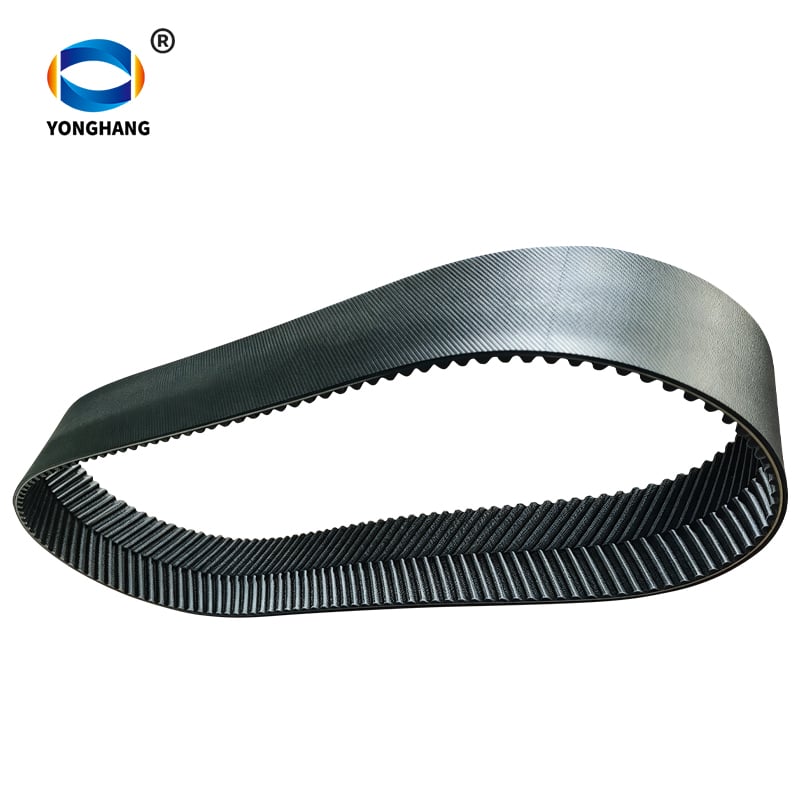
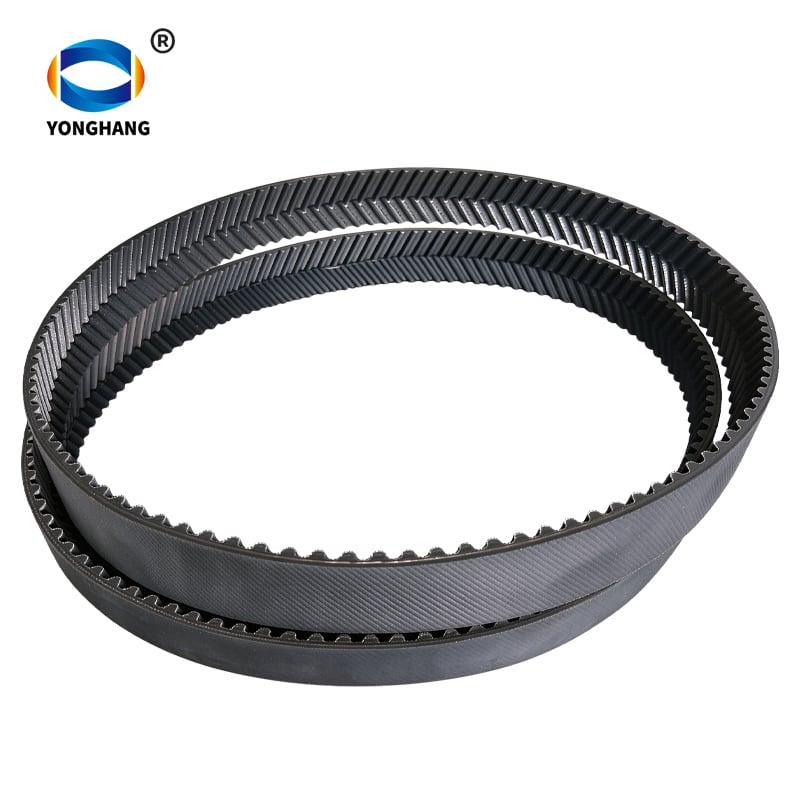
G Type Rubber Herringbone Timing Belt
G Type Rubber Herringbone Timing Belts for industrial synchronous transmission systems. Customized belt dimensions, rubber compounds, and reinforcement options available from Yonghang.
- Introduction
Introduction
G Type Rubber Herringbone Timing Belt
Product Overview
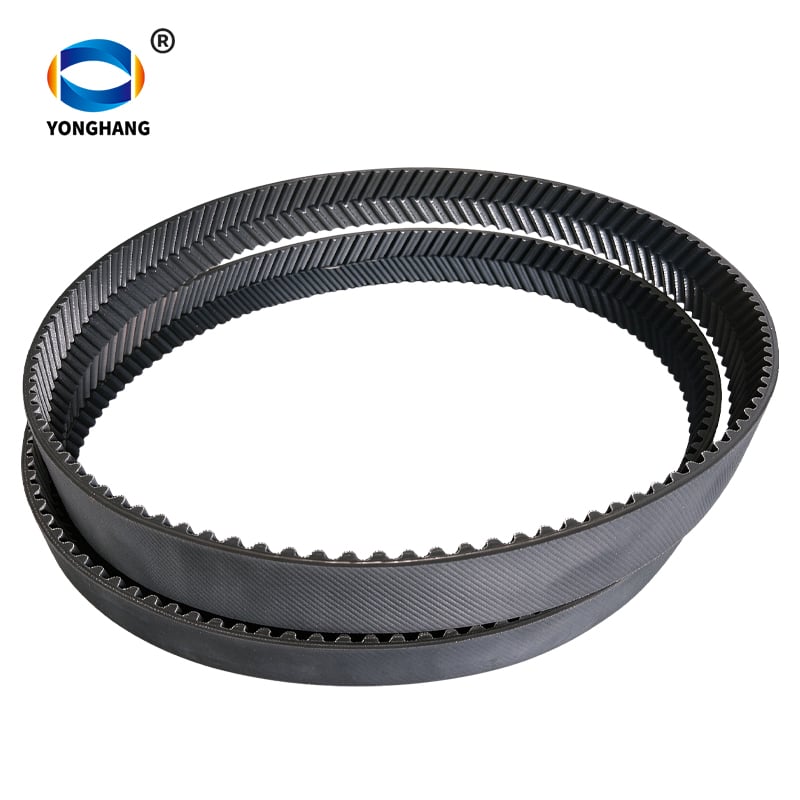
The G Type Rubber Herringbone Timing Belt is a specialized synchronous transmission belt designed for industrial machinery, mechanical drive systems, and customized automation equipment. Combining a rubber belt construction with a distinctive herringbone tooth arrangement, this product provides a transmission solution for machinery requiring synchronized movement, consistent mechanical engagement, and reliable operating performance.
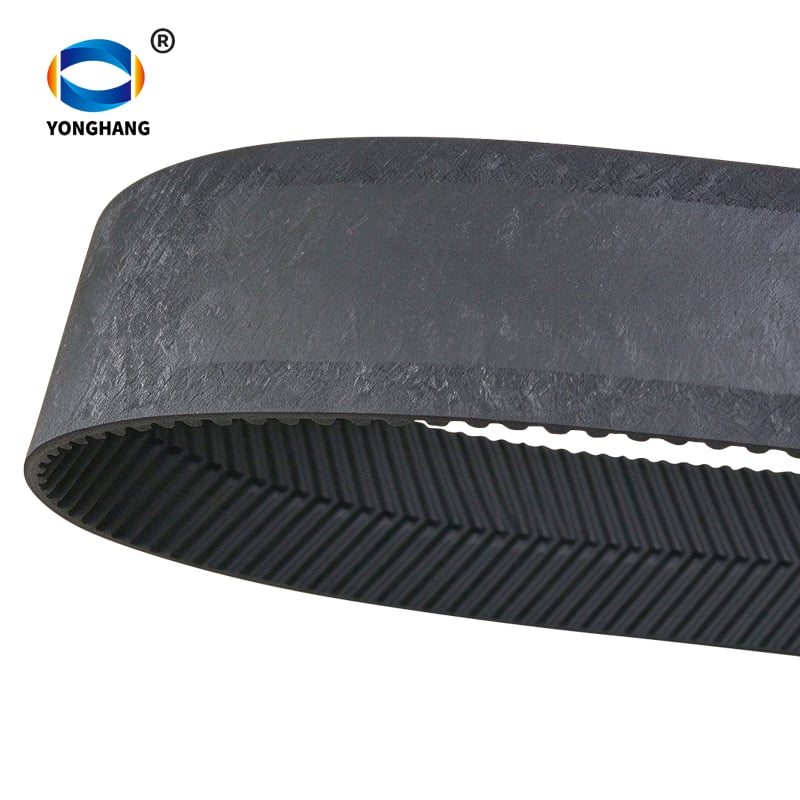
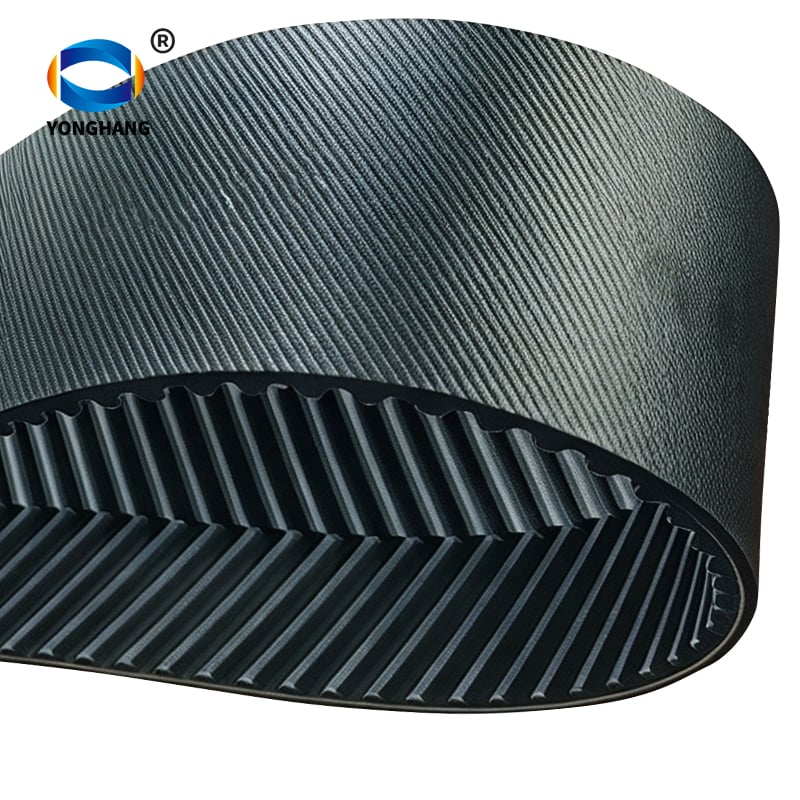
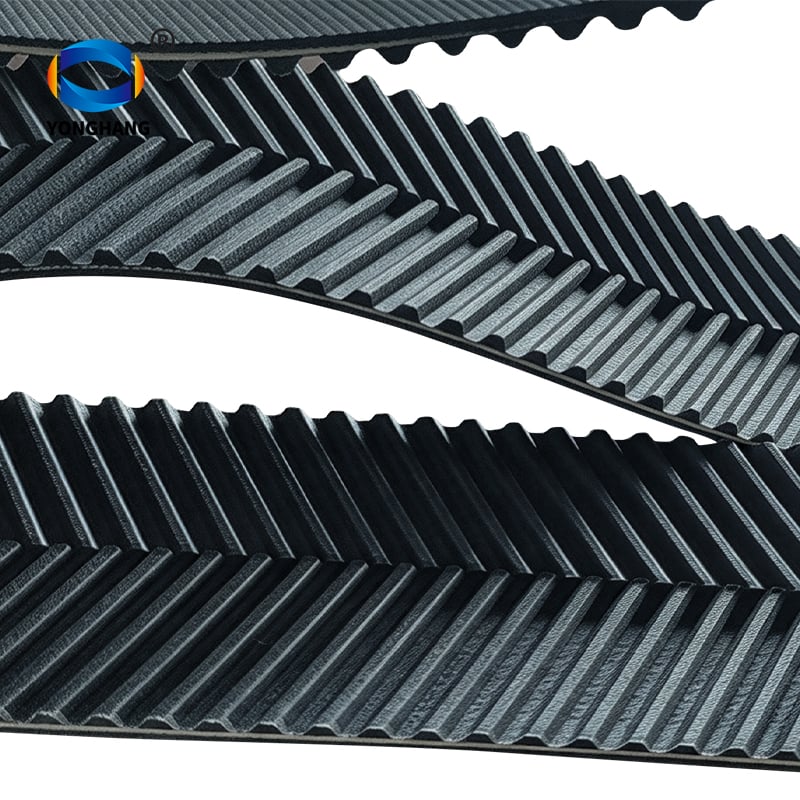
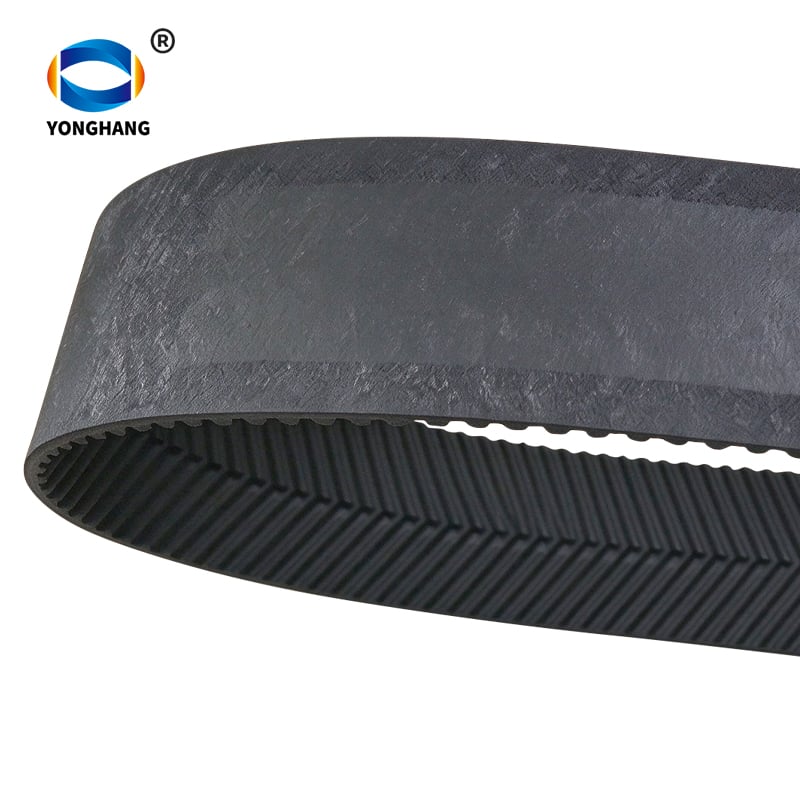
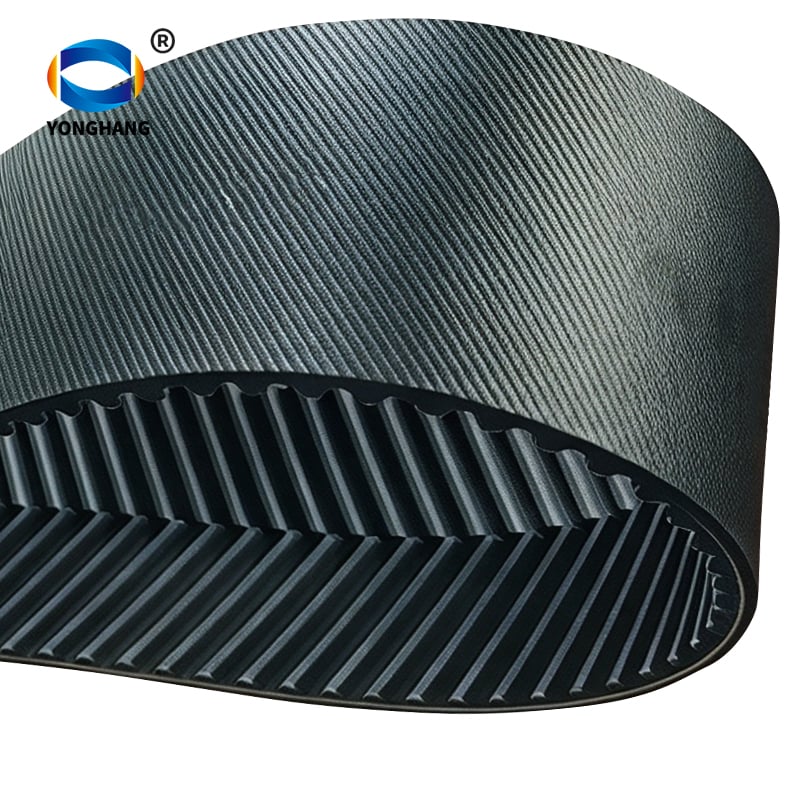
Unlike conventional timing belts with straight transverse teeth, the herringbone design features an angled tooth arrangement that creates a characteristic chevron pattern. The opposing tooth directions are designed to balance lateral force components during engagement, helping support stable belt movement when used with a properly matched pulley system.
Manufactured using rubber material, the G Type Rubber Herringbone Timing Belt offers flexibility and mechanical resilience for repeated industrial operation. Its internal tensile reinforcement can be selected according to the required transmission load, operating speed, and dimensional stability requirements.
The G Type configuration is intended for equipment designed around the corresponding belt specifications. Correct matching of the tooth profile, pitch, and pulley geometry is essential for achieving reliable synchronous transmission.
Yonghang provides customized industrial timing belt solutions for machinery manufacturers, automation equipment suppliers, and replacement-parts distributors. Belt dimensions, rubber compounds, reinforcement materials, and structural specifications can be discussed according to customer drawings, original samples, and application requirements.
Whether you are looking for replacement belts or developing a specialized mechanical transmission system, Yonghang can help you evaluate a suitable G Type Rubber Herringbone Timing Belt solution.
Key Features of G Type Rubber Herringbone Timing Belt
1. Specialized Herringbone Tooth Structure
The most distinctive feature of this belt is its herringbone tooth arrangement.
The teeth are arranged in opposing angled directions to create a symmetrical chevron-style structure. This configuration is designed to balance lateral force components during engagement between the belt and pulley.
When used with a compatible herringbone pulley, the structure can contribute to controlled belt movement and stable transmission.
2. Rubber Material Construction
The belt is manufactured using rubber material suitable for industrial synchronous transmission applications.
Depending on the rubber formulation, the material can provide:
Good flexibility during repeated bending.
Mechanical resilience under operating stress.
Resistance to repeated operational fatigue.
Suitable abrasion resistance for industrial applications.
Vibration-damping characteristics.
Compatibility with different tensile reinforcement structures.
The final performance depends on the specific rubber compound, internal reinforcement, operating temperature, and working environment.
3. Synchronized Power Transmission
The timing teeth engage with their corresponding pulley grooves to transfer mechanical movement through positive engagement.
This design helps maintain synchronization between driving and driven components and reduces the possibility of unwanted transmission slip under suitable operating conditions.
The correct tooth profile and pulley specifications are important for consistent transmission performance.
4. Stable Running Characteristics
The opposing angled tooth arrangement is designed to help balance lateral forces generated during tooth engagement.
When combined with correct pulley geometry and accurate installation, the herringbone structure can contribute to stable belt operation.
Actual tracking performance depends on the tooth design, belt tension, pulley alignment, and overall mechanical structure.
5. Customizable Belt Specifications
Different industrial machines have different transmission requirements. Yonghang can discuss customized product configurations according to customer specifications.
Customization options may include:
G Type profile requirements.
Herringbone tooth arrangement.
Belt width and length.
Rubber compound selection.
Tensile reinforcement material.
Belt thickness and structural dimensions.
Special manufacturing and processing requirements.
Technical drawings, original belt samples, and product photographs can help identify the required specifications.
Product Specifications
| Item | Specification |
|---|---|
| Product Name | G Type Rubber Herringbone Timing Belt |
| Belt Material | Rubber |
| Belt Category | Synchronous Timing Belt |
| Product Designation | G Type |
| Tooth Arrangement | Herringbone / Chevron |
| Belt Structure | Rubber body with tensile reinforcement, subject to design |
| Tooth Profile | According to actual G Type specification |
| Tooth Pitch | To be confirmed |
| Belt Width | Customizable |
| Belt Length | Customizable |
| Belt Thickness | According to actual specification |
| Reinforcement Material | To be confirmed |
| Color | To be confirmed |
| Supply Form | According to application requirements |
| Application | Industrial synchronous transmission |
| Customization | Available upon technical confirmation |
Technical Note: G Type should be verified against the actual product drawing or manufacturer's specification. Tooth pitch, tooth geometry, belt thickness, reinforcement construction, and pulley compatibility must be confirmed before ordering.
How Does a G Type Rubber Herringbone Timing Belt Work?
A rubber herringbone timing belt transmits mechanical movement through the engagement between its teeth and a compatible timing pulley.
Unlike a conventional straight-tooth timing belt, the herringbone design uses opposing angled tooth sections that form a symmetrical pattern.
This special arrangement influences how the belt engages with the pulley and how forces are distributed during operation.
Synchronized Mechanical Transmission
The timing teeth engage with corresponding pulley grooves to transfer rotational movement and maintain synchronization between mechanical components.
Balanced Lateral Force Components
The opposing angled tooth directions are designed to balance lateral force components generated during engagement.
Controlled Belt Movement
When used with a compatible pulley and properly aligned drive system, the herringbone configuration can support stable belt movement.
Consistent Operating Performance
A correctly selected rubber compound, reinforcement structure, and tooth profile help the transmission system meet its intended operating requirements.
The final performance depends on belt specifications, pulley design, installation accuracy, and working conditions.
Applications of G Type Rubber Herringbone Timing Belts
G Type Rubber Herringbone Timing Belts can be considered for specialized industrial machinery requiring synchronous transmission and compatible herringbone pulley structures.
1. Industrial Automation Equipment
Automated production equipment frequently requires synchronized movement between motors, pulleys, and mechanical assemblies.
A G Type rubber herringbone timing belt can be evaluated for machinery incorporating a compatible herringbone transmission system.
2. Industrial Mechanical Drive Systems
Mechanical transmission equipment requires consistent engagement between driving and driven components.
The rubber construction and specialized herringbone tooth arrangement provide an alternative to conventional timing belt configurations for suitable applications.
3. Packaging and Processing Machinery
Packaging and processing machines often use synchronous transmission systems for product feeding, positioning, and material handling.
Customized G Type herringbone timing belts can be considered for equipment designed around the corresponding tooth profile.
4. Material Handling Equipment
Certain material handling systems use timing belts to coordinate the movement of mechanical components.
The herringbone configuration can be evaluated for suitable applications where stable transmission and controlled belt tracking are important design considerations.
5. Industrial Production Machinery
Specialized production equipment may require non-standard belt profiles to match its mechanical transmission structure.
G Type rubber herringbone timing belts offer another configuration for machinery designed specifically around this type of belt.
6. Customized Machinery and Replacement Projects
Equipment manufacturers and maintenance suppliers may require replacement belts with particular tooth structures and dimensional specifications.
Yonghang can review original belt samples, equipment drawings, and pulley information to help determine an appropriate product configuration.
Note: Final application suitability depends on the actual tooth profile, pulley compatibility, operating load, transmission speed, and working environment.
G Type Herringbone Timing Belt vs. Conventional Timing Belt
The main difference between a conventional timing belt and a herringbone timing belt is their tooth arrangement and corresponding pulley requirements.
| Comparison | Conventional Rubber Timing Belt | G Type Rubber Herringbone Timing Belt |
|---|---|---|
| Material | Rubber | Rubber |
| Tooth Arrangement | Generally straight transverse teeth | Herringbone / Chevron |
| Tooth Geometry | Conventional timing profile | Specialized angled tooth arrangement |
| Transmission | Synchronous power transmission | Synchronous power transmission |
| Tracking Characteristics | Depend on pulley and installation design | Designed to balance lateral force components |
| Pulley Compatibility | Matching conventional pulley | Matching herringbone pulley |
| Main Application | General industrial transmission | Specialized synchronous transmission |
Although both products transmit mechanical power through synchronous tooth engagement, they have different tooth geometries. Buyers should verify the actual belt and pulley specifications before selecting a replacement.
Advantages of Customized G Type Rubber Herringbone Timing Belts
Selecting a customized timing belt helps ensure compatibility with the machine's transmission requirements.
Specialized Herringbone Structure
The chevron tooth arrangement provides an alternative to conventional straight-tooth timing belt configurations.
Flexible Rubber Construction
Rubber material offers flexibility and mechanical resilience for repeated industrial operation.
Customized Dimensions
Belt width, length, and other dimensional requirements can be discussed according to equipment specifications.
Reinforcement Options
The internal tensile reinforcement can be evaluated according to load requirements, operating speed, and dimensional stability needs.
Application-Based Manufacturing
Technical drawings, original samples, and equipment information can help clarify the required belt configuration.
Why Choose Yonghang G Type Rubber Herringbone Timing Belts?
Yonghang specializes in industrial transmission belts and customized timing belt solutions for different machinery applications.
For customers sourcing G Type Rubber Herringbone Timing Belts, Yonghang can discuss product specifications according to actual equipment requirements.
Customized specifications: Different belt dimensions and structural requirements can be discussed.
Specialized tooth arrangement: Suitable for compatible herringbone transmission systems.
Rubber material options: Material specifications can be evaluated according to working conditions.
Reinforcement selection: Tensile reinforcement can be discussed according to application requirements.
Technical specification support: Drawings, samples, and photographs can help identify the required belt construction.
B2B supply service: Suitable for machinery manufacturers, industrial distributors, automation companies, and replacement-parts suppliers.
Our goal is to help customers find a suitable rubber timing belt configuration for their mechanical transmission systems.
How to Select the Right G Type Rubber Herringbone Timing Belt
Before purchasing, it is important to check the following technical details.
1. Confirm the G Type Specification
Verify the exact G Type designation and its corresponding tooth geometry. Providing an original sample or technical drawing is recommended to avoid profile confusion.
2. Check Tooth Pitch and Profile
The tooth pitch and geometry must match the corresponding pulley specifications. Incorrect tooth dimensions may result in poor engagement and premature belt damage.
3. Determine Belt Width and Length
Measure the belt dimensions according to the equipment's installation space and transmission layout.
Customized widths and lengths can be discussed according to project requirements.
4. Select the Appropriate Rubber Compound
Different rubber formulations provide different mechanical and environmental characteristics.
Consider operating temperature, transmission load, oil exposure, and operating frequency when selecting the material.
5. Confirm the Tensile Reinforcement
The tensile reinforcement plays an important role in belt strength and resistance to elongation.
The appropriate reinforcement structure should be selected according to the machine's load and operating requirements.
6. Verify Pulley Compatibility
The herringbone tooth arrangement requires a compatible pulley design. Confirm the pulley profile, tooth pitch, dimensions, and installation arrangement.
7. Provide Original Samples or Drawings
For replacement applications, an original belt sample, clear product photographs, or a technical drawing can help reduce specification errors.
Frequently Asked Questions
Q1: What is a G Type Rubber Herringbone Timing Belt?
It is a rubber synchronous transmission belt identified by a G Type designation and featuring a herringbone tooth arrangement. It is intended for compatible industrial transmission systems requiring synchronized movement.
Q2: What makes a herringbone timing belt different from a conventional timing belt?
A conventional timing belt generally has straight transverse teeth, whereas a herringbone timing belt features opposing angled tooth sections arranged in a chevron pattern. This changes the tooth engagement geometry and the distribution of lateral forces during operation.
Q3: What are the advantages of rubber construction?
Rubber provides flexibility, mechanical resilience, and useful vibration-damping characteristics. Its actual performance depends on the selected compound and reinforcement structure.
Q4: Can the G Type Rubber Herringbone Timing Belt be customized?
Yes. Belt width, length, rubber compound, tensile reinforcement, and other technical specifications can be discussed according to customer requirements.
Q5: Can this belt be used with a standard timing pulley?
Not necessarily. The herringbone tooth geometry requires a compatible pulley. Please confirm the exact tooth profile and pulley specifications before installation.
Q6: What information is needed when requesting a quotation?
Please provide the G Type specification, tooth pitch, tooth dimensions, belt width, length, rubber compound requirements, reinforcement specifications, matching pulley information, and estimated order quantity.
An original belt sample or technical drawing is particularly helpful.
Q7: Is this belt suitable for continuous industrial operation?
It can be considered for continuous-duty machinery when the rubber compound, reinforcement structure, dimensions, and operating conditions are correctly matched. Actual service performance depends on the load, speed, tension, temperature, and installation quality.
Request a Quote for G Type Rubber Herringbone Timing Belts
Are you looking for a customized G Type Rubber Herringbone Timing Belt for your industrial machinery or specialized synchronous transmission system?
Yonghang welcomes inquiries from machinery manufacturers, automation equipment suppliers, industrial distributors, and replacement-parts buyers.
To help us identify the appropriate belt specifications, please provide:
G Type tooth profile information.
Tooth pitch and tooth dimensions.
Required belt width and length.
Rubber compound requirements.
Tensile reinforcement material.
Matching pulley specifications.
Machine model and application.
Estimated order quantity.
You can also send us photographs of the existing belt, pulley drawings, or original samples for technical evaluation.
Product: G Type Rubber Herringbone Timing Belt
Material: Rubber
Product Designation: G Type
Tooth Arrangement: Herringbone / Chevron
Application: Industrial Synchronous Transmission
Customization: Available according to technical requirements
Contact Yonghang today to discuss your customized G Type Rubber Herringbone Timing Belt requirements.