
 EN
EN
 AR
AR
 HR
HR
 DA
DA
 NL
NL
 FR
FR
 DE
DE
 EL
EL
 HI
HI
 IT
IT
 JA
JA
 KO
KO
 NO
NO
 PL
PL
 PT
PT
 RO
RO
 RU
RU
 ES
ES
 TL
TL
 IW
IW
 ID
ID
 SR
SR
 SK
SK
 UK
UK
 VI
VI
 TH
TH
 TR
TR
 AF
AF
 MS
MS
 IS
IS
 HY
HY
 AZ
AZ
 KA
KA
 BN
BN
 LA
LA
 MR
MR
 MY
MY
 KK
KK
 UZ
UZ
 KY
KY
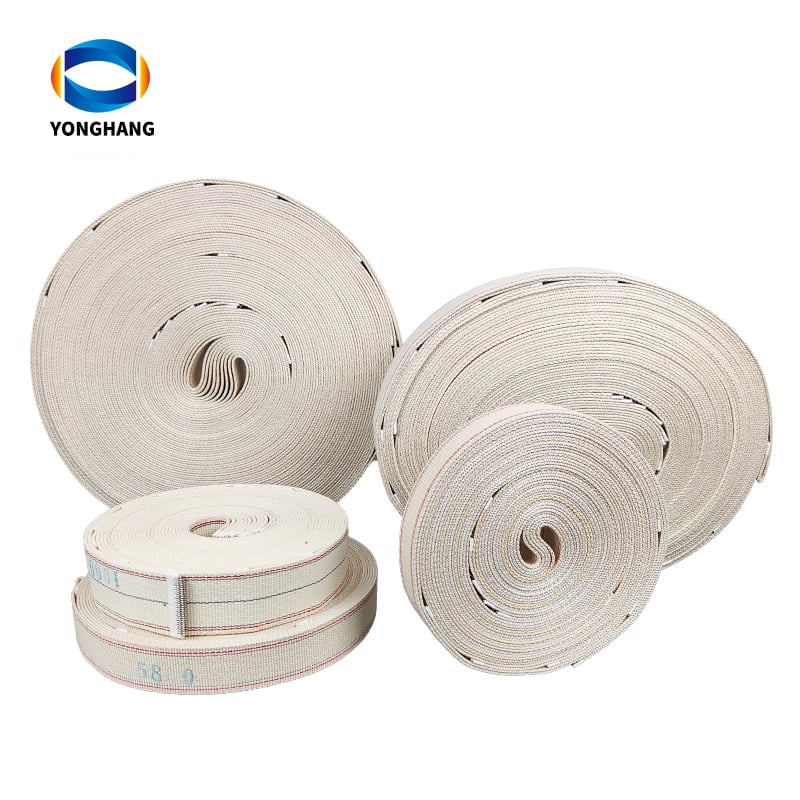
In a commercial laundry, the quality of the ironing process depends on much more than the heating system itself. The flatwork ironer belt must transport linen smoothly, tolerate continuous heat, maintain dimensional stability, and work reliably through repeated bending and steam exposure.
For this reason, Nomex aramid flatwork ironer belts are widely considered for demanding commercial laundry ironing applications where thermal stability and long-term mechanical performance are important.
However, not every flatwork ironer requires the same belt thickness.
A 1.1mm Nomex flatwork ironer belt and a 2.5mm Nomex aramid flatwork ironer belt may both be designed for high-temperature laundry ironing, but they serve different machine configurations.
The 1.1mm belt is designed around flexibility, compact roller arrangements, and narrow-format ironing systems, while the 2.5mm belt focuses on a more robust construction for demanding flatwork ironing applications.
Understanding this difference is important when replacing an existing ironer belt.
What Is a Nomex Aramid Flatwork Ironer Belt?
A Nomex aramid flatwork ironer belt is a heat-resistant woven or needled textile belt designed to transport flat linen through a commercial or industrial ironing machine.
Unlike a conventional conveyor belt, an ironer belt operates in an environment involving:
-
High temperature
-
Steam and moisture
-
Continuous mechanical tension
-
Repeated bending
-
Roller friction
-
Textile contact
-
Long operating cycles
The belt must therefore maintain its physical dimensions and mechanical integrity while moving through the ironing system.
Yonghang's 1.1mm and 2.5mm Nomex aramid flatwork ironer belts are both specified for continuous operation up to 240°C, making them suitable for demanding steam-heated flatwork ironing applications.
Why Is Nomex Used in Flatwork Ironer Belts?
Nomex is a meta-aramid fiber known for its heat-resistant characteristics.
In a flatwork ironer, the belt can be exposed to elevated temperatures repeatedly during every production cycle. A belt material that cannot maintain dimensional stability under these conditions may stretch, shrink, deform, or deteriorate prematurely.
A Nomex-based construction is selected when the application requires a combination of:
-
High-temperature resistance
-
Dimensional stability
-
Flexibility
-
Mechanical durability
-
Resistance to repeated thermal exposure
-
Resistance to laundry chemicals
-
Stable operation under steam
Yonghang specifies both of these Nomex ironer belt models for continuous operation at temperatures up to 240°C.
1.1mm vs. 2.5mm Nomex Ironer Belt: What Is the Difference?
The most obvious difference is thickness, but thickness is not the only factor.
The two belts are designed around different machine requirements.
| Feature | 1.1mm Nomex Ironer Belt | 2.5mm Nomex Aramid Ironer Belt |
|---|---|---|
| Thickness | 1.1mm | 2.5mm |
| Continuous temperature | Up to 240°C | Up to 240°C |
| Design focus | Thin, flexible, compact systems | Robust high-temperature applications |
| Standard widths | 48 / 89 / 97mm | 28 / 38 / 50 / 60 / 65 / 70 / 75 / 80mm |
| Structure | Optimized plain-weave aramid structure | Needled aramid felt structure |
| Typical equipment | Compact flatwork ironers and chest ironers | Commercial steam flatwork ironers |
| Belt length | Custom | Custom |
| Joint | 304 stainless steel clip / endless seamless | 304 stainless steel clip / endless seamless |
The correct choice should be based on the original machine specification rather than simply assuming that a thicker belt is better.
1.1mm Nomex Flatwork Ironer Belt
The 1.1mm Nomex flatwork ironer belt is a thin-profile belt developed for compact and narrow-format ironing systems.
Its low-profile construction is particularly useful for machines with smaller-diameter cylinders and compact roller arrangements.
Why Choose a 1.1mm Belt?
A thinner belt can provide several practical advantages in an appropriately designed machine.
Better Flexibility Around Small Rollers
Compact ironers may use smaller-diameter rollers than larger industrial systems.
A 1.1mm construction can flex more easily around these components, reducing unnecessary bending stress.
Fast Thermal Response
Because the belt is relatively thin, less material needs to be heated as the belt passes through the ironing system.
This can support efficient heat transfer between the heating system and the linen.
Lower Mechanical Load
A thin and flexible belt can reduce mechanical resistance in certain compact machine configurations.
Yonghang describes the 1.1mm construction as being optimized for compact roller arrangements and small-diameter ironer cylinders.
Narrow Standard Widths
The 1.1mm model is available in:
-
48mm
-
89mm
-
97mm
Custom widths and endless loop lengths can also be manufactured for specific machines.
2.5mm Nomex Aramid Flatwork Ironer Belt
The 2.5mm Nomex aramid flatwork ironer belt is designed for applications where a more substantial belt construction is required.
Yonghang specifies eight standard widths:
28mm, 38mm, 50mm, 60mm, 65mm, 70mm, 75mm and 80mm.
The belt uses a needled aramid felt structure designed to provide consistent steam permeability and moisture dissipation during the ironing process.
Why Choose a 2.5mm Belt?
The thicker construction can be appropriate for flatwork ironing systems requiring greater belt body thickness and mechanical robustness.
Its precision-calibrated thickness is designed to support:
-
Stable belt tracking
-
Consistent pressure distribution
-
Repeated high-temperature operation
-
Mechanical durability
-
Reliable performance during high-volume laundry production
The product page specifically positions the belt for luxury hotel laundries, hospital linen facilities, and large-scale industrial laundry plants.
Is a Thicker Ironer Belt Always Better?
No.
This is one of the most important points when choosing a replacement flatwork ironer belt.
A thicker belt is not automatically a better belt.
The belt thickness must match:
-
Roller diameter
-
Belt path
-
Guide system
-
Machine design
-
Required flexibility
-
Original belt specification
-
Operating temperature
-
Textile finishing requirements
For a compact ironer with small-diameter rollers, a thin 1.1mm belt may be more appropriate.
For a machine designed around a 2.5mm belt, replacing it with a thinner belt could change the belt path, pressure distribution, tracking behavior, and mechanical performance.
The safest approach is to match the original belt specification or provide the machine model and dimensions to the belt manufacturer.
How Does a Nomex Ironer Belt Handle High Temperature?
During continuous ironing, the belt is repeatedly exposed to heat and steam.
The primary challenge is not only surviving a single high-temperature cycle. The belt must remain stable after many hours of repeated operation.
Yonghang specifies both the 1.1mm and 2.5mm Nomex belt models for continuous operation up to 240°C.
The belts are processed using thermal stabilization intended to improve dimensional stability under prolonged heat exposure.
This is particularly important because excessive thermal deformation can contribute to:
-
Belt stretching
-
Belt wandering
-
Tracking instability
-
Edge wear
-
Frequent tension adjustment
-
Reduced service life
Steam Permeability Matters in Flatwork Ironing
A flatwork ironer does not simply apply heat to dry fabric.
Steam and moisture management are also part of the finishing process.
The belt structure therefore needs to allow appropriate movement of vapor and moisture.
The 1.1mm model uses an optimized plain-weave aramid structure designed for balanced steam permeability and controlled moisture dissipation. The 2.5mm model uses a needled aramid felt structure intended to provide uniform steam penetration and rapid moisture dissipation.
This helps explain why specialized textile belts are used instead of conventional solid rubber conveyor belts in many ironing systems.
Chemical Resistance in Commercial Laundry Applications
Commercial laundry equipment is exposed to more than heat.
Textiles may contain residual chemicals from washing processes, including detergent and bleaching agents.
Yonghang's product descriptions highlight the chemical stability of the Nomex aramid construction against laundry chemicals, residual alkaline detergents, bleach agents, and steam aging.
This characteristic is particularly relevant for:
-
Hotel laundry
-
Hospital laundry
-
Industrial laundry
-
Linen rental facilities
-
High-volume commercial laundry plants
A belt operating continuously in these environments must be selected with the complete working environment in mind.
Reinforced Edges for Continuous Operation
The belt edge can experience concentrated friction because of guide rails and edge-positioning components.
Once the edge begins to fray, the damage can spread and eventually affect belt tracking.
Both Yonghang Nomex ironer belt models incorporate abrasion-reinforced selvedges intended to reduce edge wear and unraveling during continuous operation.
This is especially important for laundry facilities that operate their ironing equipment for extended periods every day.
304 Stainless Steel Clip Joint or Endless Belt?
Replacement ironer belts can be supplied using different joining configurations.
304 Stainless Steel Clip Joint
A stainless steel clip joint can provide a practical solution when quick installation or on-site belt replacement is important.
Yonghang offers 304 stainless steel clip joints for both the 1.1mm and 2.5mm Nomex belt models.
The low-profile joint is designed to reduce the risk of leaving marks or creating snags on delicate linen.
Endless Seamless Construction
For applications where a completely smooth belt surface is preferred, Yonghang also offers endless seamless constructions.
This can be useful when the customer wants to minimize the possibility of a joint leaving a visible impression on finished textiles.
The appropriate joint should be selected according to the machine structure, maintenance requirements, and textile quality requirements.
Which Nomex Ironer Belt Should You Choose?
The decision can be simplified by looking at the machine configuration.
Choose a 1.1mm Nomex Belt When:
A 1.1mm belt may be suitable when the machine:
-
Uses narrow-format belts
-
Has compact roller arrangements
-
Uses relatively small-diameter cylinders
-
Requires high flexibility
-
Is a compact flatwork ironer
-
Is a chest ironer
-
Processes delicate linen or smaller textile pieces
-
Requires a thin belt profile
The available standard widths are 48mm, 89mm and 97mm.
Choose a 2.5mm Nomex Aramid Belt When:
A 2.5mm belt may be suitable when the machine:
-
Requires a more robust belt construction
-
Uses narrow industrial belt widths
-
Operates in demanding commercial laundry production
-
Processes high volumes of linen
-
Requires enhanced mechanical durability
-
Uses a belt specification close to 2.5mm
The standard widths range from 28mm to 80mm, with eight stocked options.
What Types of Laundry Use Nomex Ironer Belts?
Nomex aramid ironer belts are suitable for a wide range of commercial textile finishing environments.
Hotel Laundry
Hotels process large volumes of sheets, pillowcases, duvet covers, table linens, and other textiles.
Stable ironing belt performance helps maintain consistent textile transportation during high-volume finishing.
Hospital Laundry
Hospital laundry facilities often process large quantities of sheets, patient linen, and other textiles.
Reliable ironing equipment can be particularly important when continuous production is required.
Industrial Laundry Plants
Large laundry plants may process textiles for multiple hotels, restaurants, hospitals, and other commercial customers.
These facilities can place strong emphasis on belt service life, temperature stability, and maintenance efficiency.
Commercial Linen Finishing
Flatwork ironers are commonly used for sheets, tablecloths, napkins, duvet covers, and other flat textile products.
The appropriate Nomex belt can help maintain consistent movement through the finishing system.
Common Signs That a Flatwork Ironer Belt Needs Replacement
A worn belt does not always fail immediately.
Several warning signs can indicate that inspection or replacement is necessary.
Belt Edge Fraying
Fraying along the edge may indicate prolonged friction or guide-system wear.
Belt Wandering
If the belt repeatedly moves sideways, the belt, guide tape, rollers, alignment, and tension should all be inspected.
Uneven Belt Surface
Localized wear can affect the consistency of textile transportation.
Excessive Stretching
Unexpected changes in belt length may affect tracking and tension.
Increasing Maintenance Frequency
If operators need to adjust belt tension or tracking more frequently than before, the belt and machine alignment should be checked.
Visible Thermal Damage
Discoloration, hardening, cracking, or other signs of thermal degradation can indicate that the belt is being operated under unsuitable conditions.
How to Extend the Service Life of a Nomex Ironer Belt
Correct belt selection is only the first step.
Proper maintenance can also influence service life.
Maintain Correct Belt Tension
Excessive tension increases mechanical stress.
Insufficient tension can cause unstable tracking or slipping.
Always follow the machine manufacturer's recommended tension procedure.
Check Roller Alignment
Misaligned rollers can force the belt toward one side and create uneven edge wear.
If belt tracking problems continue after tension adjustment, inspect the mechanical alignment.
Inspect Guide Components
Guide rails, guide tapes, and edge-positioning components should be checked regularly.
A damaged guide component can accelerate belt-edge wear.
Monitor Temperature
The Yonghang 1.1mm and 2.5mm Nomex belts are specified for continuous operation up to 240°C. Operating conditions should remain within the belt's specified range.
Keep the Belt Path Clean
Lint, detergent residue, and other contaminants can accumulate around the belt path.
Routine cleaning and inspection can help prevent unnecessary friction.
Can a Nomex Belt Replace a Polyester Ironer Belt?
Sometimes, but not automatically.
The decision should be based on the machine's actual operating conditions.
A polyester ironer belt may be suitable for applications within its specified temperature and mechanical requirements.
A Nomex aramid belt may be considered when the application requires higher continuous temperature capability or greater resistance to demanding thermal conditions.
However, changing materials without checking thickness, belt structure, dimensions, and machine compatibility is not recommended.
The replacement belt should match the machine's operating requirements rather than being selected solely because one material has a higher temperature rating.
Can a 1.1mm Belt Replace a 2.5mm Belt?
Generally, a direct replacement should not be assumed.
Thickness changes can affect:
-
Belt flexibility
-
Roller contact
-
Belt tension
-
Tracking
-
Pressure distribution
-
Heat transfer
-
Machine clearances
The 1.1mm and 2.5mm Yonghang belts are designed for different machine configurations.
If you want to change from one thickness to another, the machine design should be reviewed first.
Can a 2.5mm Belt Replace a 1.1mm Belt?
The same principle applies.
A 2.5mm belt may be too thick for a machine designed around a low-profile 1.1mm belt.
Small-diameter rollers and compact belt paths may require the flexibility of a thinner belt.
Therefore, belt thickness should be treated as a machine specification, not simply a durability preference.
How to Order a Nomex Flatwork Ironer Belt
Before requesting a quotation, prepare as much information as possible.
Recommended Information
1. Machine brand and model
This helps identify the machine configuration.
2. Original belt width
Measure the belt accurately.
3. Original belt thickness
Confirm whether the original belt is 1.1mm, 2.5mm, or another specification.
4. Belt length
Provide the endless loop length or the original belt dimensions.
5. Operating temperature
Provide the actual working temperature when available.
6. Joint type
Specify whether you need a clip joint or endless seamless construction.
7. Quantity
State the number of belts required.
8. Photos
Photos of the existing belt, machine, guide system, and belt joint can help identify the correct replacement.
Yonghang provides custom widths, endless loop lengths, and edge treatments for machine-specific requirements.
Frequently Asked Questions About Nomex Flatwork Ironer Belts
What is a Nomex flatwork ironer belt?
A Nomex flatwork ironer belt is a heat-resistant textile belt designed to transport linen through commercial and industrial flatwork ironing machines.
What temperature can Yonghang Nomex ironer belts withstand?
Both the 1.1mm and 2.5mm Nomex ironer belt products are specified for continuous operation up to 240°C.
What is the thickness of the 1.1mm Nomex ironer belt?
The 1.1mm model has a 1.1mm precision-calibrated thickness and is designed for compact flatwork ironers and chest ironing systems.
What is the thickness of the 2.5mm Nomex ironer belt?
The 2.5mm model has a 2.5mm precision-calibrated thickness and is designed for demanding commercial steam flatwork ironing applications.
What widths are available for the 1.1mm Nomex belt?
Standard widths are 48mm, 89mm and 97mm. Custom widths are also available.
What widths are available for the 2.5mm Nomex belt?
Standard widths are 28mm, 38mm, 50mm, 60mm, 65mm, 70mm, 75mm and 80mm. Custom widths are available for specific machines.
Which is better: 1.1mm or 2.5mm Nomex ironer belt?
Neither thickness is universally better. The correct choice depends on the machine design. A 1.1mm belt is designed for thin, flexible applications and compact rollers, while the 2.5mm belt provides a more substantial construction for demanding commercial ironing systems.
Is Nomex suitable for steam-heated flatwork ironers?
Yes. Nomex aramid is specifically used in high-temperature textile applications, and Yonghang specifies these two ironer belt models for continuous operation up to 240°C.
Can the belt length be customized?
Yes. Both products support customized belt lengths and endless-loop configurations.
Can Yonghang provide stainless steel clip joints?
Yes. Both the 1.1mm and 2.5mm models are available with 304 stainless steel clip joints, while endless seamless constructions are also available.
Where are Nomex flatwork ironer belts used?
Typical applications include hotel laundries, hospital linen facilities, commercial laundry plants, flatwork ironers, chest ironers, and other textile finishing equipment.
Conclusion
Choosing a flatwork ironer belt is not simply a matter of selecting the most heat-resistant or thickest product.
The belt must match the machine.
For compact ironing systems with small-diameter rollers and narrow belt paths, a 1.1mm Nomex flatwork ironer belt can provide the thin, flexible profile required by the equipment.
For demanding commercial laundry applications requiring a more robust belt construction, a 2.5mm Nomex aramid flatwork ironer belt can provide a more substantial solution.
Both Yonghang models are specified for continuous operation up to 240°C, with custom belt lengths and configurations available. The 1.1mm model is offered in 48mm, 89mm and 97mm widths, while the 2.5mm model is available in 28mm, 38mm, 50mm, 60mm, 65mm, 70mm, 75mm and 80mm widths.
The most reliable way to choose the correct replacement is to provide the machine model, original belt thickness, belt width, belt length, operating temperature, joint type, and photos of the existing belt.
With the correct belt specification, a commercial laundry can achieve more stable tracking, reliable heat performance, consistent linen finishing, and reduced unplanned maintenance.
Table of Contents
- What Is a Nomex Aramid Flatwork Ironer Belt?
- Why Is Nomex Used in Flatwork Ironer Belts?
- 1.1mm vs. 2.5mm Nomex Ironer Belt: What Is the Difference?
- 1.1mm Nomex Flatwork Ironer Belt
- 2.5mm Nomex Aramid Flatwork Ironer Belt
- Is a Thicker Ironer Belt Always Better?
- How Does a Nomex Ironer Belt Handle High Temperature?
- Steam Permeability Matters in Flatwork Ironing
- Chemical Resistance in Commercial Laundry Applications
- Reinforced Edges for Continuous Operation
- 304 Stainless Steel Clip Joint or Endless Belt?
- Which Nomex Ironer Belt Should You Choose?
- What Types of Laundry Use Nomex Ironer Belts?
- Common Signs That a Flatwork Ironer Belt Needs Replacement
- How to Extend the Service Life of a Nomex Ironer Belt
- Can a Nomex Belt Replace a Polyester Ironer Belt?
- Can a 1.1mm Belt Replace a 2.5mm Belt?
- Can a 2.5mm Belt Replace a 1.1mm Belt?
- How to Order a Nomex Flatwork Ironer Belt
- What is a Nomex flatwork ironer belt?
- What temperature can Yonghang Nomex ironer belts withstand?
- What is the thickness of the 1.1mm Nomex ironer belt?
- What is the thickness of the 2.5mm Nomex ironer belt?
- What widths are available for the 1.1mm Nomex belt?
- What widths are available for the 2.5mm Nomex belt?
- Which is better: 1.1mm or 2.5mm Nomex ironer belt?
- Is Nomex suitable for steam-heated flatwork ironers?
- Can the belt length be customized?
- Can Yonghang provide stainless steel clip joints?
- Where are Nomex flatwork ironer belts used?