
 EN
 AR
 HR
 DA
 NL
 FR
 DE
 EL
 HI
 IT
 JA
 KO
 NO
 PL
 PT
 RO
 RU
 ES
 TL
 IW
 ID
 SR
 SK
 UK
 VI
 TH
 TR
 AF
 MS
 IS
 HY
 AZ
 KA
 BN
 LA
 MR
 MY
 KK
 UZ
 KY
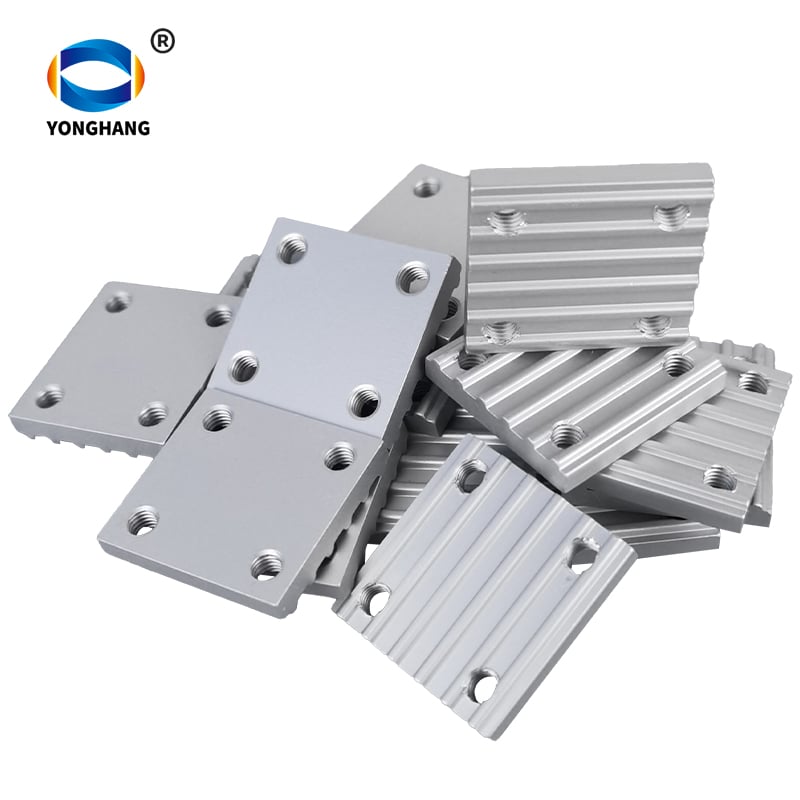
A timing belt clamping plate is a mechanical component designed to secure a timing belt to a machine frame, moving carriage, positioning platform, or other structural component. It is particularly useful in belt-driven linear motion systems where the belt must transfer movement to a designated part of the machine.
Unlike a timing belt pulley, which engages with the belt to transmit rotary motion, a clamping plate provides a mechanical anchoring point. When the plate is correctly matched to the belt and installed according to the equipment design, it helps maintain a stable connection between the belt and the driven component.
For machinery manufacturers, automation integrators, and maintenance engineers, choosing the correct timing belt clamping plate is important for reliable movement, repeatable positioning, and long-term equipment performance.
How Does a Timing Belt Clamping Plate Work?
In a typical belt-driven linear motion system, a timing belt runs around pulleys connected to a drive motor or transmission mechanism. One or both ends of an open-ended timing belt may be secured to a moving carriage or fixed mounting structure, depending on the machine design.
The clamping plate holds the belt at the required location. When the drive system moves the belt, the secured connection transfers the belt's motion to the associated mechanical assembly.
The effectiveness of this connection depends on several factors:
-
Belt compatibility: The plate must match the belt profile, width, and clamping arrangement.
-
Mounting accuracy: The hole positions and plate dimensions must fit the equipment.
-
Clamping force: The connection must hold the belt securely without damaging its structure.
-
Operating conditions: Belt tension, acceleration, payload, and duty cycle must remain within the system's design limits.
A suitable plate is therefore more than a simple fastening accessory. It is part of the overall mechanical interface between the belt and the equipment.
Key Functions of a Timing Belt Clamping Plate
1. Secure Belt Fixation
The primary function of a clamping plate is to anchor the timing belt at a specified point. This is essential when a linear motion system uses a moving belt to position a carriage, transfer unit, or other machine component.
A correctly designed clamping arrangement helps prevent unwanted movement at the connection point.
2. Support Accurate Linear Movement
Automation machinery often requires controlled and repeatable movement. The belt, pulley, clamping plate, and mounting structure must work together to achieve the intended motion.
If the belt slips within the clamp or the mounting arrangement is incorrectly positioned, the equipment may experience positioning errors. Correct component matching helps reduce these risks.
3. Provide a Practical Mounting Interface
A clamping plate connects the timing belt to the mechanical structure of the machine. Depending on the equipment design, the plate may have specific mounting holes, dimensions, or tooth geometry.
This allows engineers to integrate the belt into a wider range of machine configurations without relying solely on improvised fastening methods.
4. Support Equipment Maintenance and Replacement
For existing machinery, a worn, damaged, or incompatible clamping plate can complicate belt replacement. Identifying the original dimensions and belt specifications makes it easier to select a suitable replacement component.
For new machinery, confirming plate dimensions early in the design process can help simplify assembly and future maintenance.
Common Timing Belt Clamping Plate Types and Belt Profiles
Timing belts are manufactured in different tooth profiles, pitches, widths, and constructions. A clamping plate must be selected according to the specific belt and its intended installation method.
The Yonghang Transmission Belt product page lists several profile categories, including:
| Belt profile category | Selection considerations |
|---|---|
| MXL and XL | Confirm the exact pitch, belt width, and compatible clamping design. |
| 2GT and 2M/S2M | Check the specified profile and the plate's tooth or clamping geometry. |
| 3M/S3M | Match the plate to the actual belt series and width. |
| 5M/S5M and 8M/S8M | Verify the belt dimensions and required mounting configuration. |
| 14M | Confirm compatibility with the particular belt and machine requirements. |
| T5/AT5 and T10/AT10 | Distinguish between the required profiles rather than selecting by pitch designation alone. |
| H and L | Check the exact belt standard and the existing machine arrangement. |
These categories are starting points for identification, not interchangeable options. The compatible profile and available width must be confirmed for the particular clamping plate design.
Explore the Yonghang Timing Belt Clamping Plate product page for product details and specification references.
How to Choose the Right Timing Belt Clamping Plate
Choosing the right plate begins with the timing belt itself. The following checks help reduce compatibility problems during installation.
Step 1: Identify the Timing Belt Profile
Check the belt marking, technical drawing, equipment manual, or original purchasing record.
A belt's appearance alone may not be enough to identify its exact tooth profile. Confirm the profile designation and pitch before ordering a replacement plate.
Step 2: Measure the Belt Width
The clamping plate must accommodate the actual belt width and provide the intended contact area.
An undersized or oversized plate may create uneven clamping pressure or fail to fit the mounting arrangement. Record the belt width accurately and compare it with the plate specifications.
Step 3: Confirm the Mounting Dimensions
The profile is only one part of the selection process. The plate must also fit the machine.
Check the following dimensions where applicable:
-
Overall length, width, and thickness
-
Mounting-hole diameter and spacing
-
Hole location relative to the belt
-
Available installation space
-
Required fastener type and clearance
For precision equipment, a dimensioned technical drawing is generally more useful than an unscaled photograph.
Step 4: Consider the Operating Load
The required clamping arrangement depends on the forces generated during operation.
A system that moves a lightweight positioning carriage may have different requirements from one that accelerates a heavier component or operates continuously at high speed.
Consider belt tension, acceleration, payload, operating frequency, and the manufacturer's specified limits when evaluating a design.
Step 5: Confirm Material and Environmental Requirements
Material selection depends on the application. Weight limitations, mechanical loading, moisture, corrosion exposure, temperature, and surrounding conditions may influence the appropriate design.
Do not assume that every clamping plate uses the same material. Confirm the material and any required surface treatment for the specific order.
Step 6: Request a Custom Design When Necessary
Standard configurations may not match every machine. A customized timing belt clamping plate may be considered when the equipment requires special dimensions, hole positions, mounting structures, or belt interfaces.
Providing an existing sample, a technical drawing, or clear photographs with measurements can help the supplier assess the required configuration.
Common Selection Mistakes to Avoid
Choosing by belt width alone: Two belts with the same width can have different profiles or clamping requirements.
Confusing the clamping plate with a pulley: A pulley drives the belt through its engagement with the teeth; a clamping plate secures the belt to a designated structure.
Ignoring hole positions: A plate with the correct belt interface may still be unsuitable if its mounting holes do not match the machine.
Overlooking operating loads: The connection must be appropriate for the actual force, acceleration, and duty cycle.
Ordering without dimensional confirmation: Checking the original component or technical drawing can help prevent costly installation errors.
Where Are Timing Belt Clamping Plates Used?
Linear Motion Systems
Belt-driven slides, positioning axes, transfer units, and moving platforms often require a defined connection between the belt and carriage.
Industrial Automation
Automated equipment uses timing belt drives for controlled movement between workstations and mechanical assemblies. The clamping plate provides the required belt-to-structure connection where the design calls for one.
Packaging Machinery
Packaging equipment may use belt-driven systems to move products, position components, and coordinate machine operations. The correct clamp design depends on the specific mechanism.
Conveyor and Transfer Equipment
In selected transfer systems, timing belts move fixtures, carriers, or other components between positions. A suitable clamping arrangement helps establish the intended mechanical connection.
Custom Machinery
Special-purpose equipment may require non-standard belt interfaces and mounting dimensions. In such cases, drawings and application requirements can guide component selection.
Frequently Asked Questions
What is the main purpose of a timing belt clamping plate?
Its primary purpose is to secure a timing belt to a designated part of a machine, such as a moving carriage or mounting structure, so the belt can transfer motion as intended.
Can one clamping plate fit different timing belt profiles?
Not necessarily. The belt profile, pitch, width, and clamping geometry must be compatible. Confirm the exact specification before using a plate with a different belt.
Can timing belt clamping plates be customized?
Custom configurations may be possible depending on the design requirements. Relevant information includes belt profile, belt width, overall dimensions, hole positions, material requirements, and the intended application.
What information should I provide when requesting a quotation?
Provide the belt profile, width, required plate dimensions, mounting-hole details, material requirements if specified, application, order quantity, and a drawing or sample where available.
Does a clamping plate replace the need for correct belt tension?
No. The clamping plate secures the belt according to the machine design. Belt tension must be established and maintained using the equipment's specified tensioning arrangement.
Conclusion
Selecting the correct timing belt clamping plate requires more than matching a single dimension. Belt profile, width, mounting geometry, operating load, and environmental conditions all influence compatibility.
By checking these details before purchasing, machinery manufacturers and maintenance teams can reduce installation problems and support more reliable belt-driven motion.
Yonghang Transmission Belt supplies industrial belt solutions and related components for different machine configurations. Visit the Timing Belt Clamping Plate product page to review the product information or contact the team with your belt specifications and drawings to discuss a suitable solution.
Table of Contents
- How Does a Timing Belt Clamping Plate Work?
- Key Functions of a Timing Belt Clamping Plate
- Common Timing Belt Clamping Plate Types and Belt Profiles
- How to Choose the Right Timing Belt Clamping Plate
- Common Selection Mistakes to Avoid
- Where Are Timing Belt Clamping Plates Used?
- Frequently Asked Questions
- Conclusion