
 EN
EN
 AR
AR
 HR
HR
 DA
DA
 NL
NL
 FR
FR
 DE
DE
 EL
EL
 HI
HI
 IT
IT
 JA
JA
 KO
KO
 NO
NO
 PL
PL
 PT
PT
 RO
RO
 RU
RU
 ES
ES
 TL
TL
 IW
IW
 ID
ID
 SR
SR
 SK
SK
 UK
UK
 VI
VI
 TH
TH
 TR
TR
 AF
AF
 MS
MS
 IS
IS
 HY
HY
 AZ
AZ
 KA
KA
 BN
BN
 LA
LA
 MR
MR
 MY
MY
 KK
KK
 UZ
UZ
 KY
KY
In the world of high-temperature industrial manufacturing, your choice of conveyor belt can mean the difference between seamless productivity and costly, unexpected downtime. Industrial processing lines—ranging from textile drying to electronics curing—subject equipment to a brutal combination of extreme heat, intense chemical exposure, and continuous physical tension.
For decades, facilities relied on standard fiberglass belts or traditional metal wire mesh. However, as production speeds accelerate and precision requirements tighten, these legacy materials are hitting their limits. Fiberglass stretches and tears under high loads, while heavy metal mesh consumes excessive energy and risks marking delicate products.
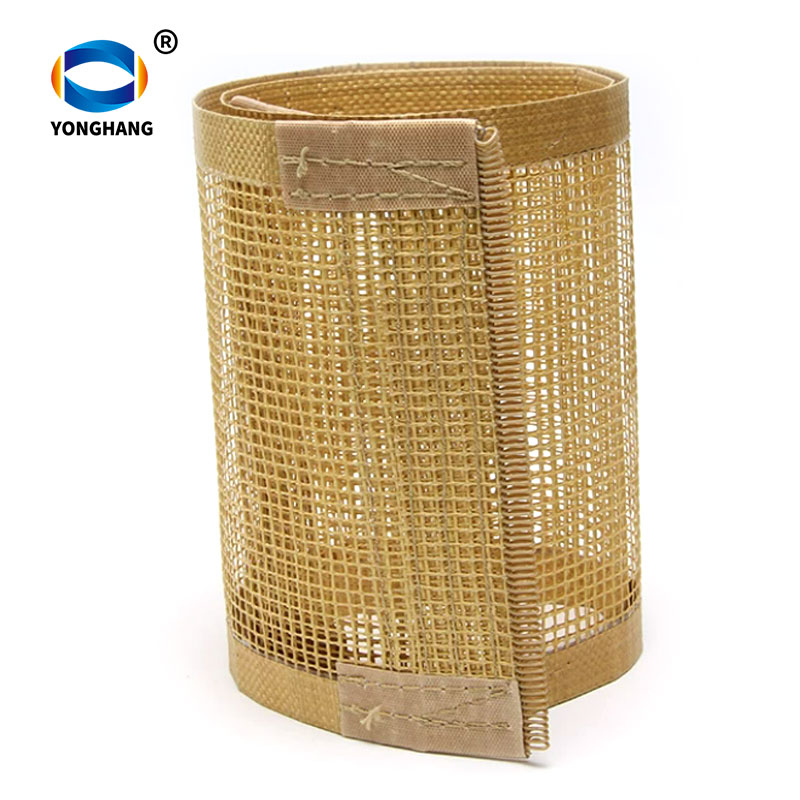
The modern answer to these engineering bottlenecks is the PTFE Kevlar Conveyor Mesh Belt. By combining the unparalleled tensile strength of aramid fibers with the ultra-smooth, non-stick properties of Teflon, this advanced belting solution sets a new benchmark for thermal processing performance.
The Anatomy of Power: Understanding the Teflon-Kevlar Matrix
What makes these mesh belts so resilient? The secret lies in their composite construction. The core matrix is woven from high-modulus Kevlar (aramid) fibers, which are then meticulously coated with high-grade PTFE (polytetrafluoroethylene).
Take a professional-grade model like the Model 6010 from leading manufacturers:
-
Mesh Window Size: 4mm x 4mm open mesh, highly optimized for maximum airflow and rapid moisture evaporation.
-
Extreme Tensile Strength: Rated at 3500/3300N per 5cm, providing immense load-bearing capacity under high tension.
-
Vast Temperature Envelope: Maintains flawless structural integrity across extreme temperatures, ranging from -70°C to +260°C.
This unique combination creates a lightweight yet rugged conveyor belt that remains completely dimensionally stable under intense thermal and physical stress.
Kevlar vs. Traditional Materials: Why It’s Time to Upgrade
1. Outperforming Standard Glass Fiber
While fiberglass open mesh belts are suitable for standard thermal applications, they often fail under heavy loads or sudden high tension. Over time, fiberglass tends to stretch, warp, and suffer from tracking misalignment. PTFE-coated Kevlar, on the other hand, possesses a much higher mechanical modulus. It delivers vastly superior puncture, tear, and abrasion resistance, completely eliminating belt elongation and significantly extending its active service life.
2. A Superior Alternative to Metal Wire Mesh
Traditional metal mesh belts are heavy, cumbersome, and inherently abrasive. They place an immense strain on conveyor motors, leading to higher energy consumption and accelerated equipment wear. Furthermore, metal can scratch or mark delicate products—a critical flaw in high-precision industries. A PTFE Kevlar belt acts as a lightweight, non-marking replacement. It protects your products from damage while decreasing operational and maintenance costs.
Key Performance & Value Highlights
-
Ultimate Non-Stick Surface: The premium Teflon coating ensures that chemical residues, sticky adhesives, and food particles release effortlessly, reducing cleanup times and preventing buildup.
-
Excellent Chemical & Moisture Resistance: Fully waterproof and immune to most corrosive industrial chemicals, acids, and alkalis.
-
Energy Efficiency: Due to its lightweight composition, it requires less torque to drive, directly lowering your facility's energy bills and reducing motor wear.
-
Customizable Integration: Universally adaptable with various professional splice options (such as Castellated, Clipper, PEEK Spiral, or Alligator splices) to ensure smooth tracking on any machinery setup.
Cross-Industry Optimization: Where It Excels
Thanks to its versatile performance profile, the PTFE Kevlar conveyor mesh belt is universally compatible with rigorous industrial machinery across multiple sectors:
-
Textile & Apparel: Highly effective for continuous flat-bed dryers, garment shrink-setting, flocking production lines, and garment fusing machines.
-
Electronics Manufacturing: Perfect for high-precision PCB (Printed Circuit Board) drying ovens and infrared curing tunnels where tracking errors must be avoided.
-
Printing & Packaging: Widely used in high-heat screen printing dryers and packaging lamination lines.
-
Industrial Food Processing: Excellent for continuous dehydration, baking, and drying lines, offering a clean, food-safe, and temperature-resistant transport medium.
Conclusion: A Smart Investment in Efficiency
Upgrading to a high-performance PTFE Kevlar conveyor mesh belt is more than just buying a replacement part—it is a strategic decision to optimize your production throughput. By preventing belt stretching, ensuring flawless tracking, and eliminating product marking, this advanced belting technology minimizes maintenance downtime and maximizes product quality.
If your facility demands flawless execution under high tension and intense heat, making the switch to a Teflon-Kevlar core matrix is the ultimate way to future-proof your operations.