
 EN
EN
 AR
AR
 HR
HR
 DA
DA
 NL
NL
 FR
FR
 DE
DE
 EL
EL
 HI
HI
 IT
IT
 JA
JA
 KO
KO
 NO
NO
 PL
PL
 PT
PT
 RO
RO
 RU
RU
 ES
ES
 TL
TL
 IW
IW
 ID
ID
 SR
SR
 SK
SK
 UK
UK
 VI
VI
 TH
TH
 TR
TR
 AF
AF
 MS
MS
 IS
IS
 HY
HY
 AZ
AZ
 KA
KA
 BN
BN
 LA
LA
 MR
MR
 MY
MY
 KK
KK
 UZ
UZ
 KY
KY
In the woodworking and furniture manufacturing industry, precision is everything. Whether you are laminating panels, applying veneers, or running a high-speed edge banding line, the way materials are transported through your machinery directly impacts the quality of your final product.
One critical but often overlooked component in this process is the conveyor system, specifically inside the woodworking adhesive application machine (glue spreaders or coating machines). To achieve a flawless, uniform adhesive layer without material slippage, standard smooth belts often fall short. That is where the PVC conveyor belt with small cleats becomes an absolute game-changer.
The Role of Conveyor Belts in Woodworking Glue Spreaders
Woodworking adhesive application machines demand a high level of stability. When wooden boards, MDF, or plywood sheets pass under the gluing rollers, they experience significant mechanical pressure and shear force.
If the conveyor belt cannot firmly grip the wooden substrate, the board will micro-slip. This results in:
-
Uneven Glue Distribution: Patches of excess glue alongside dry spots.
-
Product Defects: Poor bonding strength, leading to delamination later in the product's lifecycle.
-
Machine Jams: Boards misaligning and causing downtime on the production line.
Standard belts lack the surface structure to counteract the lubricating effect of accidental glue spills or the sheer weight of heavy timber. A specialized surface profile is required to maintain absolute control.
Why Choose a PVC Conveyor Belt with Small Cleats?
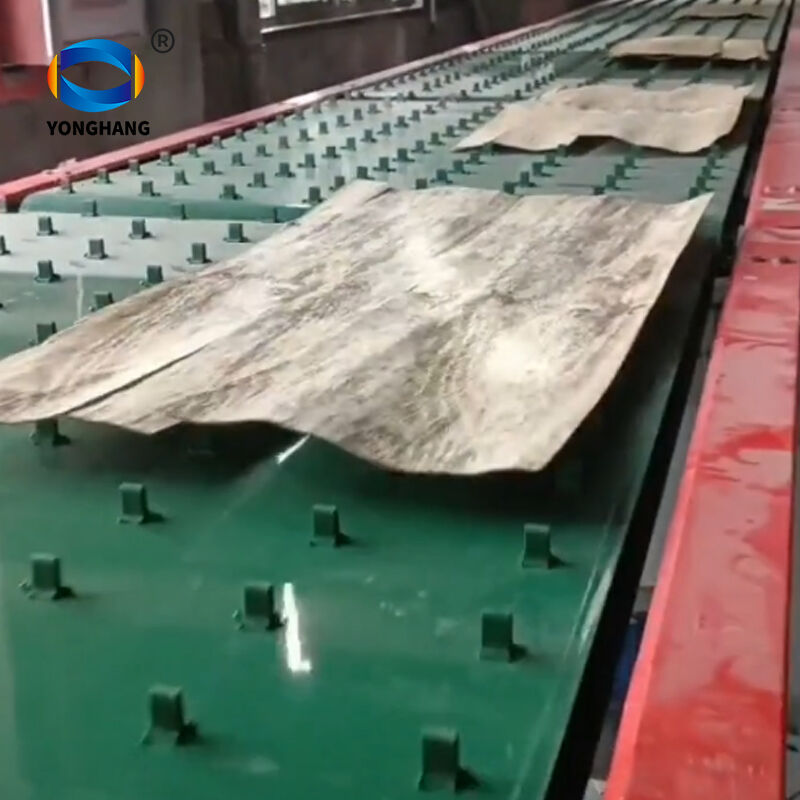
As seen in industrial manufacturing setups like the one featured in Picture , integrating precisely molded profiles—or small cleats—onto the belt surface solves these transport challenges.
1. Superior Slip Resistance and Mechanical Grip
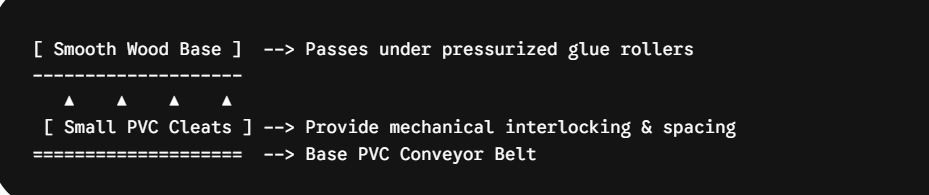
The small cleats acts as tiny driving teeth or stabilizers. Instead of relying purely on friction (which drops drastically if wood dust or liquid adhesive gets onto the belt), the cleats provide a mechanical stop. They physically prevent the wooden panels from shifting backward or sliding sideways as they engage with the heavy adhesive rollers.
2. Excellent Chemical and Adhesive Resistance
PVC (Polyvinyl Chloride) is highly resilient against the diverse types of adhesives used in woodworking, including:
-
PUR (Polyurethane hot melt)
-
PVAc (Polyvinyl acetate / white glue)
-
Urea-formaldehyde resins
PVC formulas can be engineered to resist oil, grease, and chemical solvents, making it incredibly easy to clean off dried glue residues without degrading the belt material.
3. Preventing Vacuum Lock and Facilitating Release
When a flat, smooth wooden board is pressed tightly against a completely flat conveyor belt with wet glue in between, it can create a strong vacuum effect. This makes it difficult for the board to cleanly separate from the belt at the discharge end. The small cleats elevate the workpiece slightly, breaking the surface tension, minimizing contact area where glue might stray, and allowing for a smooth, seamless transfer to the next stage of the assembly line.
Key Technical Specifications to Consider
When sourcing or customizing a cleated PVC conveyor belt for your woodworking machinery, pay close attention to these technical parameters:
| Feature | Recommended Specification | Benefit |
| Base Material | High-grade industrial PVC | Oil, chemical, and abrasion resistance |
| Cleat Shape | Small T-cleats or low-profile studs | Firm grip without marking the wooden surface |
| Cleat Pitch/Spacing | Customized based on minimum workpiece length | Ensures at least 2–3 rows of cleats support every board |
| Joint Type | Thermoplastic hot-spliced / Finger joint | Creates a seamless, endless loop with zero thickness variation |
Maintenance Tips for Cleated Belts in Gluing Environments
To extend the lifespan of your cleated conveyor belt and maintain 100% operational efficiency, implement these maintenance best practices:
Regular Scraping and Cleaning
Install specialized belt scrapers designed to navigate between the rows of small cleats. Cleaning the belt while the adhesive is still wet—or using approved release agents—prevents hardened glue chunks from building up, which could otherwise dent or scratch incoming wooden panels.
Correct Tensioning
Because cleated belts carry structured mechanical loads, ensuring precise tracking and correct tension is vital. Over-tensioning can stress the fabric carcass beneath the PVC layers, while under-tensioning can cause the belt to jump on the drive pulley.
Conclusion
Investing in a high-quality PVC conveyor belt with small cleats is one of the most cost-effective upgrades you can make to your woodworking adhesive application machine. By replacing a standard smooth belt with a customized profile design, you instantly eliminate slippage, guarantee uniform glue application, and protect your materials from costly defects.
For factories looking to optimize their output, choosing a belt with rugged, cleanly welded cleats ensures your production line runs smoothly, shift after shift.