
 EN
EN
 AR
AR
 HR
HR
 DA
DA
 NL
NL
 FR
FR
 DE
DE
 EL
EL
 HI
HI
 IT
IT
 JA
JA
 KO
KO
 NO
NO
 PL
PL
 PT
PT
 RO
RO
 RU
RU
 ES
ES
 TL
TL
 IW
IW
 ID
ID
 SR
SR
 SK
SK
 UK
UK
 VI
VI
 TH
TH
 TR
TR
 AF
AF
 MS
MS
 IS
IS
 HY
HY
 AZ
AZ
 KA
KA
 BN
BN
 LA
LA
 MR
MR
 MY
MY
 KK
KK
 UZ
UZ
 KY
KY
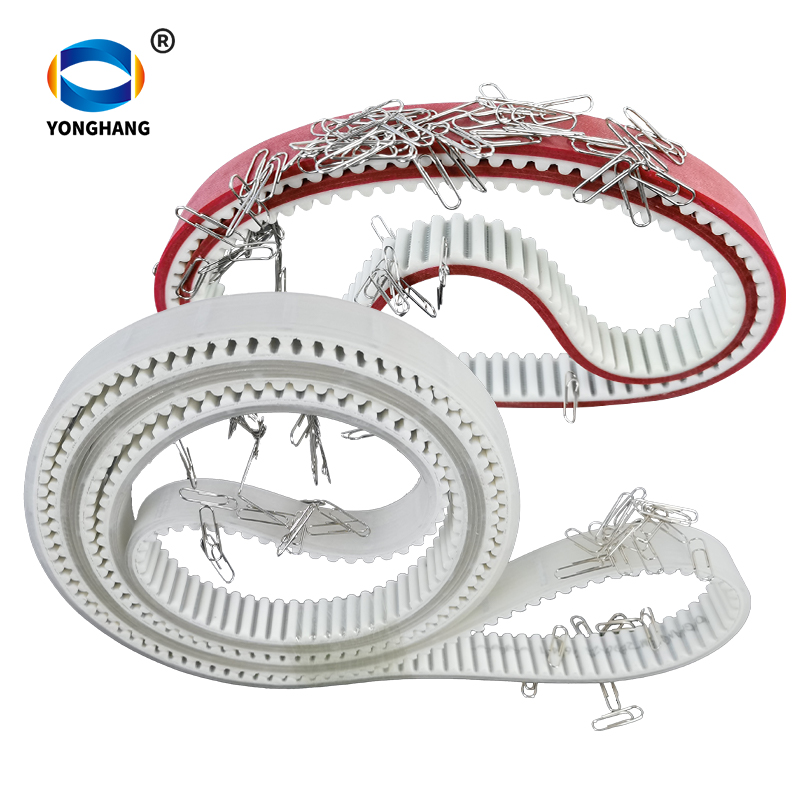
In an era where production lines run at hundreds of cycles per minute and a single misaligned component can trigger an entire shift of rework, the way machines detect, track, and position products has become a critical competitive differentiator. Traditional approaches—external proximity sensors mounted on frames, mechanical flags, or vision systems that demand careful lighting calibration—each introduce their own points of failure, complexity, and cost.
Embedded magnetic timing belts represent a fundamentally different philosophy. Instead of adding sensing as an afterthought, the sensing capability is built directly into the belt itself. Permanent magnets are precision-embedded into the body of a high-strength polyurethane timing belt, allowing the belt to communicate its exact position—and, in some configurations, to actively hold the products it carries—through non-contact interaction with Hall effect sensors or reed switches.
This guide explores how this technology works, the two primary configurations available (standard embedded magnetic belts and red-rubber-coated variants), and how engineers can specify the right solution for their automation challenges.
What Exactly Is an Embedded Magnetic Timing Belt?
At its core, an embedded magnetic timing belt is a thermoplastic polyurethane (PU) timing belt—typically 92 Shore A hardness—reinforced with high-tensile steel, Kevlar, or stainless steel cords, into which permanent magnets have been precisely installed. The magnets sit in CNC-milled pockets, ensuring their surfaces are flush with (or recessed below) the belt's back or tooth face, so they never interfere with pulley or roller contact.
The result is a single component that performs three functions simultaneously: mechanical power transmission (via the timing belt tooth profile), positional feedback (via the embedded magnets triggering external sensors), and—when a rubber coating is added—enhanced product conveying with superior traction.
How the Technology Works: From Magnet to Signal
Understanding the engineering behind these belts helps clarify why they outperform conventional sensing setups in so many applications.
1. CNC-Precision Magnet Embedding
Each magnet is placed in a pocket milled by CNC equipment, achieving a positioning accuracy of ±0.05 mm. This level of precision means that the distance between consecutive magnets—and therefore the positional resolution of the system—remains consistent along the entire belt length. The magnets are then hermetically sealed using a secondary vulcanization process or high-strength industrial adhesives, protecting them from oils, moisture, and industrial debris.
2. Zero-Stretch Reinforcement
The belt's tension member—steel cord, Kevlar cord, or stainless steel—ensures that even under high-load and high-speed operation, the belt does not elongate. This is critical because any stretch would shift the magnet positions relative to the sensors, degrading positional accuracy over time. The reinforcement also extends belt life and reduces maintenance intervals.
3. Non-Contact Sensing
As each embedded magnet passes a Hall effect sensor or reed switch mounted near the belt path, it triggers a clean electrical signal. Because there is no physical contact, there is no wear on the sensing components, no mechanical backlash, and no risk of contamination transfer—making the system suitable for cleanroom, medical, and food-adjacent environments.
4. Customizable Magnetic Polarity and Strength
Magnets can be configured with alternating North/South polarity or consistent patterns, and the magnetic field strength (measured in Gauss) can be matched to the sensitivity of the sensors being used. Neodymium (NdFeB) magnets offer high field strength in compact sizes, while ferrite magnets provide a cost-effective option for less demanding applications. Magnet shapes—disc, rectangular, or cylindrical—are selected based on the available belt cross-section and the desired field pattern.
Two Configurations, One Engineering Platform
Yonghang offers two primary configurations of embedded magnetic timing belts, each optimized for a distinct set of application requirements.
Standard Embedded Magnetic Timing Belts
The standard configuration is designed primarily for precision positioning and automated sensing. The embedded magnets serve as positional markers that the machine's control system uses to determine exact belt location, trigger actions at specific points in the cycle, or verify that components are present and correctly indexed.
This configuration is ideal when the belt's primary role is synchronous power transmission with integrated feedback—think of a packaging machine that needs to fire a sealing bar at an exact moment, or a robotic linear actuator that requires non-contact home-positioning and limit sensing. The belt's PU surface remains exposed, offering the standard durability and chemical resistance of thermoplastic polyurethane.
Embedded Magnetic Timing Belts with Red Rubber Coating
The red rubber coating variant adds a high-friction rubber layer to the belt's conveying surface, transforming it from a positioning component into a full-featured conveying solution. The red rubber coating serves three purposes:
- Enhanced traction: The high-friction surface prevents product slippage, even on inclined conveyors or during rapid acceleration and deceleration.
- Product cushioning: The rubber layer absorbs minor impacts and vibrations, protecting delicate or surface-sensitive products during transport.
- Magnetic holding: The embedded magnets actively attract and secure ferrous components, combining mechanical grip with magnetic retention for metal parts that might otherwise shift or slide.
This configuration is particularly valuable in metal processing, sheet metal handling, and automated sorting systems where products are ferrous and the conveying surface must provide both traction and positive holding. The coating thickness and rubber hardness can be customized to match the product weight, conveying speed, and environmental conditions.
Side-by-Side: Which Configuration Fits Your Application?
|
Criterion |
Standard Embedded Magnetic Belt |
Red Rubber Coated Magnetic Belt |
|
Primary Function |
Positioning & sensing |
Conveying, holding & positioning |
|
Surface |
Exposed PU (92 Shore A) |
Red rubber coating (custom hardness) |
|
Product Traction |
Standard PU friction |
High-friction, anti-slip |
|
Ferrous Part Holding |
No (magnets for sensing only) |
Yes (active magnetic retention) |
|
Ideal For |
Packaging, lab automation, robotics |
Metal handling, sorting, inclined conveying |
|
Coating Customization |
N/A |
Thickness, hardness, surface pattern |
Technical Specifications at a Glance
|
Feature |
Specification |
|
Base Belt Profiles |
T5, T10, AT5, AT10, 5M, 8M, XL, L (others available on request) |
|
Belt Material |
Thermoplastic Polyurethane (PU) — 92 Shore A |
|
Magnet Type |
Neodymium (NdFeB) / Ferrite |
|
Magnet Shapes |
Disc, Rectangular, or Cylindrical |
|
Embedding Depth |
Flush with surface / Recessed / Sub-surface |
|
Positioning Accuracy |
±0.05 mm (CNC controlled) |
|
Magnetic Polarity |
N/S alternating or consistent N/S patterns |
|
Reinforcement |
Steel Cord / Kevlar Cord / Stainless Steel |
|
Operating Temperature |
-20°C to +80°C (special high-temp grades available) |
Where These Belts Make a Difference: Real-World Applications
Automated Sorting Systems
In high-speed parcel and component sorting, every millisecond counts. Embedded magnetic timing belts provide the control system with real-time positional data, allowing diverters and pushers to act at precisely the right moment. The red rubber coating variant adds the traction needed to keep products stable during the rapid acceleration and deceleration cycles that characterize modern sorting equipment.
Medical and Laboratory Automation
Sample trays, vial racks, and diagnostic cartridges must be positioned with micron-level accuracy. The non-contact nature of magnetic sensing eliminates particulate generation, while the sealed magnet construction resists cleaning agents and disinfectants. Standard embedded magnetic belts are widely used in clinical chemistry analyzers, liquid handling platforms, and automated histology systems.
Packaging Machinery
Multi-stage filling and sealing lines demand tight synchronization between conveyors, filling nozzles, and sealing heads. Embedded magnets provide the positional feedback that ensures each container arrives at each station at the correct angle and position. The result is reduced scrap, fewer line stops, and consistent seal quality.
Metal Processing and Sheet Metal Handling
For stamped components, metal sheets, and machined parts, the red rubber coated magnetic belt is a game-changer. The embedded magnets hold ferrous workpieces securely against the belt surface—even on inclines—while the rubber coating prevents scratching and provides additional friction. This combination is increasingly used in press-feeding systems, metal stamping lines, and automated welding cell material handling.
Robotic Linear Actuators and Smart Conveyors
In robotic systems, non-contact home-positioning and limit sensing via embedded magnets eliminate the need for external sensor brackets and wiring runs. The belt itself becomes the encoder, simplifying machine design and reducing the number of components that can fail.
Customization: Engineering a Belt for Your Specific Machine
No two automation systems are identical, and a one-size-fits-all belt rarely delivers optimal performance. Yonghang engineers embedded magnetic timing belts around the specific requirements of each application, with customization across the following dimensions:
- Timing belt profile and pitch: T5, T10, AT5, AT10, 5M, 8M, XL, L, or custom profiles.
- Belt width and length: Cut to exact machine dimensions, with endless or open-ended options.
- Magnet layout: Position, spacing, polarity pattern, and field strength tailored to sensor configuration and application needs.
- Reinforcement type: Steel cord for high tensile strength, Kevlar for non-magnetic applications, or stainless steel for corrosion resistance.
- Red rubber coating (optional): Customizable thickness, hardness (Shore A), and surface pattern for optimal product grip.
- Special grades: High-temperature formulations, anti-static constructions, and food-contact compliant materials where required.
Customers can provide drawings, dimensions, or detailed application descriptions, and Yonghang's engineering team will recommend the optimal configuration—including magnet type, arrangement, and coating specification—for the specific machine and operating conditions.
Frequently Asked Questions
How does an embedded magnetic timing belt differ from a standard timing belt with external sensors?
A standard timing belt relies on externally mounted sensors that detect marks, holes, or attachments on the belt or the products it carries. An embedded magnetic timing belt has the sensing elements built directly into its structure, providing a cleaner, more compact, and more durable solution with no external markers to wear, loosen, or fall off. The positional accuracy is also higher because the magnets are CNC-placed to ±0.05 mm and held in a zero-stretch reinforced belt body.
Can the magnetic force be adjusted for different products?
Yes. The magnetic holding force depends on the magnet type (NdFeB vs. ferrite), magnet size and arrangement, the distance between the magnet and the product, and the product's material properties. Yonghang configures the magnetic layout based on the specific application—including product weight, conveying speed, and contact distance—to ensure reliable holding without excessive force that could complicate product release.
What are the advantages of the red rubber coating?
The red rubber coating provides a high-friction conveying surface that prevents product slippage, particularly in inclined conveying or rapid acceleration scenarios. It also cushions products to minimize impact damage and surface scratching. When combined with embedded magnets, the coating allows the belt to actively hold ferrous components while maintaining the precise synchronous movement of a timing belt. The coating thickness and hardness can be customized for the specific product and operating environment.
What materials can the red rubber coated magnetic belt convey?
The belt is designed primarily for ferrous metal components—steel parts, metal sheets, stamped components, and other magnetic materials—where the embedded magnets provide active holding. However, the high-friction rubber surface also works effectively for non-ferrous products that require enhanced traction, such as cartons, packages, and plastic containers, where the magnetic elements serve a positional sensing role rather than a holding role.
What is the operating temperature range?
Standard embedded magnetic timing belts operate from -20°C to +80°C. For applications requiring higher temperature resistance—such as ovens, curing tunnels, or hot-fill packaging lines—special high-temperature grades are available. It is important to note that magnet performance can degrade at extreme temperatures, so the appropriate magnet grade and belt material must be selected based on the actual operating conditions.
How do I specify a custom embedded magnetic timing belt?
Provide Yonghang with your machine's timing belt profile and pitch, belt width and length, application details (what is being conveyed or positioned, conveying speed, environmental conditions), and any sensor specifications. Drawings or dimensional sketches are particularly helpful. The engineering team will then recommend the optimal magnet type, layout, reinforcement, and coating configuration for your application.
Conclusion: Integrating Sensing, Transmission, and Conveying in One Belt
Embedded magnetic timing belts represent a convergence of three traditionally separate functions—mechanical power transmission, positional sensing, and product conveying—into a single, engineered component. For machine builders and automation engineers, this means simpler designs, fewer components, higher reliability, and tighter positional accuracy.
Whether your application demands pure precision positioning (standard embedded magnetic belts) or a combination of magnetic holding, high-friction conveying, and synchronous transmission (red rubber coated variant), the key is to work with a manufacturer that can engineer the belt around your specific machine requirements rather than forcing you to adapt your machine to a catalog product.
Yonghang specializes in custom power transmission and conveyor belt solutions for industrial automation. With CNC-precision magnet embedding, a full range of timing belt profiles, and customizable rubber coating options, Yonghang can develop an embedded magnetic timing belt that matches the exact needs of your application—from medical lab automation to high-speed metal processing.
Ready to explore how an embedded magnetic timing belt can improve your machine's performance? Contact Yonghang for a custom quote and engineering consultation.
Table of Contents
- What Exactly Is an Embedded Magnetic Timing Belt?
- How the Technology Works: From Magnet to Signal
- Two Configurations, One Engineering Platform
- Side-by-Side: Which Configuration Fits Your Application?
- Technical Specifications at a Glance
- Where These Belts Make a Difference: Real-World Applications
- Customization: Engineering a Belt for Your Specific Machine
-
Frequently Asked Questions
- How does an embedded magnetic timing belt differ from a standard timing belt with external sensors?
- Can the magnetic force be adjusted for different products?
- What are the advantages of the red rubber coating?
- What materials can the red rubber coated magnetic belt convey?
- What is the operating temperature range?
- How do I specify a custom embedded magnetic timing belt?
- Conclusion: Integrating Sensing, Transmission, and Conveying in One Belt