
 EN
EN
 AR
AR
 HR
HR
 DA
DA
 NL
NL
 FR
FR
 DE
DE
 EL
EL
 HI
HI
 IT
IT
 JA
JA
 KO
KO
 NO
NO
 PL
PL
 PT
PT
 RO
RO
 RU
RU
 ES
ES
 TL
TL
 IW
IW
 ID
ID
 SR
SR
 SK
SK
 UK
UK
 VI
VI
 TH
TH
 TR
TR
 AF
AF
 MS
MS
 IS
IS
 HY
HY
 AZ
AZ
 KA
KA
 BN
BN
 LA
LA
 MR
MR
 MY
MY
 KK
KK
 UZ
UZ
 KY
KY
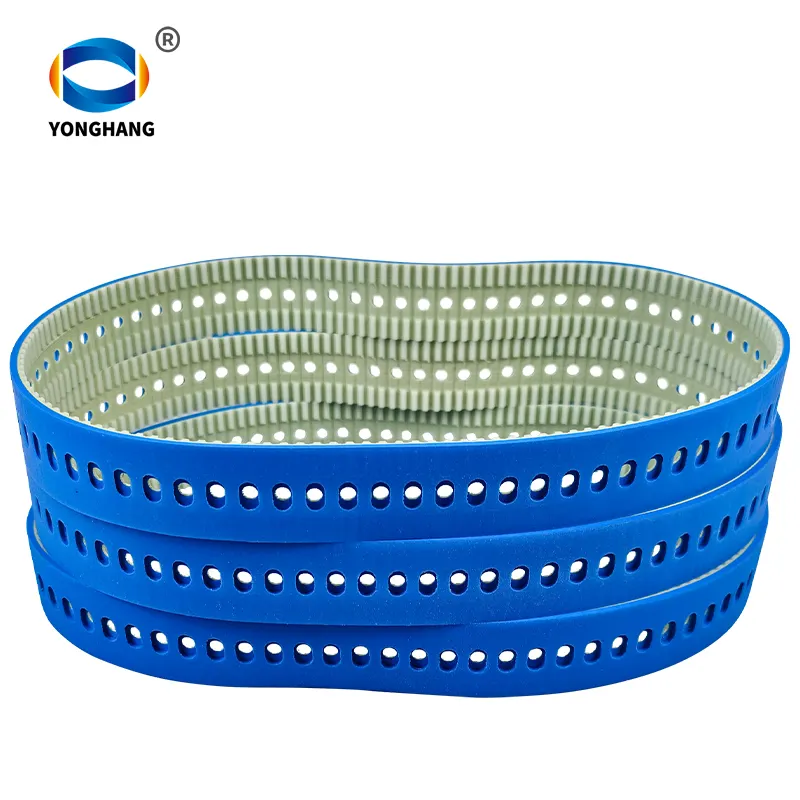
Dimensional Stability and Low Elongation for Consistent Positioning
How PU's inherent rigidity minimizes elastic deformation under dynamic load
Polyurethane timing belts keep things aligned in precision transmission systems because of how their molecules are arranged, which makes them really good at resisting stretch when loads change suddenly. Rubber just doesn't compare since PU has this thermoplastic rigidity that stops backlash problems when servo systems start and stop under heavy torque. Tests in real industrial settings show these PU belts stay engaged with teeth deviations no more than 0.05 mm even when hit with 500 Newton load spikes. That kind of stability matters a lot for CNC machines and robots doing pick and place tasks, where small position errors can ruin entire batches of parts. Manufacturers have seen firsthand how critical this level of consistency is for maintaining tight tolerances in production runs.
Empirical elongation data: <0.1% for PU vs. 0.5–1.2% for CR/neoprene at rated tension
When kept under constant 20 kgf tension for 1,000 hours straight, PU timing belts show almost no permanent stretch at less than 0.1%. Compare that to chloroprene (CR) or neoprene belts which can stretch between 0.5% and 1.2% under the same conditions. The difference really adds up over time. Take a standard 1 meter conveyor system as an example. After running for months, those CR belts might have developed around 12 mm of slack, whereas PU belts stay synchronized down to fractions of a millimeter throughout their lifespan. For maintenance teams, this means far fewer headaches with belt adjustments and replacements since the PU belts just keep performing consistently without needing regular tightening.
Tooth Profile Integrity and Synchronization Accuracy in High-Demand Motion Control
PU's resistance to tooth shear and profile distortion during high-frequency reversal
The way PU molecules stick together lets it keep its exact tooth shape even when moving back and forth really fast, which is super important for stuff where acceleration can hit over 50 meters per second squared. Rubber materials tend to squish out at the base of their teeth when pushed too hard, but PU stays strong enough to stop tiny slips and angle changes. When we look at actual applications like those fancy servo-controlled optical alignment systems, this makes all the difference. Regular rubber belts usually let things drift about 0.1 degrees, messing up the whole beam path and throwing off calibration across the entire system. With PU, manufacturers get much better stability without having to constantly recalibrate everything.
Real-world precision gain: 3D printer X-axis error reduced from ±12 µm (rubber) to ±3.2 µm (PU)
Additive manufacturing validation demonstrates PU's measurable impact on motion fidelity:
| Material | Positional Error (µm) | Tension Loss (%) |
|---|---|---|
| Rubber | ±12.0 | 8.2 |
| PU Timing Belt | ±3.2 | 0.7 |
The 73% reduction in positional error stems from PU’s minimal tension decay and near-zero micro-slip during micro-stepping. In CNC laser engraving, this enables ±0.005 mm repeatability over 10 cycles—meeting the sub-micron registration demands of semiconductor wafer processing.
Operational Reliability of PU Timing Belt in Sensitive and Harsh Environments
Low-noise, low-pre-tension operation for vibration-critical applications (e.g., laser cutters, metrology stages)
Polyurethane timing belts run quieter than 65 decibels even when working at maximum capacity, which makes them great choices for places where both sound and machine vibrations need to stay low. These belts are stiffer naturally so they can sync properly with only about 30 percent less tension compared to regular rubber belts. This means less strain on bearings and fewer annoying vibrations throughout the system. Semiconductor manufacturers who handle delicate wafers and companies operating laser equipment benefit greatly from this feature. The damping effect actually reduces positioning errors by around 40 percent in these applications. Plus, because PU has consistent material properties throughout, it soaks up those pesky harmonics that would normally mess with feedback systems in high precision motion control setups.
Oil and fat resistance extends service life in automated conveyors with lubricated guides
The way PU is built at the molecular level gives it natural resistance against things like hydrocarbons, animal fats, and those industrial lubricants that tend to get everywhere in food processing areas and car manufacturing systems. When tested after sitting in ISO VG 32 hydraulic oil for 500 straight hours, PU keeps around 98% of what makes it strong; regular rubber? It basically falls apart, down to only 35%. Because of this protection from breakdown, PU doesn't swell up or warp teeth in those guides that run on lubrication, which means parts last way longer – talking about around 15,000 hours of actual operation time. Real world results show bottling facilities are replacing these components 60% less often now, which cuts down on repair bills and stops those annoying production halts that happen when something breaks unexpectedly.
PU Timing Belt vs. Traditional Rubber: A Precision-Driven Performance Comparison
For applications where exact movement matters most, polyurethane or PU timing belts beat out regular rubber options in several key ways. The thing about PU is how stable it stays dimensionally. When stretched to its working tension, PU only stretches about 0.1%, which makes it anywhere from five to twelve times better than rubber's typical 0.5 to 1.2% stretch rate. This means machines can maintain their position accurately without any play or slack in the system. Another big plus? PU keeps its teeth shape intact even when moving back and forth rapidly something rubber just can't handle without losing sync over time. Put PU into gritty workspaces and it lasts three times longer than rubber would. Plus, PU doesn't react badly to oils and greases like rubber does, so no worrying about expansion or early breakdown from lubricants. And lets not forget the noise factor either. PU runs noticeably quieter too around 15 to 20 decibels down compared to similar rubber belts. All these benefits together cut down on positioning mistakes by more than 70% in critical operations such as computer numerical control machining or delicate semiconductor manufacturing processes. No wonder so many industries have made the switch to PU for those super fine movements measured in micrometers.
Frequently Asked Questions (FAQ)
Why are PU timing belts preferred over rubber in precision applications?
PU timing belts offer superior dimensional stability and minimal elongation, which means they maintain accuracy under tension. This makes them more reliable than rubber belts for applications requiring precise positioning.
How does PU's tooth profile integrity benefit high-demand motion control?
PU's structure ensures its teeth maintain their shape even under high-frequency reversals, reducing slipping and maintaining synchronization accuracy, which is crucial for tasks like CNC machining and 3D printing.
Are PU belts resistant to harsh environments?
Yes, PU belts are resistant to various environmental factors, including oils, fats, and exposure to lubricated guides, making them ideal for tough industrial settings.
What are the noise levels for PU belts compared to rubber belts?
PU belts run quieter, often by 15 to 20 decibels, compared to rubber belts.
Table of Contents
- Dimensional Stability and Low Elongation for Consistent Positioning
- Tooth Profile Integrity and Synchronization Accuracy in High-Demand Motion Control
- Operational Reliability of PU Timing Belt in Sensitive and Harsh Environments
- PU Timing Belt vs. Traditional Rubber: A Precision-Driven Performance Comparison
- Frequently Asked Questions (FAQ)