
 EN
EN
 AR
AR
 HR
HR
 DA
DA
 NL
NL
 FR
FR
 DE
DE
 EL
EL
 HI
HI
 IT
IT
 JA
JA
 KO
KO
 NO
NO
 PL
PL
 PT
PT
 RO
RO
 RU
RU
 ES
ES
 TL
TL
 IW
IW
 ID
ID
 SR
SR
 SK
SK
 UK
UK
 VI
VI
 TH
TH
 TR
TR
 AF
AF
 MS
MS
 IS
IS
 HY
HY
 AZ
AZ
 KA
KA
 BN
BN
 LA
LA
 MR
MR
 MY
MY
 KK
KK
 UZ
UZ
 KY
KY
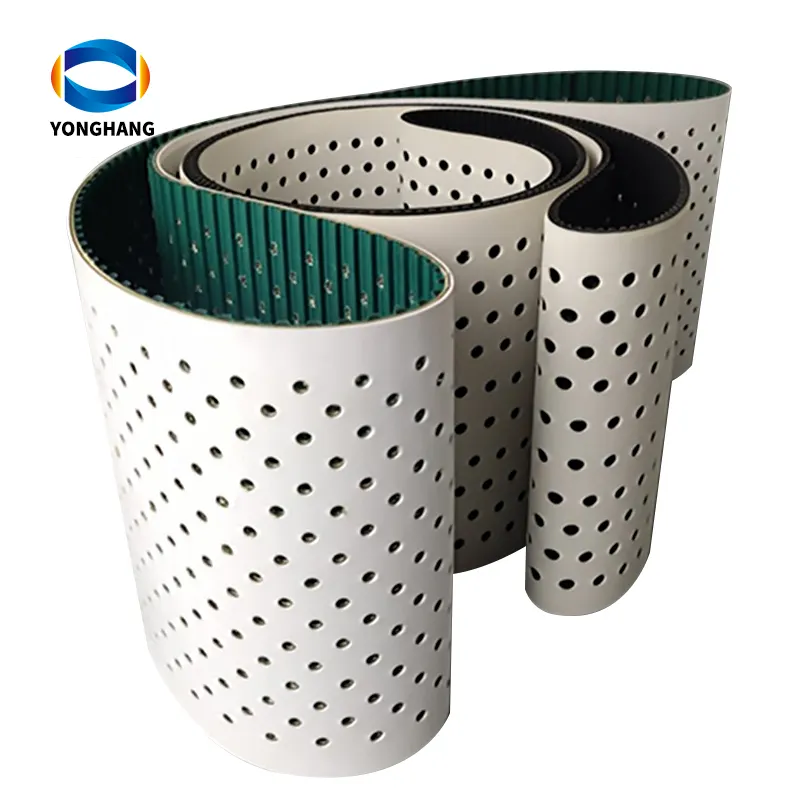
How Folder Gluer Belts Drive Precision Folding and Timing Control
Synchronizing belt motion with cam indexing and glue application windows
The folder gluer belt serves as the main timing system for carton processing lines, coordinating the movement of cartons through the machine while controlling both the folding mechanisms and glue application. These belts move with pinpoint accuracy, lining up cartons with the folding cams at just the right moment and positioning the paperboard edges right beneath the glue nozzles where they need to be. Getting this timing right stops those frustrating misfolds that happen when creases don't line up properly and keeps glue from running out on critical seam areas. When everything works as intended, the folding arms only engage once the carton has reached its correct spot in the process. A slight timing issue can lead to jammed machines or weak glue joints though, which is why reliable belt operation remains so important for maintaining box dimensions and quality standards across production runs.
Real-world impact: 42% reduction in misfolds after upgrading to high-grip polyurethane folder gluer belts
When packaging plants upgrade their equipment to high grip polyurethane folder gluer belts, they tend to see noticeable improvements in product quality. Take one plant for instance that cut down on misfolds by almost half after making the switch. The reason? Better traction prevented those tiny slips that happen when things speed up too fast. This kept everything lined up properly between the folding mechanisms and where the paper actually needs to bend, which means fewer rejects because of wonky shapes. Plus, since this material maintains consistent friction throughout different batches, operators don't have to tweak the glue applicators as often anymore—around 30% less adjustment time overall. All these changes show just how much better materials can make a difference in getting those boxes sealed right every single time.
The Direct Link Between Folder Gluer Belt Condition and Adhesion Reliability
Micro-slip under load: Causes of inconsistent fold angles and glue-starved seams
When there's micro slip happening because either the tension isn't right or surfaces have worn down, it creates tiny timing problems that mess with how folds form and how well adhesive gets transferred. Cartons tend to move around when compressed, so those important fold angles end up all over the place. At the same time, the pressure needed for proper adhesion drops off completely in some spots, creating weak points along the seam where not enough glue actually sticks. According to industry reports, something as small as half a second of slipping can cut glue coverage down by almost 40 percent. That kind of reduction means packages are far more likely to fail while they're being transported from one place to another.
Friction decay and surface wear’s effect on adhesive transfer efficiency (per TAPPI TIP 0404-12)
The surface of polyurethane belts tends to break down in predictable ways across three main stages that reduce friction over time. First comes the initial alignment of polymer chains within the first 500 hours of operation. Then around the 500 to 1,500 hour mark, plasticizers start migrating out of the material. After that point, usually beyond 1,500 hours, the base layer becomes exposed. According to TAPPI TIP 0404-12 testing methods, each of these phases leads to roughly 12 to 18 percent drop in how well adhesive transfers onto materials, something operators notice when glue lines don't fully form at folding points. Keeping the coefficient of friction (COF) above 0.85 remains critical throughout this process. This measurement gets checked using ASTM D1894 standards. When COF drops below this threshold, it creates those pesky adhesion gaps responsible for about two thirds of all carton seal failures spotted during packaging quality checks.
Optimizing Folder Gluer Belt Tension and Tracking for Consistent Box Geometry
Precise folder gluer belt tension and tracking are non-negotiable for achieving uniform box dimensions. Misalignment directly translates to production rejects and material waste.
Lateral drift and tracking instability: Root causes of skewed folds and SKU rejection
Lateral belt drift causes misaligned folds that trigger automatic SKU rejection. Primary contributors include worn guide flanges permitting micro-movements, uneven belt wear patterns generating directional pull, and frame resonance induced by high-speed operation. Maintaining belt tracking within ±0.5 mm tolerance is essential to prevent these failures.
Validated tension range (12–18 psi) for 1.5-mm belts – balancing grip, accuracy, and service life
Research identifies 12–18 psi as the optimal tension range for 1.5-mm polyurethane belts–delivering maximum grip without overstress while supporting 18–24 months of service life.
| Tension (psi) | Performance Impact | Belt Longevity |
|---|---|---|
| <12 | Slippage during peak loads | Extended |
| 12–18 | Max grip without overstress | 18–24 months |
| >18 | Premature core fatigue | 30% reduction |
Exceeding 18 psi accelerates core delamination; sub-12 psi tension causes misfolds during glue-set cycles.
Selecting the Right Folder Gluer Belts for Your Packaging Application
Choosing the optimal folder gluer belts directly impacts production efficiency, box quality, and long-term reliability. Key selection criteria include:
- Material compatibility: Match belt compounds to environmental conditions–including temperature fluctuations, humidity, and chemical exposure from inks or cleaners
- Surface properties: Select textured or smooth finishes based on substrate slip tendencies and required grip levels
- Dimensional precision: Confirm exact width, length, and thickness specifications to prevent tracking issues and avoid machine stress
- Performance characteristics: Prioritize features like anti-static properties, reverse-bending endurance, or heat resistance aligned with your line’s operational demands
- Splicing method: Evaluate trade-offs between pre-spliced belts (faster changeovers, consistent splice integrity) and in-house splicing (cost flexibility, labor requirements)
Proper selection prevents seam misalignment, glue starvation, and unplanned downtime–ensuring consistent throughput, reduced waste, and reliable fold geometry tailored to your specific packaging environment.
Frequently Asked Questions (FAQs)
Why are folder gluer belts critical in carton processing?
Folder gluer belts synchronize movement and timing in carton processing, ensuring precise folding and glue application to maintain quality and prevent rejects.
How do polyurethane belts improve carton production?
Polyurethane belts provide better traction, reducing misfolds by maintaining alignment between folding mechanisms and glue application, thus improving product quality.
What is the impact of belt tension on adhesion reliability?
Correct belt tension ensures consistent adhesion, minimizing slip-induced timing issues that lead to weak glue seams and increased package failure rates.
What factors should be considered when selecting folder gluer belts?
Selection considerations include material compatibility, surface properties, dimensional precision, performance characteristics, and splicing methods to best suit your packaging needs.
Table of Contents
- How Folder Gluer Belts Drive Precision Folding and Timing Control
- The Direct Link Between Folder Gluer Belt Condition and Adhesion Reliability
- Optimizing Folder Gluer Belt Tension and Tracking for Consistent Box Geometry
- Selecting the Right Folder Gluer Belts for Your Packaging Application
- Frequently Asked Questions (FAQs)