
 EN
EN
 AR
AR
 HR
HR
 DA
DA
 NL
NL
 FR
FR
 DE
DE
 EL
EL
 HI
HI
 IT
IT
 JA
JA
 KO
KO
 NO
NO
 PL
PL
 PT
PT
 RO
RO
 RU
RU
 ES
ES
 TL
TL
 IW
IW
 ID
ID
 SR
SR
 SK
SK
 UK
UK
 VI
VI
 TH
TH
 TR
TR
 AF
AF
 MS
MS
 IS
IS
 HY
HY
 AZ
AZ
 KA
KA
 BN
BN
 LA
LA
 MR
MR
 MY
MY
 KK
KK
 UZ
UZ
 KY
KY
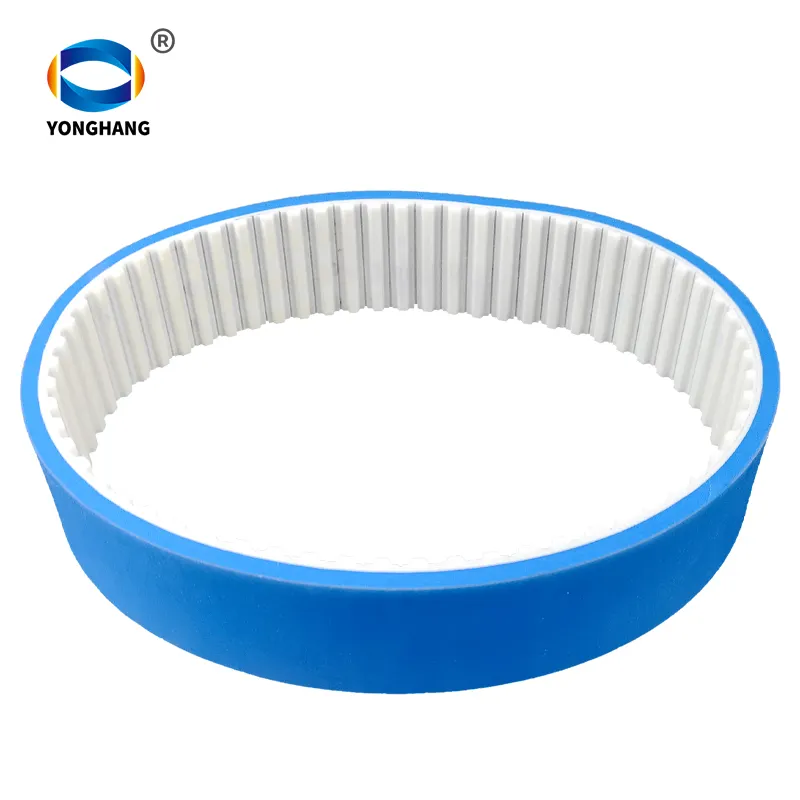
Why Timing Belts with Cleats Are Essential for Reliable Inclined and Vertical Conveying
Timing belts equipped with cleats offer superior material handling security when dealing with challenging elevation changes. Standard flat belts simply cannot maintain proper positioning on inclined surfaces, which leads to product slipping and unexpected production stoppages. The cleated design addresses this issue by physically securing items within the gaps created by the raised sections. According to recent research from Precision Conveyance (2023), any incline steeper than 12 degrees requires cleat height that surpasses the product's center of gravity for effective containment. These benefits become particularly important in vertical setups such as pharmaceutical sorting systems where integrated cleats stop products from falling freely while still allowing precise movement along the conveyor path. Some major benefits include:
- Zero-backsliding grip: TPU cleats with pyramidal profiles achieve 200% higher friction coefficients than smooth belts
- Modular adaptability: Removable cleats enable rapid reconfiguration for product changes
- Energy savings: Eliminate secondary braking systems through passive load stabilization
Vertical conveying via precision systems reduces manual handling injuries by 34% while boosting throughput accuracy to ±2mm—critical for automated packaging. This positions timing belts with cleats as the failsafe solution for steep-angle transport reliability.
Key Selection Criteria for Timing Belt with Cleats: Pitch, Material, and Load Compatibility
Matching Tooth Profile (HTD, GT2, P5M) and Pitch to Cleat Spacing and Drive Torque
Choosing the right tooth profile makes all the difference when it comes to how well loads are transferred and where things actually end up. With cleated timing belts, HTD profiles work pretty well for those moderate torque situations most folks deal with daily. But if precision matters more than anything else, GT2 profiles with their rounded teeth cut down on that annoying backlash that messes up conveyor systems. Now about pitch sizes like 5M versus 8M - they need to match up with the spacing between cleats so products don't slip around when moving uphill. The 5M pitch gives better grip for heavier stuff because there's just more contact points, whereas 8M works better when dealing with taller cleats. And remember to check those drive torque numbers against what the belt can actually handle. Underestimating this leads to broken teeth real quick, particularly when starting something massive from a dead stop.
Polyurethane vs. Thermoplastic Polyurethane (TPU) vs. PEEK: Wear Resistance and Cleat Bond Integrity
Material choice dictates longevity in demanding environments:
- Polyurethane: Offers 40% higher abrasion resistance than rubber (Machinery Lubrication 2023), ideal for packaging lines with frequent product impacts.
- TPU: Excels in chemical resistance, maintaining cleat adhesion integrity when exposed to oils or sanitizers.
- PEEK: Withstands 150°C+ temperatures and exhibits 3× longer fatigue life in pharmaceutical sterilization cycles.
Cleat bonding failures drop by 70% when belt and cleat materials share compatible thermal expansion coefficients. Avoid material mismatches—e.g., metal cleats on TPU belts risk delamination under cyclic bending.
Critical Tip: For vertical conveying, prioritize PEEK belts with molded cleats. Their monolithic construction eliminates bond weaknesses under sustained tension.
Optimizing Cleat Design for Product Control Without Compromising Belt Flexibility
Cleat Height, Shape, and Mounting Method Impact on Positional Accuracy and Belt Bending Life
The size of cleats plays a big role in how stable products stay on conveyor belts. When dealing with lighter packaging stuff, going with 0.5 inch cleats works well because they hold things in place but still let the belt bend around those small pulleys under three inches across. On the flip side, when handling heavier boxes made from tough materials like PEEK polymer, bigger 3 inch cleats are needed to avoid wear and tear over time. According to Packaging Digest from last year, curved cleat shapes cut down on product snagging problems by about 27 percent compared to those old square edge designs. Hot molding is really important too. This process fuses thermoplastic polyurethane cleats right into the belt material itself, so nothing comes loose even when running at over 500 revolutions per minute while keeping the belt flexible enough for normal operation. Just look at bonded options though they tend to fail around 40% more often in areas where the belt bends sharply around pulleys. All these factors together help keep items positioned accurately within half a millimeter tolerance zone even when directions change quickly during transport.
Real-World Validation: Pharma Packaging Case Study Using Modular Cleats on an 8M GT2 Timing Belt with Cleats
One pharmaceutical company recently started using modular thermoplastic cleats on their GT2 profile timing belts to move vials along 15 degree inclines. These belts have an 8mm pitch and manage to get about 99.3 percent accuracy when transferring items thanks to those specially designed L-shaped cleats that are spaced just right for different vial sizes. What makes this system really stand out is how easy it is to switch between products. The interchangeable cleat modules let operators change over from one product line to another in less than seven minutes flat, which cuts down on downtime by around two thirds compared to older fixed cleat systems. Another big plus point comes from the belt's dual durometer design with a soft 70A belt material paired with harder 90D cleats. This combination keeps the belt flexible enough to work properly but still lasts well over 18,000 operating hours before needing replacement. That kind of longevity meets all the strict cleanliness standards required in pharmaceutical manufacturing environments.
Installation, Tensioning, and Maintenance Best Practices for Long-Term Performance
Getting timing belts with cleats installed correctly and properly tensioned makes all the difference in how long they last. The first step is making sure those pulleys line up pretty closely - around half a degree angle difference and no more than 0.1 millimeter off parallel. This alignment matters because edge wear from misalignment causes nearly 4 out of every 10 belt replacements according to Bearing Industry Council data from last year. When it comes to tension, folks should grab a good quality gauge and aim for that sweet spot where the belt deflects about 1 to 2 percent of its total length between supports. Too loose and the belt will slip, too tight and it puts unnecessary strain on the cleats which can actually break their bond to the belt material. Maintenance-wise, schedule some regular checks at least once a month looking specifically at three main spots that tend to show problems first.
- Cleat Integrity: Check for cracks or detachment at bonding points
- Tooth Wear: Monitor pitch deformation exceeding 3% of original dimensions
- Material Degradation: Inspect for hardening or surface glazing in high-heat zones
Establish quarterly tension rechecks with load simulations, as operational vibrations can reduce initial tension by 15% within six months. Clean belts using pH-neutral solutions only—acidic cleaners degrade polyurethane 40% faster. Following these protocols extends service life by up to 70% while maintaining positional accuracy below ±0.3mm variance.
FAQs
Why are timing belts with cleats essential for inclined and vertical conveying?
Timing belts with cleats ensure effective material handling on inclined and vertical surfaces by preventing product slipping and maintaining proper positioning.
What are the benefits of using timing belts with cleats?
They offer zero-backsliding grip, modular adaptability, energy savings, and reduce manual injuries while improving throughput accuracy.
What materials are ideal for timing belts with cleats?
Polyurethane, TPU, and PEEK are preferred due to their abrasion, chemical, and temperature resistance respectively.
How should timing belts with cleats be maintained?
Regular alignment checks, maintaining proper tension, and using pH-neutral cleaners extend the longevity and performance of timing belts.
Table of Contents
- Why Timing Belts with Cleats Are Essential for Reliable Inclined and Vertical Conveying
- Key Selection Criteria for Timing Belt with Cleats: Pitch, Material, and Load Compatibility
- Optimizing Cleat Design for Product Control Without Compromising Belt Flexibility
- Installation, Tensioning, and Maintenance Best Practices for Long-Term Performance
- FAQs