
 EN
EN
 AR
AR
 HR
HR
 DA
DA
 NL
NL
 FR
FR
 DE
DE
 EL
EL
 HI
HI
 IT
IT
 JA
JA
 KO
KO
 NO
NO
 PL
PL
 PT
PT
 RO
RO
 RU
RU
 ES
ES
 TL
TL
 IW
IW
 ID
ID
 SR
SR
 SK
SK
 UK
UK
 VI
VI
 TH
TH
 TR
TR
 AF
AF
 MS
MS
 IS
IS
 HY
HY
 AZ
AZ
 KA
KA
 BN
BN
 LA
LA
 MR
MR
 MY
MY
 KK
KK
 UZ
UZ
 KY
KY
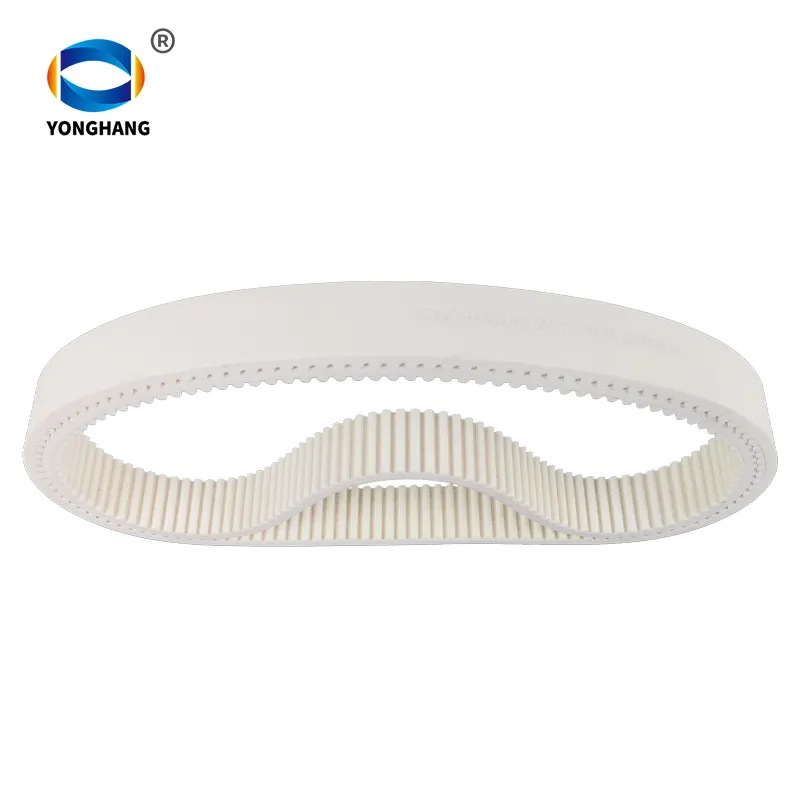
Core Performance Requirements for Haul Off Belts in Heavy-Duty Extrusion
Thermal Stability and Sustained Load-Bearing Capacity Under Continuous High-Temperature Operation
Belt systems used for haul off applications need to stay strong and perform reliably even when subjected to intense heat and constant mechanical forces. When we look at heavy duty extrusion processes, these belts often run hotter than 150 degrees Celsius. At such temperatures, most polymer materials can lose nearly half their strength compared to room temperature conditions according to recent studies from the Polymer Engineering Journal. To handle the massive loads of around 25 kilonewtons per meter while keeping stretch below 2%, manufacturers rely on dual layer polyester reinforcements. Special silicone compounds and certain types of polyurethane help fight against material hardening and gradual shape changes, maintaining proper grip and size stability throughout those relentless 24 hour production runs. But it's not enough for belts to simply withstand heat they also need to let heat escape properly. Belts that trap too much thermal energy tend to age faster and won't last as long in service.
Traction Integrity vs. Surface Marking: Balancing Grip and Product Finish
Achieving optimal haul off performance means resolving the fundamental trade-off between traction and surface quality. Harder compounds (80–90 Shore A) maximize grip but risk imprinting patterns onto delicate extruded profiles; softer formulations (60–70 Shore A) protect finish integrity yet limit pulling force. Key design levers include:
| Factor | Traction Impact | Finish Impact |
|---|---|---|
| Durometer | Higher = Better Grip | Lower = Fewer Marks |
| Surface Texture | Aggressive = +30% Pull | Smooth = Minimal Contact |
| Tension Control | Tight = Stability | Over-Tight = Deformation |
Micro-textured surfaces–engineered to raise the coefficient of friction by 0.3–0.5 without visual marking–represent a proven compromise. Advanced EPDM blends, validated in PVC extrusion trials, reduced surface defects by 62% while maintaining line-speed consistency (Materials Performance Quarterly, 2024).
Material Analysis: Polyurethane, Rubber, and Composite Haul Off Belts
Polyurethane Haul Off Belts – Superior Tensile Strength (25–30 MPa) and Abrasion Resistance for Demanding Lines
Polyurethane belts offer exceptional tensile strength ranging between 25 and 30 MPa, plus they resist wear about 3 to 5 times better than regular rubber belts. These characteristics make them particularly well suited for applications involving heavy loads and precise extrusion requirements. The material doesn't deform permanently when subjected to long periods of tension, which means operators get consistent pulling power throughout entire production shifts. Special formulations have been developed to stand up against water breakdown, oils, and various chemicals, so these belts won't deteriorate in moist environments or harsh processing areas. Temperature stability is another big plus point for polyurethane, as it retains its shape and dimensions reliably from minus 40 degrees Celsius all the way up to 100 degrees Celsius. This helps maintain those tight extrusion tolerances even when workshop temperatures fluctuate during different parts of the day. When dealing with extrusion lines that require over 15 tons of pulling force or situations where maintaining profile consistency down to the micron level absolutely matters, most experienced engineers will tell you polyurethane remains the gold standard in belt materials.
Rubber Haul Off Belts – Economic Choice with Thermal Limitations Above 80°C
For medium duty extrusion applications where temperatures don't regularly exceed around 80 degrees Celsius, rubber belts still represent a cost effective solution. Once things get hotter than that though, rubber starts losing about 40 percent of its strength properties and begins developing permanent deformation issues, which really messes with profile shape particularly when passing through those heated calibration sections. Rubber naturally stretches between 8 to 12 percent over time, so belt tension needs regular checking and adjustment. Plus, it doesn't handle exposure to oils or sunlight very well at all, meaning shorter lifespan in harsh industrial settings. Sure, rubber provides sufficient traction for regular PVC profiles and cuts upfront costs somewhere between 30 and 50 percent compared to those fancy composite alternatives. But when dealing with high volume production runs that require sustained elevated temperatures, rubber simply isn't going to cut it anymore.
Hybrid Composite Haul Off Belts – Optimized for Multi-Zone Speed Variability and Extended Service Life
When making hybrid composites, manufacturers combine polyurethane bases with either aramid fibers or carbon fiber reinforcements to handle what modern extrusion processes throw at them. The way these materials are put together allows for speed differences of more than 15% between different sections of the production line. This matters a lot when working with thermoplastic elastomers and similar materials that tend to shrink unevenly during processing. For those interested in carbon-infused versions, tests show they stretch less than 2% even when subjected to heavy loads around 20 tons, which helps maintain accurate dimensions throughout complex manufacturing sequences. Industry tests have found that these hybrid belt systems last well beyond 50,000 operating hours, about twice as long as regular rubber alternatives. The layered design also spreads out heat better, preventing hot spots where friction builds up. Plus, the ability to adjust tension settings works across various product profiles, reducing the time needed to switch between different manufacturing runs.
Critical Design Parameters That Determine Haul Off Belt Suitability
Belt Thickness, Reinforcement Architecture, and Edge Stability Metrics for Heavy-Duty Duty Cycles
Three interdependent parameters define suitability for heavy-duty extrusion:
- Belt thickness (8–15 mm) governs load distribution, flexibility, and thermal mass. Too thin, and the belt wears prematurely under pressure; too thick, and motor strain increases energy use by up to 15%.
- Reinforcement architecture, such as polyester-cord or steel-reinforced matrices, must exceed 25–30 MPa tensile strength to withstand high-torque starts/stops without elongation. Steel reinforcement adds dimensional stability but increases weight and system inertia.
- Edge stability, measured by resistance to lateral fraying under tracking forces >3 kN/m, is vital for long-run precision. Micro-notched edges or polyurethane-coated boundaries reduce delamination by 40% in continuous operation.
Compromising any one parameter undermines the entire system: poor edge integrity causes micro-slippage and surface marring; excessive thickness strains drives unnecessarily; inadequate reinforcement leads to irreversible stretch and loss of line-speed control. Optimal designs align all three to support line speeds >120 m/min without sacrificing reliability or product quality.
FAQ
What is the importance of thermal stability in haul off belts?
Thermal stability is crucial in haul off belts as it ensures the belts perform reliably under continuous high-temperature operation, maintaining their strength and integrity.
How do polyurethane belts differ from rubber belts?
Polyurethane belts offer superior tensile strength and abrasion resistance compared to rubber belts, making them better suited for heavy-duty applications.
What factors influence traction and surface marking in haul off belts?
Factors such as durometer, surface texture, and tension control influence traction and surface marking. Balancing these factors helps optimize product finish.
Why are hybrid composite belts preferred?
Hybrid composite belts are preferred for their ability to handle multi-zone speed variability and extended service life, offering improved durability and versatility.
How do edge stability metrics affect haul off belt performance?
Edge stability metrics, such as resistance to lateral fraying, are vital for maintaining precision and minimizing micro-slippage, ensuring reliable operation.