
 EN
EN
 AR
AR
 HR
HR
 DA
DA
 NL
NL
 FR
FR
 DE
DE
 EL
EL
 HI
HI
 IT
IT
 JA
JA
 KO
KO
 NO
NO
 PL
PL
 PT
PT
 RO
RO
 RU
RU
 ES
ES
 TL
TL
 IW
IW
 ID
ID
 SR
SR
 SK
SK
 UK
UK
 VI
VI
 TH
TH
 TR
TR
 AF
AF
 MS
MS
 IS
IS
 HY
HY
 AZ
AZ
 KA
KA
 BN
BN
 LA
LA
 MR
MR
 MY
MY
 KK
KK
 UZ
UZ
 KY
KY
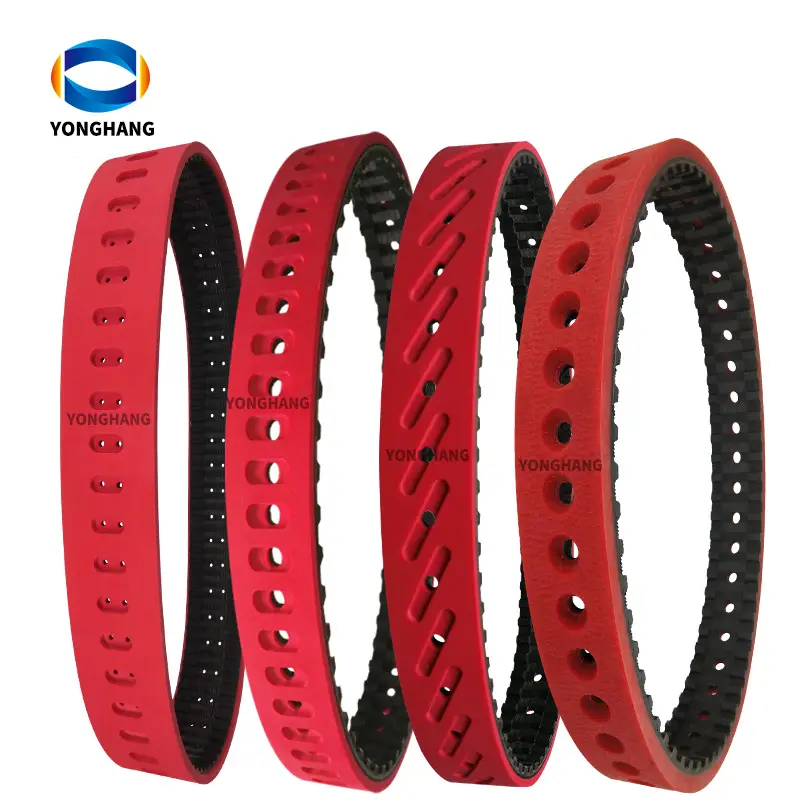
Key Durability Requirements for Sausage Belts in High-Load Packaging
Abrasion Resistance Against Sausage Casings and Seasoning Particles
The sausage belts take a beating from all that friction caused by collagen casings and those little bits of seasoning like pepper seeds flying around during fast production runs. The better quality polyurethane stuff rated at least Shore 85A stands up much better against surface damage where bacteria can get trapped and cause faster wear. These premium belts last roughly three times longer than regular rubber ones according to industry standards. When making smoked sausages, there's extra trouble from paprika or chili flakes getting stuck in the belt surface. Only the really tough belts with just the right firmness can handle over 8,000 cycles per hour without letting those tiny particles dig into them and mess things up.
Slippage Prevention on Greasy, Moist Sausage Surfaces at High Speeds
When fresh sausages come off the stuffing machine, they still have moisture and fat on their surfaces which makes them slippery. This slipperiness becomes a big problem when trying to align them properly at vacuum packaging stations. The solution? Micro textured belts that provide good grip even at high speeds. These belts maintain a friction level around 0.6 or better, so they work well even when lines are running over 200 feet per minute. Another smart design element is the ribbed profile pattern. These ribs help water drain away quickly and stop something called hydraulic lift from happening. Real world tests on packaging lines show that all these improvements cut down on misloaded products by about 18 percent compared to regular smooth belts. For meat processors dealing with thousands of sausages every hour, this kind of improvement adds up fast.
Tensile Strength and Fatigue Life Under Continuous Start-Stop Cycles
Sausage packaging lines today typically experience around 500 sudden stops each day. These repeated movements create stress on the hinges over time, which can lead to problems like belt stretching or complete tracking issues down the road. The solution? High strength polyester cores rated at about 1,200 Newtons per square millimeter help maintain shape when subjected to those jerky motions. Meanwhile, the backing material is designed to handle well over a million bending cycles without showing cracks, something we've confirmed through standard industry tests similar to ISO 5293 requirements. With this kind of construction, most systems will run reliably for five years straight, even when operating non-stop around the clock in busy production facilities.
Temperature, Moisture, and Chemical Resilience for Sausage Processing Environments
Cold-Tunnel Performance: Maintaining Flexibility and Grip from -20°C to 4°C
When temperatures drop inside cold storage tunnels, regular rubber conveyor belts tend to get stiff and lose their grip on wet, icy sausages which can lead to jams and production delays. That's why food processors are turning to special materials like food grade silicone and certain types of polyurethane. These materials stay flexible even when temps hit minus 20 degrees Celsius all the way up to four degrees. They maintain around 90% of their normal flexibility even at those super cold extremes. Testing shows that silicone belts don't really suffer from compression issues after going through about 500 freeze thaw cycles. The polyurethane options also hold up pretty well against cold flow problems. For meat processing plants running high speed frozen sausage lines, this kind of reliable performance means they can keep producing at rates approaching 15 thousand units per hour without constant belt adjustments or breakdowns.
Resistance to Food-Grade Sanitizers (Peracetic Acid, Chlorine Washdowns)
Regular cleaning with peracetic acid (PAA) or chlorine really takes a toll on belt materials over time. Most standard polymer belts tend to swell about 15% after repeated exposure and start showing those tiny micro cracks at around 200 ppm PAA concentration. These cracks become little hiding spots where bacteria can hang out. That's why premium quality sausage belts are made with special chemically treated polymers designed to last through thousands of wash downs without losing strength. We've run them through lab tests by submerging samples for extended periods and they just keep performing without any signs of wear.
| Sanitizer Type | Exposure Duration | Material Degradation |
|---|---|---|
| 2% PAA | 30 days | <3% volume change |
| 500ppm Chlorine | 60 cycles | No surface cracking |
This chemical durability prevents bacterial colonization and extends operational lifespan by 2–3 years in high-moisture, high-sanitation settings.
Food-Safe Compliance and Direct Meat Contact Certification
When materials come into direct contact with meat, they need proper food safety certifications according to global standards. Think FDA 21 CFR §177.2600 in the US market and EU Regulation (EC) No. 1935/2004 elsewhere. These rules exist because certain materials can react when exposed constantly to meat fats, water, and cleaning chemicals over time. If equipment doesn't meet these requirements, serious problems happen. Chemicals might migrate into products, causing contamination issues that regulators definitely notice. Factories facing inspection failures typically lose around $740,000 each time operations stop completely. Smart manufacturers work with independent labs to test their belts under conditions similar to what happens on actual production lines. This includes exposing them to meat grease, running multiple sanitation cycles, and subjecting them to temperature extremes. Every single batch needs detailed records showing not only that it was safe initially but also how well it maintains performance after all those cleaning processes.
PU vs. Modular Plastic Sausage Belts: Matching Material to Application Needs
Polyurethane Sausage Belts: Oil Repellency, Release Efficiency, and Flex Life
Modular Plastic Belts: Cleanability, Joint Integrity, and Raw Sausage Handling Trade-offs
The main advantage of modular plastic belts lies in their quick maintenance capabilities and how easy they are to keep clean on the surface. These belts have interlocking parts so when one section gets damaged, it can be replaced individually rather than swapping out the whole belt. This saves time since studies show around 40% less downtime compared to replacing entire belts. But there's a catch. Those joints where sections connect tend to form little pockets that catch bits of seasoning and become breeding grounds for bacteria, especially important in places making raw sausages. That means cleaning procedures need to be extra thorough. Even though the smooth surfaces make applying sanitizers easier, those small spaces between each link still pose problems. So we're basically looking at a classic trade off here:
| Attribute | Modular Plastic | PU |
|---|---|---|
| Cleanability | Superior surface sanitation | Resists oil penetration |
| Joint Integrity | Prone to particle trapping | Seamless construction |
| Raw Meat Handling | Higher microbial risk | Lower contamination risk |
For cooked sausage lines with frequent, high-temperature washdowns, modular belts offer compelling advantages. For raw or high-fat products, PU’s monolithic structure delivers stronger food safety assurance.
Hygienic Design and Real-World Maintainability of Sausage Belts
CIP Compatibility and Microbial Risk Reduction in Belt Surface Texture and Joints
Designing hygienic sausage belts really comes down to two main things: making them work well with Clean-in-Place systems and keeping pathogens at bay. This happens when engineers focus on creating smooth surfaces without any cracks or grooves. Research indicates these kinds of surfaces hold about 40 percent fewer microbes after cleaning compared to those with ribs or textures. When looking at joints, manufacturers need to pay special attention whether they're working with sealed polyurethane seams or interlocking parts in modular setups. These connections should stop water from pooling because that's exactly where dangerous bacteria like Listeria and Salmonella love to grow. Belts also have to withstand regular high pressure washes with food grade peracetic acid at around 80 degrees Celsius without breaking down. Real world testing shows that certain polymer blends resist microbes so much better than regular materials that facilities report cutting their swab failure rates by roughly two thirds. This means less time spent scrubbing manually and fewer unexpected shutdowns. The whole system needs to handle fast drainage, stand up to harsh chemicals, and keep running strong mechanically while maintaining food safety standards throughout production runs.
FAQ
Q: What are the benefits of using polyurethane belts in sausage processing?
A: Polyurethane belts offer superior abrasion resistance, slippage prevention on moist surfaces, and robust tensile strength suitable for continuous start-stop cycles.
Q: How do cold tunnel conditions affect belt materials?
A: Regular rubber belts may stiffen and lose grip in cold tunnels. Silicone and certain polyurethane belts remain flexible between -20°C to 4°C, ensuring efficient sausage handling.
Q: Why is chemical resilience important for sausage belts?
A: Chemical resilience ensures belts can withstand food-grade sanitizers like peracetic acid and chlorine washdowns without degrading, thus preventing bacterial colonization.
Q: What is a key consideration when choosing between PU and modular plastic belts?
A: PU belts provide better oil repellency and lower contamination risk, while modular plastic belts allow easy maintenance but might increase microbial risk due to particle trapping at joints.
Table of Contents
- Key Durability Requirements for Sausage Belts in High-Load Packaging
- Temperature, Moisture, and Chemical Resilience for Sausage Processing Environments
- Food-Safe Compliance and Direct Meat Contact Certification
- PU vs. Modular Plastic Sausage Belts: Matching Material to Application Needs
- Hygienic Design and Real-World Maintainability of Sausage Belts