
 EN
EN
 AR
AR
 HR
HR
 DA
DA
 NL
NL
 FR
FR
 DE
DE
 EL
EL
 HI
HI
 IT
IT
 JA
JA
 KO
KO
 NO
NO
 PL
PL
 PT
PT
 RO
RO
 RU
RU
 ES
ES
 TL
TL
 IW
IW
 ID
ID
 SR
SR
 SK
SK
 UK
UK
 VI
VI
 TH
TH
 TR
TR
 AF
AF
 MS
MS
 IS
IS
 HY
HY
 AZ
AZ
 KA
KA
 BN
BN
 LA
LA
 MR
MR
 MY
MY
 KK
KK
 UZ
UZ
 KY
KY
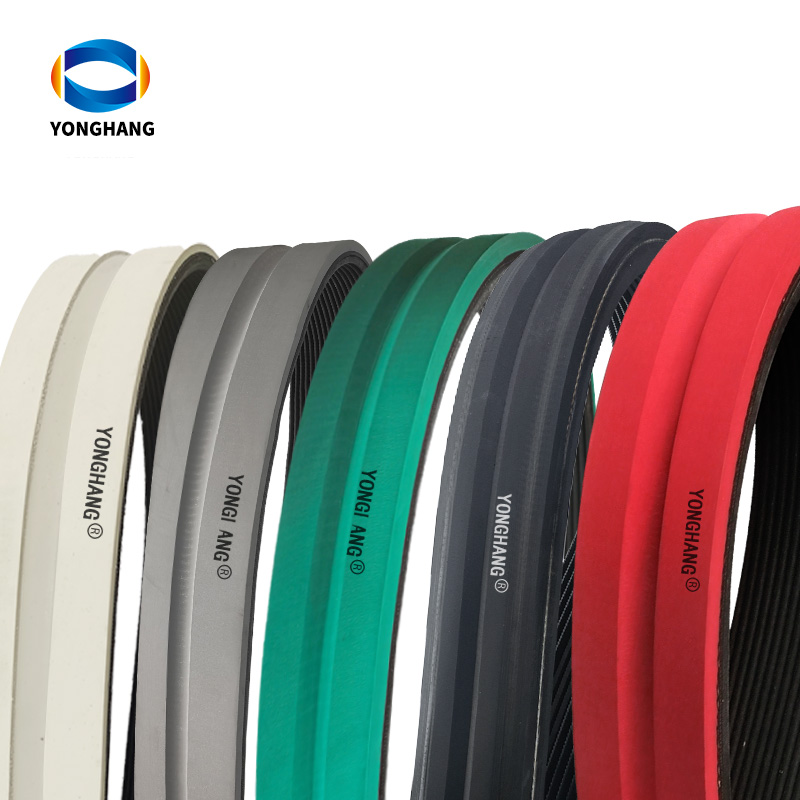
How Haul-Off Belts Enable Stable Tension Control in Pipe Extrusion Lines
The Physics of Belt Slip and Its Cascading Impact on Downstream Resonance
When the force pulling on a belt gets stronger than what the friction can handle between the belt and pipe surface, we get belt slip. Even small amounts matter a lot - something like 0.5% slippage creates problems that ripple through the whole system. What happens next? Well, differences in speed create twisting vibrations, inconsistent cooling of polymers leads to size variations around 1.2%, and those vibrations keep growing stronger further down the line, which puts equipment at real risk for breaking down over time. According to some studies done by the Plastics Extrusion Institute, almost two thirds of unexpected shutdowns in extrusion lines actually come back to these kinds of tension issues starting right in the haul-off area. Makes sense why operators watch this so closely day after day.
Why Traction Integrity Determines Closed-Loop Tension Control Accuracy
Modern extrusion lines rely on closed-loop tension control systems using real-time strain gauges—but their accuracy depends entirely on haul-off belt traction integrity. Three interdependent factors govern performance:
- Force transmission fidelity: Belts must translate motor torque without elasticity losses (<0.3% creep at 80°C)
- Surface contact consistency: Worn belts create localized pressure zones that induce stick-slip motion
- Synchronization tolerance: At haul-off speeds up to 120 m/min, >95% surface contact is required for ±0.25% speed regulation
High-performance polyurethane-reinforced belts maintain grip stability under variable loads—eliminating the micro-slippage that undermines automated control algorithms. Without this mechanical foundation, even advanced sensors cannot compensate for energy losses.
The Functional Role of Haul-Off (Caterpillar) Belts in Maintaining Line Synchronization
How Asymmetric Wear Disrupts Speed Consistency and Induces ±0.8% Fluctuations
Uneven belt degradation creates microscopic friction differentials across the contact surface, directly triggering speed oscillations. When one segment slips more readily than adjacent sections, torque variance propagates downstream as tension resonance—commonly exceeding ±0.8% in PVC pipe production. This synchronization loss manifests as:
- Periodic under-pulling, causing wall thickness variations
- Over-compression at weld lines
- Surface defects such as shark-skinning
Edge Stability, Runout Tolerance, and Axial Load Distribution: Key Interdependencies
How well the edges of a belt hold up determines how much runout occurs during operation. Runout basically means how much the belt moves sideways as it runs. When there's even just half a millimeter of wear on those edges, runout jumps by around 40%. That forces the tension to shift towards the middle part of the belt. What happens next? The middle gets overloaded and starts to compress faster than normal. Meanwhile, the edges become too loose and start vibrating because they're not getting enough tension. This creates what we call a self-reinforcing cycle where bad edges lead to worse runout, which messes up how weight is distributed across the belt, and that uneven loading just makes the edges wear down even more quickly. For belts to work properly over time, manufacturers need to design them so they can keep edge deformation below 0.1 mm when operating at full capacity.
Selecting High-Performance Haul-Off Belts for Long-Term Grip Reliability and Slippage Prevention
Material Advances: Polyurethane-Reinforced Belts Delivering 120+ MPa Strength and <0.3% Creep at 85°C
The development of polyurethane reinforced belts marks a real advancement in material science. These belts can handle tensile strengths above 120 MPa, and show minimal creep rates below 0.3% even when running continuously at around 85 degrees Celsius. The remarkable thermal stability means these belts won't stretch out of shape during long extrusion runs. Another benefit is how the polyurethane base fights off plasticizer migration from what gets extruded through them. This helps maintain stable friction properties throughout thousands upon thousands of production hours without significant degradation.
Application-Based Selection: Matching Belt Specifications to Duty Cycle and Environmental Demands
Optimal haul-off belt performance requires precise alignment with operational conditions:
- Duty Cycle Intensity: High-speed lines demand belts with reinforced tensile cords and heat-dissipating designs; intermittent operations prioritize rapid recovery from thermal cycling
- Environmental Stressors: Chemical exposure (e.g., oils, solvents) necessitates specialized polymer formulations; humid environments require hydrolysis-resistant compounds
- Load Profiles: Dynamic tension spikes require enhanced shear-resistant bonding between layers to prevent localized wear
- Temperature Extremes: Verify continuous rating exceeds peak process temperature by 15–20% margin—cold environments impact flexibility and grip onset
| Selection Factor | Performance Requirement | Consequence of Mismatch |
|---|---|---|
| Tensile Load | >120% of maximum line pull force | Premature cord failure, slippage |
| Ambient Humidity | Hydrolysis-resistant formulations | Edge delamination, grip inconsistency |
| Peak Temperature | Continuous rating ≥ process max +15% | Accelerated creep, permanent deformation |
| Chemical Exposure | Oil/grease-resistant compounds | Surface degradation, friction loss |
This specification-driven approach prevents costly unplanned downtime and sustains synchronization accuracy over time.
Real-World Validation: How Upgrading Haul-Off Belts Improves Operational Stability
When facilities switch to high traction haul off belts, they typically see tension fluctuations drop by around 40%. This makes a real difference because it stops those annoying resonances downstream that cause all sorts of dimensional problems in finished products. Many manufacturing plants have actually reported cutting down on rejected units by about 22% after replacing their old belts. And let's not forget about the money saved from avoiding unexpected breakdowns. According to research from the Ponemon Institute back in 2023, facilities can save roughly $740k each year just by preventing these unplanned stoppages. Looking at all these benefits shows why haul off belts aren't just simple conveyor parts anymore. They're actually sophisticated engineering solutions that play a vital role in keeping extrusion processes running smoothly and consistently across production lines.
FAQ
What causes belt slip in haul-off systems? Belt slip occurs when the pulling force on the belt exceeds what the friction between the belt and pipe surface can handle, resulting in system-wide performance issues.
How do polyurethane-reinforced belts prevent slippage? Polyurethane-reinforced belts maintain grip stability under variable loads, eliminating micro-slippage and providing consistent force transmission and traction over time.
Why is belt edge stability important in extrusion lines? Stable belt edges reduce runout, which helps maintain even tension distribution across the belt and prevents a self-reinforcing cycle of wear and instability.
What operational factors should be considered when selecting haul-off belts? Key factors include duty cycle intensity, environmental stressors, load profiles, and temperature extremes that align belt specifications with operational demands.
Can upgrading haul-off belts have a tangible impact on production? Yes, many facilities have reported significant reductions in tension fluctuations and rejected units, leading to cost savings and improved operational stability.
Table of Contents
- How Haul-Off Belts Enable Stable Tension Control in Pipe Extrusion Lines
- The Functional Role of Haul-Off (Caterpillar) Belts in Maintaining Line Synchronization
- Selecting High-Performance Haul-Off Belts for Long-Term Grip Reliability and Slippage Prevention
- Real-World Validation: How Upgrading Haul-Off Belts Improves Operational Stability