
 EN
EN
 AR
AR
 HR
HR
 DA
DA
 NL
NL
 FR
FR
 DE
DE
 EL
EL
 HI
HI
 IT
IT
 JA
JA
 KO
KO
 NO
NO
 PL
PL
 PT
PT
 RO
RO
 RU
RU
 ES
ES
 TL
TL
 IW
IW
 ID
ID
 SR
SR
 SK
SK
 UK
UK
 VI
VI
 TH
TH
 TR
TR
 AF
AF
 MS
MS
 IS
IS
 HY
HY
 AZ
AZ
 KA
KA
 BN
BN
 LA
LA
 MR
MR
 MY
MY
 KK
KK
 UZ
UZ
 KY
KY
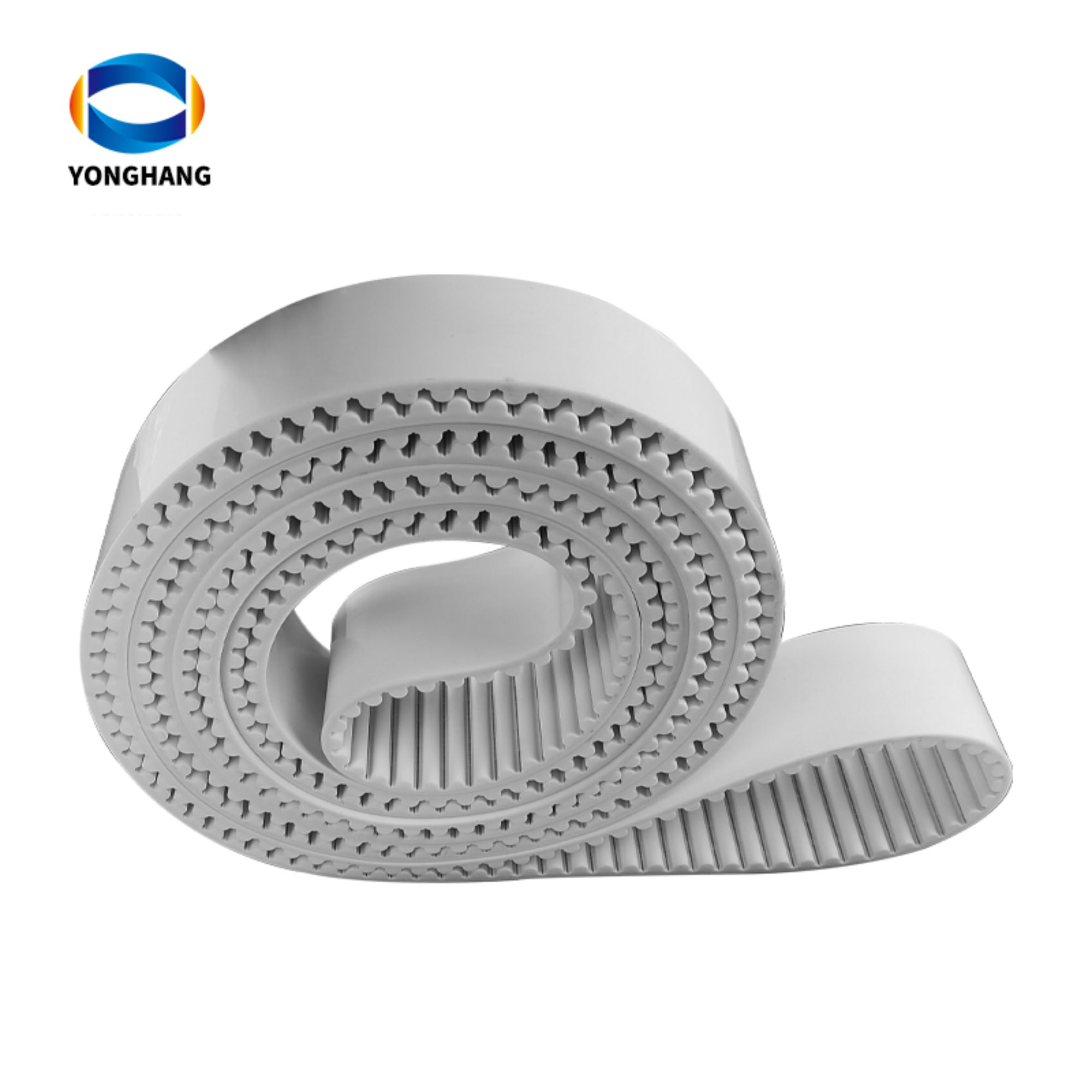
Why PU Timing Belt Excels in Abrasion Resistance: Material Science Fundamentals
Polyurethane’s unique viscoelasticity and surface energy profile
Polyurethane timing belts beat regular rubber options because of how their molecules are put together at a fundamental level. What makes them special is this unique combination where they act both like something that absorbs shocks (viscous damping) and springs back after being stretched (elastic recovery). This helps them handle impacts much better than standard materials. When grit or dust gets on the belt surface, PU has what scientists call low critical surface tension around 30 dynes per centimeter. Basically, this means it forms a kind of water-repelling shield that keeps dirt from sticking so well. Tests show about 40% less dirt sticks to PU compared to nitrile rubber according to tribology research. At the molecular level, the strong connections between ester groups and urethane parts make these belts tough against tiny tears when stressed repeatedly. Plus, those segmented polymer blocks let certain areas deform slightly when hit by abrasives, spreading out the force across the belt without breaking down the whole structure.
Micro-cutting suppression and energy dissipation mechanisms in PU timing belt
Polyurethane timing belts reduce wear from abrasives thanks to two main factors working together: they stop micro cutting and dissipate energy through hysteresis effects. These belts have pretty good bounce back properties around 50 to 60 percent at room temperature, which helps them push away sharp particles when they come into contact. At the same time, the molecules inside create friction that turns about 70% of rubbing energy into heat before it can damage the reinforcing cords. Tests in labs indicate these PU belts last roughly three times longer against abrasion compared to standard rubber ones before showing signs of wear. Why? Because the material actually deforms slightly when loaded, letting abrasive particles slide across instead of digging in. This protects the teeth shape and makes these belts last much longer in dusty or gritty conditions where regular belts would fail quickly.
Real-World Abrasion Challenges for PU Timing Belt in Heavy-Duty Applications
In demanding industrial environments, abrasion is the leading cause of premature failure for PU timing belts—accounting for over 70% of early replacements in heavy machinery (Industrial Belt Association, 2023). Operational stresses dramatically accelerate wear, making context-aware selection and maintenance essential.
Impact of dynamic load, high speed, and cyclic stress on belt tooth wear
There are three main mechanical issues that work together to wear down abrasion resistance over time. When there's dynamic loading happening, it causes tiny slips between gear teeth and pulleys. This creates hot spots that soften the polyurethane material. Once things start spinning faster than 2,500 RPM, those centrifugal forces actually push against the contact points between teeth and pulleys, cutting down on pressure by around 15 to 30 percent. This makes it easier for abrasive particles to get into the system. And then there's cyclic stress to worry about too. Every time torque fluctuations go up by 10%, cracks tend to spread faster right at the base of the gear teeth. According to some elastomer testing we've seen, this can cut abrasion resistance by about 8% in real world conditions.
Field evidence: Dust, metal chips, and moisture degradation in CNC and mining environments
PU belts in CNC machining centers get hit hard by airborne metal particles from aluminum and steel work. These tiny metal chips, sometimes just 50 microns across, behave like sandpaper when they're under tension on the belt surface. The result? Flank wear rates shoot up around 4 times what we see in clean room environments. Over in mining operations, conveyors deal with their own set of problems. Silica dust works its way into PU surfaces over time. And then there's the moisture in the air that starts this chemical breakdown process called hydrolysis. Maintenance records from copper mines show tear strength drops about 35% after only six months running in these conditions.
Engineering Durability: Structural Design and Reinforcement Strategies for PU Timing Belt
Tooth geometry optimization, polyester cord reinforcement, and interlayer adhesion
The ability to withstand tough environments comes down to both what materials are used and how they're built together. Tooth shapes that follow curves or trapezoids spread out the mechanical stress across where the pulley touches things, which cuts down on wear spots by around 30% compared to regular designs according to elastomer research. Reinforcing with polyester cords adds strength against stretching when forces change constantly, stopping tiny tears that might let particles damage the inner PU layer. When dealing with really tough situations like those found in mining conveyor belts, steel or aramid fibers give about 2.3 times better protection against cuts based on findings published in the Polymer Engineering Journal last year. What's important too is these special bonding layers between components stop them from separating even after repeated bending movements, keeping everything intact for longer periods. By combining these three approaches, what could be weak points become strengths instead.
| Design Element | Function | Abrasion Impact Reduction |
|---|---|---|
| Precision Tooth Geometry | Distributes load, minimizes friction | 25–30% |
| Polyester/Steel Cords | Prevents stretch-induced cracking | 40% less fatigue failure |
| Covalent Bond Interlayers | Eliminates internal shear points | 3× longer delamination life |
Optimizing PU Timing Belt Performance: Hardness, Additives, and Application Matching
Getting good results really depends on picking the right polyurethane formula for what needs to be done. The hardness level, measured on the Shore A scale, creates this balance between being flexible enough and resisting wear. Materials around 90 to 95 Shore A can handle the rough treatment from rocks in mining operations, though they might crack if it gets too cold. Softer options between 80 and 85 Shore A work better for absorbing shocks along packaging lines, but these tend to break down quicker when coming into contact with metal scraps. There are also special additives that make things even better. Adding silica makes surfaces smoother, cutting friction by about 15% in those fast spinning CNC machines. Carbon black helps protect against sun damage for equipment used outside like solar panel trackers. And there's stuff called anti-hydrolysis agents that stop materials from breaking down when wet, which is super important in food processing areas where everything gets washed down regularly.
The importance of designing for specific applications cannot be overstated. Take quarry crusher belts for instance they need those tough Kevlar reinforced teeth plus around 93 Shore A hardness just to stand up against all that rock dust flying around. On the other hand, when it comes to making pills or powders in pharmaceutical plants, things get completely different. They have to use FDA approved lubricants and stick with something closer to 85 Shore A hardness so everything stays compatible with cleanrooms. The difference between this kind of tailored approach and off the shelf solutions is pretty significant. Belts last about 40 percent longer which means fewer replacements down the line. Plus there's less energy wasted through slippage problems, so whole systems run better overall. Manufacturers who invest in these specifics tend to see real returns both financially and operationally in the long run.
FAQ
Why are PU timing belts better than rubber belts?
PU timing belts offer superior viscoelasticity, abrasion resistance, and low dirt adhesion due to their unique material properties and structural design.
How do PU timing belts handle abrasive conditions effectively?
They dissipate energy through hysteresis effects and have bounce-back properties that reduce micro-cutting from sharp particles, increasing longevity in harsh conditions.
What are the common challenges for PU belts in industrial environments?
Abrasion from dynamic loads, high speeds, cyclic stress, dust, metal chips, and moisture are significant challenges that require proper selection and maintenance of PU belts.
How can PU timing belts be optimized for performance?
By selecting the right polyurethane hardness, using additives, and matching specific application requirements, PU belts can be optimized for performance and durability.
Table of Contents
- Why PU Timing Belt Excels in Abrasion Resistance: Material Science Fundamentals
- Real-World Abrasion Challenges for PU Timing Belt in Heavy-Duty Applications
- Engineering Durability: Structural Design and Reinforcement Strategies for PU Timing Belt
- Optimizing PU Timing Belt Performance: Hardness, Additives, and Application Matching
- FAQ