
 EN
EN
 AR
AR
 HR
HR
 DA
DA
 NL
NL
 FR
FR
 DE
DE
 EL
EL
 HI
HI
 IT
IT
 JA
JA
 KO
KO
 NO
NO
 PL
PL
 PT
PT
 RO
RO
 RU
RU
 ES
ES
 TL
TL
 IW
IW
 ID
ID
 SR
SR
 SK
SK
 UK
UK
 VI
VI
 TH
TH
 TR
TR
 AF
AF
 MS
MS
 IS
IS
 HY
HY
 AZ
AZ
 KA
KA
 BN
BN
 LA
LA
 MR
MR
 MY
MY
 KK
KK
 UZ
UZ
 KY
KY
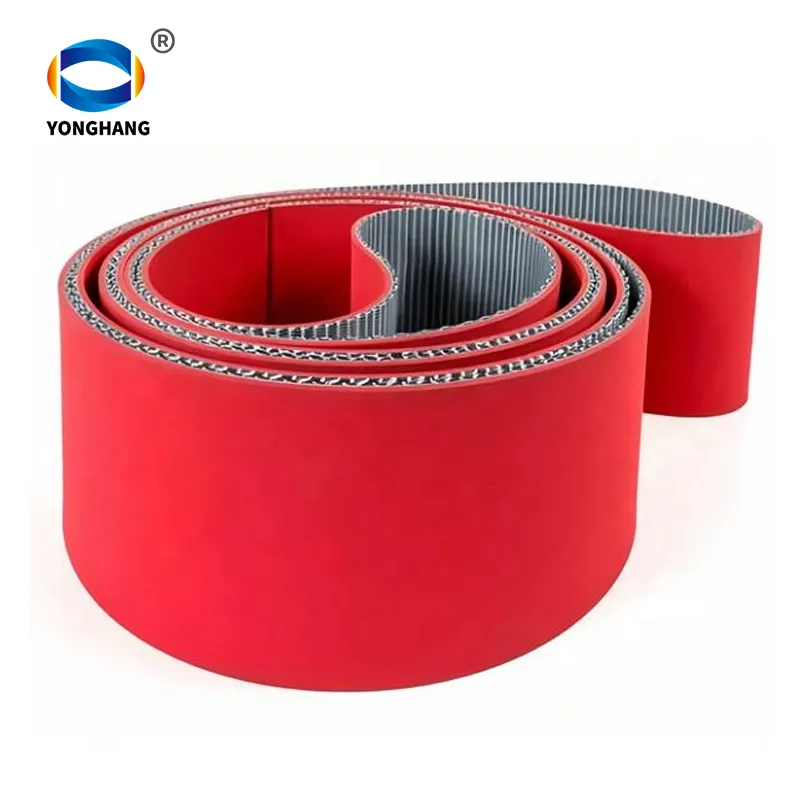
Extreme-Temperature Performance: Silicone Timing Belt Stability Above 200°
Thermal Resistance and Dimensional Integrity Under Continuous Heat Stress
Silicone timing belts keep their teeth engaged properly and hold up well against tension even when exposed to heat beyond 200 degrees Celsius. At this temperature level, other materials like neoprene and HNBR start breaking down pretty quickly. They get hard, crack, or lose around 40% of what makes them strong once they hit just 150°C. Why does silicone perform so much better? Well, it has this special inorganic silica structure that doesn't break down when heated. This means the belt won't stretch out permanently or shrink after running continuously in places like ovens, dryers, or any kind of hot industrial equipment. Tests done by third parties show these belts can handle 200°C conditions for over 10 thousand hours straight. For factories dealing with food processing or metal work, this translates into about 60% fewer unexpected shutdowns compared to traditional belts.
Reliability in Thermal Cycling Environments—Critical for Engine and Industrial Synchronization
Silicone timing belts hold up remarkably well in places where temperatures swing wildly back and forth, like inside car engines or near industrial furnaces. These belts can handle going from as cold as -40 degrees Celsius all the way up to 230 without developing tiny cracks or breaking down over time. Regular rubber belts usually start showing problems around 500 heating and cooling cycles because they get stressed when expanding and contracting. Silicone is different though since its glass transition point sits at a chilly -120°C, which means it stays flexible even through extreme temperature changes. For machinery that needs perfect timing, such as robotic assembly lines and computer controlled cutting tools, this matters a lot. If parts move out of sync by more than half a millimeter, things stop working properly. Manufacturers who track belt performance in real world settings report that silicone versions tend to last anywhere between double and triple what standard rubber belts do under similar conditions. That translates into saving about 35 percent on yearly replacement expenses for many factories.
Superior Chemical and Environmental Resistance for Hygienic and Harsh Settings
FDA-Compliant Resilience in Food, Pharma, and Cleanroom Automation
When it comes to resisting harsh chemicals, silicone timing belts really stand out in tough cleaning and processing conditions. The way these belts are built at the molecular level gives them remarkable stability against all sorts of substances we commonly encounter in industrial settings. Think about acids, bases, various solvents, even those strong sanitizing solutions like bleach (sodium hypochlorite), citric acid used in many food processes, and ethanol too. That's why they work so well in food production areas needing regular washdowns and in pharmaceutical facilities where strict sterilization is required. Compared to neoprene belts that tend to swell when exposed to oils or cleaning products, silicone maintains its shape and keeps surfaces smooth over time, which matters a lot for maintaining proper belt tension and preventing contamination risks.
The material's non porous nature stops bacteria from sticking to it, which is why it complies with both FDA 21 CFR 177.2600 standards and EU Regulation 1935/2004 for touching food directly. This makes it great for reducing contamination problems across various settings including dairy processing lines, sterile packaging operations, and cleanrooms where they need to handle things under strict sanitary conditions. Plus, these surfaces can take regular high pressure steam cleaning without any issues. Silicone stands up well against ozone damage too, and stays pliable even when exposed to extremely cold temperatures, making it suitable for cryogenic processes in certain industries. Recent research from 2023 shows that this type of surface cuts down on places where microbes might hide by around 72% compared to other materials that tend to trap dirt. When used outside, like in mining air systems, the material won't crack under sunlight thanks to its UV protection features. It also doesn't break down when wet or submerged because it resists water breakdown. All these characteristics mean fewer belt changes needed at wastewater treatment facilities according to some industry reports from 2024 showing reductions of about 40%.
Precision, Quietness, and Low-Vibration Operation in Sensitive Systems
Noise Suppression and Motion Accuracy in Medical Devices and Robotics
Silicone timing belts offer exceptional motion control at the sub-micron level, making them ideal for applications where both vibration and noise must be kept to a minimum, such as in surgical robots and diagnostic imaging equipment. These belts have a natural ability to dampen vibrations and absorb those annoying harmonic frequencies, which means they can operate at noise levels under 45 decibels. That's actually quiet enough to run during long MRI sessions without causing any interference issues with the sensitive electromagnetic shielding required. The positioning accuracy gets down to around plus or minus 0.001 millimeters, something absolutely critical when working with microsurgical instruments or automating lab processes. Regular rubber materials tend to resonate and cause problems when running at high speeds for extended periods, but silicone stays stable dimensionally even after millions of operating cycles. With zero backlash in their engagement, these belts transmit force consistently throughout delicate procedures like placing implants or handling biological samples. They also help reduce wear and tear on bearings and shafts in medical devices that need to run continuously without breakdowns.
Extended Service Life and Lower Total Cost of Ownership vs. Conventional Belts
Lifecycle Comparison: Silicone Timing Belt vs. Neoprene and HNBR in High-Cycle Machinery
When it comes to high cycle count machines running hot, silicone timing belts just plain beat out neoprene and HNBR materials. The reason? They handle heat much better without breaking down. Most people know neoprene starts to fall apart once temps hit around 100 degrees Celsius, while HNBR isn't far behind either, really struggling past about 150 degrees. But silicone? That stuff keeps going strong even at 200 degrees Celsius, maintaining both strength and flexibility so production lines don't have to stop for belt changes. And let's talk numbers for a second. Factory managers report seeing anywhere from 40 to 60 percent fewer belt replacements when switching to silicone over traditional options. Fewer parts needed means lower expenses overall, plus all those hours saved when machines aren't sitting idle waiting for repairs.
The total cost of ownership advantage extends beyond longevity:
- Energy Efficiency: A lower coefficient of friction reduces power consumption by 3–5% versus neoprene
- Maintenance Reduction: No lubrication required and minimal tension adjustments needed
- Failure Prevention: Eliminates sudden catastrophic failures common with aged HNBR belts
Unlike neoprene (vulnerable to ozone cracking) or HNBR (susceptible to steam and chemical attack), silicone's inert composition endures aggressive industrial environments. Over a decade-long lifecycle, these durability advantages typically yield 30–50% lower total costs—offsetting the 15–25% higher initial investment within 18–24 months in high-uptime operations.
Key Implementation Considerations for Silicone Timing Belt Adoption
Engineers working with silicone timing belts in tough applications need to understand how these materials behave differently from standard options if they want things to run smoothly. The friction properties are actually good for grip but this means getting the tension just right otherwise motors might strain or speeds could fluctuate unpredictably. Quality matters a lot too. If coatings aren't applied properly during manufacturing, we've seen cases where belts start peeling apart or teeth wear down faster than expected. That's why checking supplier credentials for ISO certification isn't optional it's essential. Silicone tends to stick to itself naturally which creates problems in open environments. Dust and debris get attracted to the belt surface over time, speeding up wear significantly. We recommend regular cleaning routines or installing protective covers whenever possible. Sure, silicone belts cost about 15% to 25% more upfront compared to traditional alternatives. But looking at the bigger picture makes sense here. According to industry reports like the Ponemon Institute study from last year, these belts typically last two to three times longer in harsh conditions. When companies factor in all those saved dollars on maintenance work, fewer breakdowns, and replacements down the road, the extra investment pays off pretty quickly.
FAQ
Why do silicone timing belts perform better at high temperatures compared to neoprene or HNBR belts?
Silicone timing belts perform better because they possess a special inorganic silica structure that withstands high heat. Neoprene and HNBR belts tend to degrade at lower temperatures, losing strength and cracking, whereas silicone remains stable and maintains its properties even beyond 200°C.
What makes silicone timing belts suitable for environments with extreme temperature changes?
Silicone timing belts have a glass transition point at -120°C, enabling them to remain flexible across a wide range of temperatures, between -40°C to 230°C. This resilience makes them ideal for applications with repeated thermal cycling, where standard rubber belts may fail.
How does silicone contribute to hygiene in food and pharmaceutical industries?
Silicone timing belts are non-porous, preventing bacteria adherence. They comply with FDA and EU food contact standards, making them suitable for sectors requiring stringent hygienic conditions and regular cleaning with strong sanitizers or high-pressure steam.
What are the advantages of using silicone timing belts in sensitive systems like medical devices?
In medical devices and robotics, silicone belts provide precise motion control, noise suppression, and low vibration. They function quietly under 45 decibels and offer positioning accuracy at sub-micron levels, ensuring reliability in delicate procedures without emitting disruptive noise or vibrations.
How do silicone timing belts reduce total cost of ownership compared to neoprene and HNBR belts?
Silicone timing belts offer extended service life, energy efficiency, and reduced maintenance needs. Even with higher upfront costs, they save on replacement and downtime expenses, resulting in 30–50% lower total costs over a decade.
Table of Contents
- Extreme-Temperature Performance: Silicone Timing Belt Stability Above 200°
- Superior Chemical and Environmental Resistance for Hygienic and Harsh Settings
- Precision, Quietness, and Low-Vibration Operation in Sensitive Systems
- Extended Service Life and Lower Total Cost of Ownership vs. Conventional Belts
- Key Implementation Considerations for Silicone Timing Belt Adoption
-
FAQ
- Why do silicone timing belts perform better at high temperatures compared to neoprene or HNBR belts?
- What makes silicone timing belts suitable for environments with extreme temperature changes?
- How does silicone contribute to hygiene in food and pharmaceutical industries?
- What are the advantages of using silicone timing belts in sensitive systems like medical devices?
- How do silicone timing belts reduce total cost of ownership compared to neoprene and HNBR belts?