
 EN
EN
 AR
AR
 HR
HR
 DA
DA
 NL
NL
 FR
FR
 DE
DE
 EL
EL
 HI
HI
 IT
IT
 JA
JA
 KO
KO
 NO
NO
 PL
PL
 PT
PT
 RO
RO
 RU
RU
 ES
ES
 TL
TL
 IW
IW
 ID
ID
 SR
SR
 SK
SK
 UK
UK
 VI
VI
 TH
TH
 TR
TR
 AF
AF
 MS
MS
 IS
IS
 HY
HY
 AZ
AZ
 KA
KA
 BN
BN
 LA
LA
 MR
MR
 MY
MY
 KK
KK
 UZ
UZ
 KY
KY
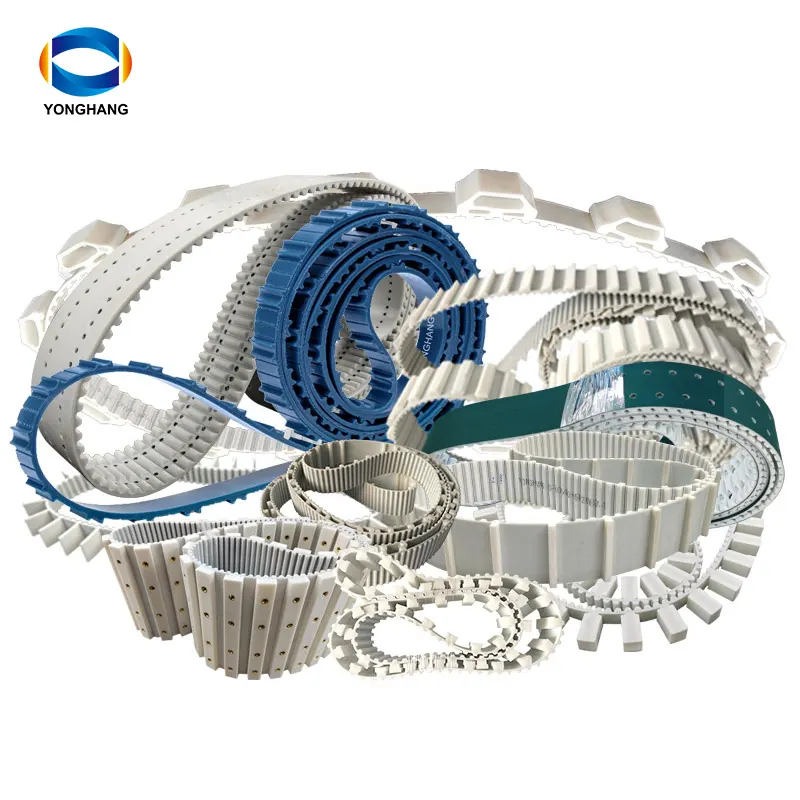
How Timing Pulleys Enable Synchronous Motion Control
Zero-slip power transmission through precise tooth engagement
Timing pulleys work by creating a synchronized movement through the way their teeth fit into the belt's grooves, forming a kind of mechanical connection that passes power without depending on friction alone. This setup stops the belt from slipping when there are changes in load or during quick starts and stops, which keeps things positioned accurately within about half a degree. That kind of precision matters a lot in areas such as robotic systems, computer controlled manufacturing machines, and even some medical equipment where exact movements are critical. The shape of those teeth makes all the difference too. Some common shapes include trapezoid ones called HTD, curved GT2 types, and newer RPP designs with slightly different curves. These newer tooth profiles actually cut down on stress at the base of the teeth by around 40% compared to older versions. Getting good contact along the whole length of each tooth remains important if we want our timing systems to stay reliable and efficient over time.
Eliminating backlash: Critical advantage over V-belt and chain drives
Timing pulleys stand apart from V-belt and chain drives because they don't have that annoying lag caused by compliance issues. The rigid teeth just mesh together so there's almost no backlash at all. Chain drives usually have about half a degree to three degrees of play between links, and V-belts can really mess with speed consistency when loaded, sometimes varying by as much as 5%. Timing systems handle those constant direction changes much better though. They keep things positioned accurately even when switching directions repeatedly, which cuts down on positioning errors by around 90% compared to chains in applications like CNC machines and 3D printers where this matters a lot. Plus, the rigidity means better power transfer too. Studies show timing drives get through about 98% of the input power, whereas V-belt systems only manage between 90% and 95%, making them clearly less efficient for most industrial needs.
Timing Pulley and Belt Compatibility: Pitch, Profile, and Interchangeability
Why Pitch Matching (e.g., 5M, 8M, HTD) Is Non-Negotiable for Timing Pulley Performance
Getting the pitch right between a belt and its matching pulley isn't just important, it's absolutely essential for making sure everything runs smoothly. The pitch refers to how far apart those little teeth are from each other center to center, and this measurement needs to be exactly the same on both parts. For example, if we're talking about a 5M belt, then both components should measure precisely 5 mm between teeth. When this alignment is off, problems start happening fast. The belt teeth don't share the workload evenly anymore, which leads to these tiny jumps or skips as the belt moves. These micro-jumps can actually reduce positional accuracy by as much as half a degree during each full rotation of a robotic arm. And when pitches don't match up properly, the stress gets distributed unevenly across the teeth too, causing them to wear out faster. Tests following ASTM D3900 standards show that mismatched systems wear down belts at around 60% higher rate than properly aligned ones. So when designing any kind of drive system, checking the pitch alignment should always come first on the list of things to verify. After all, getting this basic dimension right translates directly into better performance down the line.
Profile Standardization Gaps: ISO 5296 vs. Proprietary Designs (GT2, RPP, PowerGrip)
The ISO 5296 standard sets specifications for trapezoidal tooth profiles so different manufacturers can work together, but many high performance applications are moving away from this toward their own special shapes like GT2, RPP, and Gates' PowerGrip® designs. These custom profiles actually spread out stress better across the teeth and run much quieter than standard ones. Take GT2 for instance it cuts down on stress at the base of each tooth by about 40% compared to regular trapezoidal profiles that follow ISO standards. There's a catch though. Because GT2 belts don't fit right on HTD or RPP pulleys when there's even a tiny difference in the angle of the sides (like plus or minus 0.1 degrees), they end up putting all the pressure on one edge which makes them fail sooner. That's why most engineers find themselves stuck with just one brand's system not because they want to, but because the mechanics just won't allow mixing and matching parts from different vendors.
Timing Pulley Sizing Essentials: Diameter, Fatigue Life, and Bending Stress
Minimum pulley diameter rules and their impact on belt fatigue life (ASTM D3900 data)
The size of pulleys plays a big role in how long belts last before they wear out from repeated flexing. When belts go around pulleys, too much curve creates internal heat and wears down both the tensile cords and the rubber-like materials inside. According to ASTM D3900 tests, there's actually a logarithmic connection between pulley size and belt lifespan. If someone reduces the pulley diameter by about 20%, the bending stress jumps up around 150%. That kind of stress cuts belt service life over 60% in applications where belts cycle constantly. Most industry guidelines recommend keeping pulley diameters at least 6 to 8 times larger than the belt pitch. This helps maintain bending stress below the critical 2 MPa level found during fatigue testing. These recommendations come from years of real-world experience combined with laboratory data showing what happens when manufacturers push the limits on pulley sizing.
- A 5 mm pitch belt requires ≥30 mm pulleys
- An 8 mm pitch belt demands ≥48 mm diameters
Field data indicates undersized pulleys (<40 mm) account for 83% of premature belt replacements in industrial settings. Adhering to minimum diameter rules isn't conservative—it's foundational to achieving 20,000+ hour service life in synchronous drives.
Common Timing Pulley Failure Modes and Root-Cause Mitigation
Misalignment-induced edge wear and noise: Diagnosis and laser alignment best practices
When lateral misalignment goes beyond about plus or minus 1 degree, it creates uneven tooth contact between parts, which speeds up edge wear and produces that annoying high-pitched whine we all know too well. The telltale signs? Look for those scalloped edges on belts and worn grooves only on one side of the pulley. Getting this right needs proper laser alignment equipment to check if shafts are running parallel within what the industry considers acceptable ranges. This becomes really important in systems with multiple axes because small errors tend to build up and cause bigger problems later down the line. For preventive maintenance, technicians should check alignments roughly every 500 hours of operation since even slight angular shifts can cut belt lifespan nearly in half according to field data. Most often, these alignment issues come from foundations shifting over time, bearings wearing out in driven components, or simply poor preparation of mounting surfaces during installation.
Tooth jump: Distinguishing torque overload from installation or tensioning errors
Tooth jump events arise from three distinct mechanisms—each requiring different corrective action:
- Torque overload: Sheared or fractured teeth indicate peak loads exceeded the belt's shear strength, necessitating full drive recalculation and potential component upsizing.
- Insufficient tension: Polished, undamaged tooth flanks signal inadequate pretension; resolution requires tension gauge verification targeting 2–4% belt elongation.
- Contaminated engagement: Intermittent jumping with no visible tooth damage points to oil, dust, or debris in the mesh zone—requiring sealed housings, regular cleaning protocols, or environmental controls.
Accurate diagnosis hinges on visual inspection of tooth deformation patterns: sheared features confirm overload; polished surfaces point to tensioning errors; and inconsistent skipping suggests contamination.
FAQ
What is the primary function of timing pulleys in motion control systems?
Timing pulleys ensure synchronized movement by fitting their teeth into a belt's grooves, eliminating slip and maintaining precise positioning.
Why are timing pulleys preferred over V-belt and chain drives?
Timing pulleys minimize backlash and ensure near-perfect power transfer efficiency compared to V-belt and chain drives, which experience lag and reduced efficiency.
How critical is pitch compatibility in timing pulley systems?
Critical. Mismatched pitches between belts and pulleys lead to misalignment, reduced accuracy, and increased wear and tear.
What are some signs of timing pulley misalignment?
Signs include scalloped belt edges, increased noise, and uneven wear on one side of the pulley. Regular laser alignment checks can help prevent these issues.
What can cause tooth jump in timing pulleys?
Tooth jump can be caused by torque overload, insufficient tension, or contamination such as oil or debris in the engagement area.