
 EN
EN
 AR
AR
 HR
HR
 DA
DA
 NL
NL
 FR
FR
 DE
DE
 EL
EL
 HI
HI
 IT
IT
 JA
JA
 KO
KO
 NO
NO
 PL
PL
 PT
PT
 RO
RO
 RU
RU
 ES
ES
 TL
TL
 IW
IW
 ID
ID
 SR
SR
 SK
SK
 UK
UK
 VI
VI
 TH
TH
 TR
TR
 AF
AF
 MS
MS
 IS
IS
 HY
HY
 AZ
AZ
 KA
KA
 BN
BN
 LA
LA
 MR
MR
 MY
MY
 KK
KK
 UZ
UZ
 KY
KY
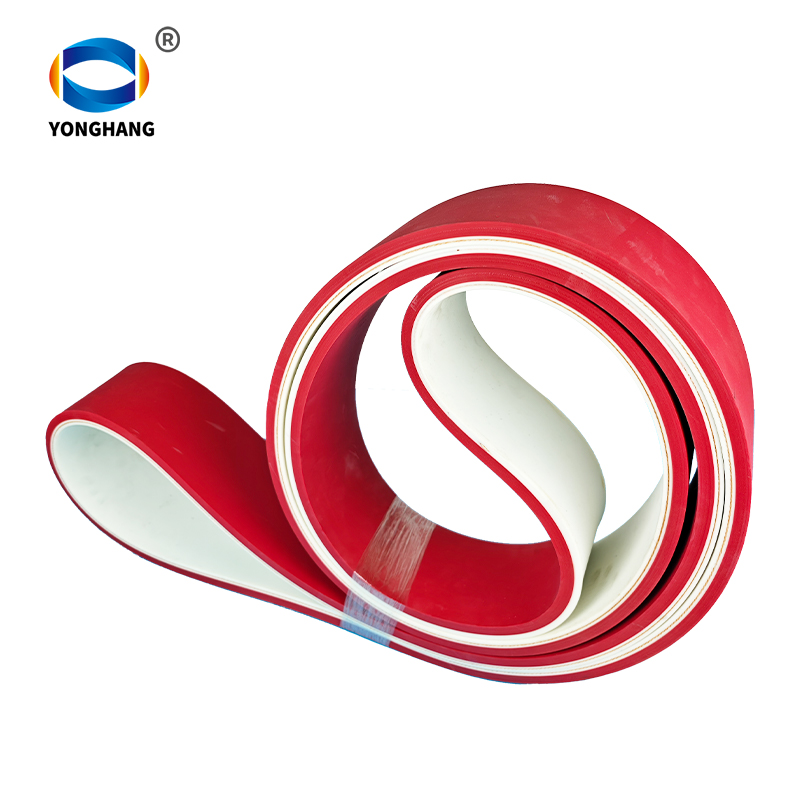
Why Haul Off Belts Are a Top Downtime Driver in Extrusion Lines
Haul off belts critically influence extrusion line continuity, yet their failure causes 23% of unplanned downtime in manufacturing—according to industry reliability studies. These components endure extreme stress while pulling extruded materials at precise speeds, making them vulnerable to three key failure modes:
- Tension fatigue, where constant load cycles degrade belt integrity
- Misalignment-induced wear, accelerating material breakdown
- Contaminant buildup (e.g., polymer residue), which reduces grip efficiency
Haul off belts going south can really bring operations to a grinding halt. When these components fail, production lines typically sit idle for around 4 to 5 hours each time it happens. The financial hit ranges from roughly $18,000 to as much as $74,000 every hour depending on what's being manufactured. What makes this particularly frustrating is that unlike problems with earlier parts of the process, when haul off systems break down, entire production lines usually need to shut down completely while repairs happen. Given how frequently these belts tend to fail combined with the massive costs involved during downtime, most plant managers would agree that haul off belt reliability remains one of the biggest headaches when trying to maintain consistent manufacturing throughput.
Selecting Durable Haul Off Belts: Material, Construction, and Environment
Polyurethane vs. Aramid-Reinforced vs. Rubber-Composite Haul Off Belts
Material choice dictates haul off belt longevity in extrusion lines. Polyurethane belts excel in chemical resistance and flexibility—ideal for applications requiring frequent washdowns. Aramid-reinforced variants offer superior tensile strength, minimizing stretch under heavy loads. Rubber-composite belts deliver unmatched abrasion resistance for high-wear environments.
| Material Type | Key Strength | Optimal Use Case |
|---|---|---|
| Polyurethane | Chemical resistance | Food/pharma processing lines |
| Aramid-Reinforced | Tensile strength | High-tension extrusion systems |
| Rubber-Composite | Abrasion resistance | Mineral/filler-heavy products |
Matching Haul Off Belt Resilience to Real-World Conditions (Heat, Dust, Humidity)
Operational environments critically impact haul off belt performance. In high-heat settings (>60°C/140°F), thermoplastic elastomers outperform rubber, which degrades rapidly. Dust-intensive operations demand closed-surface constructions to prevent particulate ingress. For humid environments, hydrolysis-resistant polyurethane prevents premature cracking. Regular environmental audits ensure belt specifications align with actual plant conditions.
Proactive Maintenance Strategies for Haul Off Belts
Preventive Protocols: Tension Checks, Alignment Verification, and Cleanliness Routines
Establishing consistent preventive maintenance is critical for extending haul off belt lifespan. Daily tension verification prevents slippage and material jams, while bi-weekly alignment checks using laser tools minimize uneven wear patterns. Contamination control is equally vital:
- Remove debris post-shift with industrial vacuums to avoid abrasive buildup
- Apply non-residue cleaners monthly to preserve polymer integrity
- Inspect rollers concurrently to eliminate secondary friction sources
Implementing these protocols reduced conveyor-related stoppages by 37% in aggregate processing plants, per the Material Handling Institute’s 2023 benchmark report.
Predictive Monitoring: Using Elongation and Thermal Signatures to Forecast Failures
Advanced diagnostics now enable failure prediction before catastrophic breakdowns. Infrared thermography identifies overheating zones indicating impending belt fatigue, while digital elongation sensors track structural stretching beyond 5% tolerance thresholds. Facilities deploying this dual-monitoring approach achieve:
| Metric | Improvement | Data Source |
|---|---|---|
| Unexpected downtime | −52% | Plant Engineering |
| Belt replacement cost | −29% | Quarterly Report |
Automated systems trigger alerts when thermal gradients exceed 15°C or elongation surpasses design limits, enabling planned interventions during scheduled maintenance windows.
Optimizing Replacement Timing Through Root Cause Analysis
Root cause analysis or RCA turns those emergency belt replacements on haul off systems from just band-aids into real solutions that fix what's actually breaking down. Most plants just slap on new belts when they snap too soon, but this misses bigger problems like bad tension settings or harsh operating conditions that are behind about 23 percent of unexpected downtime in extrusion lines. The RCA approach digs deep using those five why questions to find out exactly where things start going wrong, be it materials wearing out faster than expected or gaps in how maintenance crews check equipment regularly. Plants that commit to this kind of thorough investigation tend to see fewer breakdowns over time.
| RCA Stage | Focus Area | Impact on Replacement Timing |
|---|---|---|
| Symptom Identification | Visible belt damage (cracks, fraying) | Triggers initial inspection |
| Causal Chain Mapping | Tension stress − Heat exposure − Polymer degradation | Reveals failure acceleration patterns |
| Root Cause Validation | Suboptimal cleaning intervals allowing abrasive buildup | Confirms preventable failure drivers |
A thorough inspection method stops problems from happening again by making belts last about 30 to 40 percent longer. This happens when we fix specific issues such as changing maintenance schedules or controlling environmental factors around the equipment. Looking at real world numbers, extrusion lines can lose around 740 thousand dollars every hour they're not running according to a recent study by the Ponemon Institute in 2023 on industrial reliability. Root cause analysis changes how parts get replaced completely. Instead of just swapping them out based on arbitrary timelines, companies now wait until actual signs of wear appear. This approach saves money because it cuts down on buying spare parts that might never be needed anyway.
FAQs
What are the main failure modes of haul off belts?
Haul off belts fail mainly due to tension fatigue, misalignment-induced wear, and contaminant buildup.
How do haul off belt failures impact production lines?
Failures can halt production lines for 4 to 5 hours each time, costing between $18,000 and $74,000 every hour of downtime.
What materials are best for haul off belts?
Polyurethane is best for chemical resistance, aramid-reinforced belts are ideal for high tensile strength, and rubber-composite offers great abrasion resistance.
How can haul off belt longevity be improved?
By selecting the right material for specific conditions and implementing regular preventive maintenance like tension checks and cleanliness routines.
What role does root cause analysis (RCA) play in belt replacement?
RCA helps identify the underlying issues causing failures, enabling more strategic and less frequent belt replacements.