
 EN
EN
 AR
AR
 HR
HR
 DA
DA
 NL
NL
 FR
FR
 DE
DE
 EL
EL
 HI
HI
 IT
IT
 JA
JA
 KO
KO
 NO
NO
 PL
PL
 PT
PT
 RO
RO
 RU
RU
 ES
ES
 TL
TL
 IW
IW
 ID
ID
 SR
SR
 SK
SK
 UK
UK
 VI
VI
 TH
TH
 TR
TR
 AF
AF
 MS
MS
 IS
IS
 HY
HY
 AZ
AZ
 KA
KA
 BN
BN
 LA
LA
 MR
MR
 MY
MY
 KK
KK
 UZ
UZ
 KY
KY
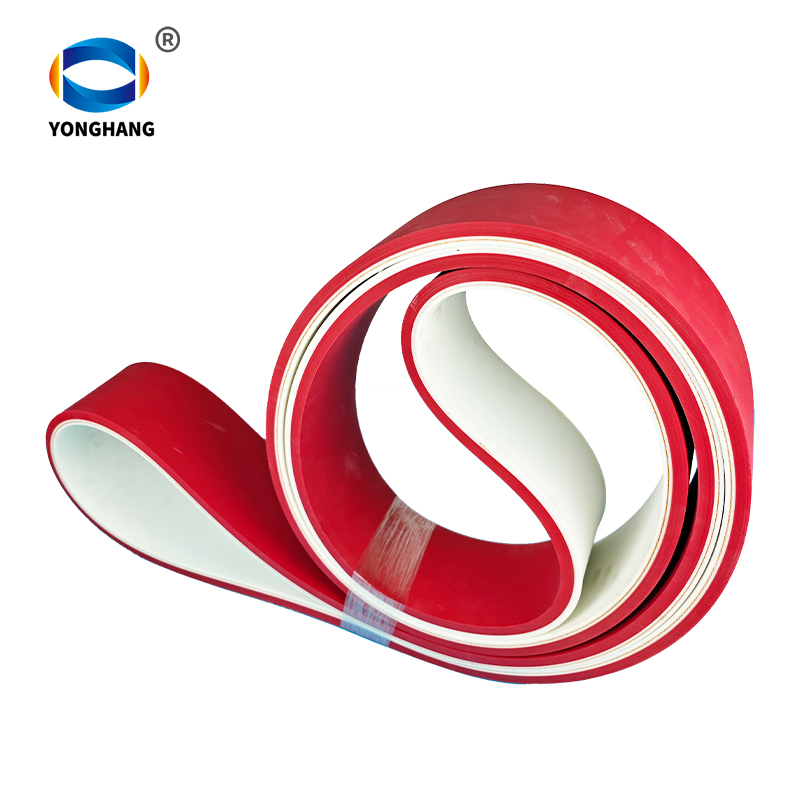
Science des matériaux : pourquoi le polyuréthane fixe la référence en matière de courroies d'entraînement
Résistance à la traction (25–30 MPa) et son impact direct sur la fiabilité en charge
Les courroies de transfert en polyuréthane peuvent supporter des résistances à la traction comprises entre 25 et 30 MPa, conformément à la norme ASTM D412. Ces courroies sont conçues pour les applications exigeantes, telles que la manutention de profilés métalliques ou de plastiques renforcés, sans s’étirer excessivement ni se rompre. La structure stable du matériau garantit qu’elles ne cèdent pas brusquement sous pression, même lors de pics de contrainte intenses. Les essais montrent que ces courroies conservent pratiquement aucune déformation permanente, même après avoir été chargées à environ 30 % de leur capacité maximale. Comparées directement aux alternatives en caoutchouc classique, les courroies en polyuréthane présentent une durée de vie environ 40 % plus longue avant d’afficher des signes d’usure dus aux cycles répétés de chargement et de déchargement.
Résistance à l’abrasion dans des environnements de cisaillement continu : données terrain issues de lignes d’extrusion
Lorsqu’ils sont soumis à des travaux d’extrusion à forte cisaillement, notamment lors de la manipulation de matériaux tels que les polymères renforcés de verre ou de profils d’aluminium abrasifs, les convoyeurs en polyuréthane résistent remarquablement bien. Après environ 5 000 heures de fonctionnement, selon les essais d’abrasion Taber ASTM D4060, ces convoyeurs conservent environ 95 % de la qualité initiale de leur surface. En examinant les chiffres réels provenant d’usines d’extrusion d’aluminium à travers le pays, les opérateurs indiquent qu’ils doivent remplacer ces convoyeurs environ 70 % moins fréquemment que les options traditionnelles en caoutchouc ou en PVC qu’ils utilisaient auparavant. Quelle est l’explication ? La composition moléculaire unique du polyuréthane forme un réseau dense qui résiste aux micro-déchirures causées par le frottement constant. Cette durabilité se traduit par des économies concrètes pour les fabricants, dont beaucoup signalent environ 18 % d’arrêts imprévus en moins chaque année dus aux défaillances des convoyeurs.
Construction hybride composite : allongement de la durée de vie en conditions de charges dynamiques
Architecture de renforcement multi-zone pour la stabilité en périphérie et la variabilité de vitesse
Les courroies hybrides de déroulage intègrent des systèmes de renforcement multicouche spéciaux qui résolvent le problème des contraintes inégales lors du fonctionnement à haute vitesse. Ces courroies sont dotées de fibres synthétiques à haute résistance à la traction intégrées directement dans leurs bords, là où se concentre la majeure partie de la force latérale. Cette conception réduit considérablement les ondulations gênantes qui apparaissent avec le temps, les diminuant d’environ 40 % par rapport aux constructions classiques de courroies. Ce qui distingue véritablement ces courroies, c’est leur capacité à conserver leur forme et leurs dimensions même à des vitesses supérieures à 120 mètres par minute — une performance que de nombreuses courroies standard peinent à atteindre dans les environnements de production, où les exigences de déroulage évoluent constamment. L’ingénierie intelligente redirige en effet les forces de compression loin des zones critiques vers ce que nous appelons des « zones sacrificielles ». Ainsi, les bords restent intacts, sans s’écailler ni se désagréger, tout en permettant de réduire l’épaisseur globale de la courroie d’environ 15 à 20 %, sans compromettre sa capacité à supporter de lourdes charges. Des essais grandeur nature menés dans diverses usines de transformation de feuilles ont montré que ces courroies améliorées présentaient une durée de vie presque 28 % plus longue avant remplacement, lorsqu’elles étaient utilisées avec des matériaux polymères chargés.
Stabilité thermique à 90–110 °C : performances maintenues au-delà de 12 000 heures de fonctionnement
Lors de la fabrication de composites hybrides, les fabricants mélangent du polyuréthane thermiquement stable avec des microsphères céramiques afin de conserver de bonnes propriétés mécaniques, même à des températures proches de celles de la filière d’extrusion. Selon les essais ASTM D638, ces courroies spéciales conservent environ 85 % de leur résistance à 110 degrés Celsius. Cela est particulièrement impressionnant, car les courroies classiques ont tendance à devenir cassantes et à se fissurer bien avant d’atteindre 8 000 heures de fonctionnement, en raison de problèmes de migration des plastifiants. Nous avons également réalisé des essais de vieillissement accéléré reproduisant les conditions réelles de calandrage. Après plus de 12 000 heures de fonctionnement sous des charges supérieures à 35 kN par mètre, aucun signe de délamination n’a été observé. Et n’oublions pas non plus la dilatation thermique : avec un coefficient de seulement 45 × 10⁻⁶ par degré Celsius, ces matériaux restent correctement alignés lors des variations rapides de température, sans risque de déformation ni de désalignement.
Résilience environnementale : comment les courroies de transmission résistent à la chaleur, à l’huile, à l’abrasion et au désalignement
Résistance chimique aux lubrifiants industriels, aux liquides de refroidissement et à l’exposition à l’ozone
Le polyuréthane se distingue par sa résistance à la dégradation lorsqu’il est exposé aux huiles, aux solvants ou à l’ozone, ce qui explique son excellente performance dans des environnements industriels exigeants tels que les usines d’extrusion de plastiques, les centres de recyclage et les ateliers de travail des métaux. La plupart des autres matériaux similaires au caoutchouc ont tendance à gonfler, à devenir cassants ou à perdre de leur résistance après contact avec les lubrifiants et les fluides de refroidissement couramment utilisés sur les machines. La capacité du matériau à résister aux dommages causés par l’ozone contribue à prévenir ces fissures superficielles gênantes qui apparaissent fréquemment à proximité des équipements électriques — un problème qui affectait autrefois les anciennes courroies transporteuses. Des fabricants renommés soumettent le polyuréthane à des essais rigoureux spécifiques, conçus pour simuler environ 12 000 heures d’usure réelle. Leurs résultats montrent que les courroies conservent leur souplesse, maintiennent une bonne adhérence sur les pièces mobiles et gardent leur forme même après cette longue période, sans présenter de signe de dégradation.
Sélection axée sur l’application : adaptation des courroies d’entraînement aux cycles de service réels
Obtenir le bon convoyeur d'extraction signifie examiner ce qui se produit réellement sur le terrain en usine, plutôt que de se contenter de cocher des spécifications issues d’un catalogue. Prenons par exemple les lignes d’extrusion fonctionnant sous tension constante, comparées aux systèmes d’emballage qui démarrent et s’arrêtent tout au long de la journée : ces opérations différentes usent les courroies de manières totalement distinctes. Selon une étude publiée l’année dernière par l’Institut Ponemon, les entreprises perdent environ 740 000 $ chaque année en raison de pannes imprévues de pièces. C’est pourquoi le choix d’une courroie parfaitement adaptée revêt une importance capitale. Que faut-il privilégier lors de la sélection d’une courroie ? Prenez en compte la fréquence à laquelle elle devra supporter des charges lourdes, la possibilité qu’elle entre en contact avec des huiles ou des produits chimiques, les températures auxquelles elle devra résister, ainsi que le degré de précision requis pour l’alignement. Les courroies spécifiquement conçues pour ces conditions présentent une durée de vie allongée de 30 % à 50 %, et les usines signalent également environ 19 % de pannes imprévues en moins. Plutôt que de considérer les convoyeurs d’extraction comme des éléments devant être remplacés régulièrement, les fabricants avisés les perçoivent désormais comme des composants critiques, conçus pour durer.
FAQ
De quoi sont constituées les courroies d'extraction ? Les courroies d'extraction sont généralement fabriquées en polyuréthane, qui offre une forte résistance à la traction, une excellente résistance à l'abrasion et une bonne stabilité thermique.
Pourquoi le polyuréthane est-il privilégié pour les courroies d'extraction ? Le polyuréthane est privilégié en raison de ses propriétés mécaniques supérieures, notamment sa durabilité, sa résistance aux produits chimiques et sa capacité à supporter des environnements industriels sévères.
En quoi les courroies d'extraction hybrides composites se distinguent-elles des courroies standard ? Les courroies hybrides composites intègrent un renforcement multi-zone et une stabilité thermique, ce qui leur permet de résister aux charges dynamiques et de maintenir leurs performances dans des conditions à haute température.
Comment les fabricants peuvent-ils réduire les arrêts imprévus causés par des défaillances de courroies ? En sélectionnant des courroies d'extraction adaptées aux cycles de service spécifiques et aux facteurs environnementaux de leurs opérations, les fabricants peuvent réduire considérablement les arrêts imprévus et augmenter la durée de vie des courroies.
Table des matières
- Science des matériaux : pourquoi le polyuréthane fixe la référence en matière de courroies d'entraînement
- Construction hybride composite : allongement de la durée de vie en conditions de charges dynamiques
- Résilience environnementale : comment les courroies de transmission résistent à la chaleur, à l’huile, à l’abrasion et au désalignement
- Sélection axée sur l’application : adaptation des courroies d’entraînement aux cycles de service réels
- FAQ