
 EN
EN
 AR
AR
 HR
HR
 DA
DA
 NL
NL
 FR
FR
 DE
DE
 EL
EL
 HI
HI
 IT
IT
 JA
JA
 KO
KO
 NO
NO
 PL
PL
 PT
PT
 RO
RO
 RU
RU
 ES
ES
 TL
TL
 IW
IW
 ID
ID
 SR
SR
 SK
SK
 UK
UK
 VI
VI
 TH
TH
 TR
TR
 AF
AF
 MS
MS
 IS
IS
 HY
HY
 AZ
AZ
 KA
KA
 BN
BN
 LA
LA
 MR
MR
 MY
MY
 KK
KK
 UZ
UZ
 KY
KY
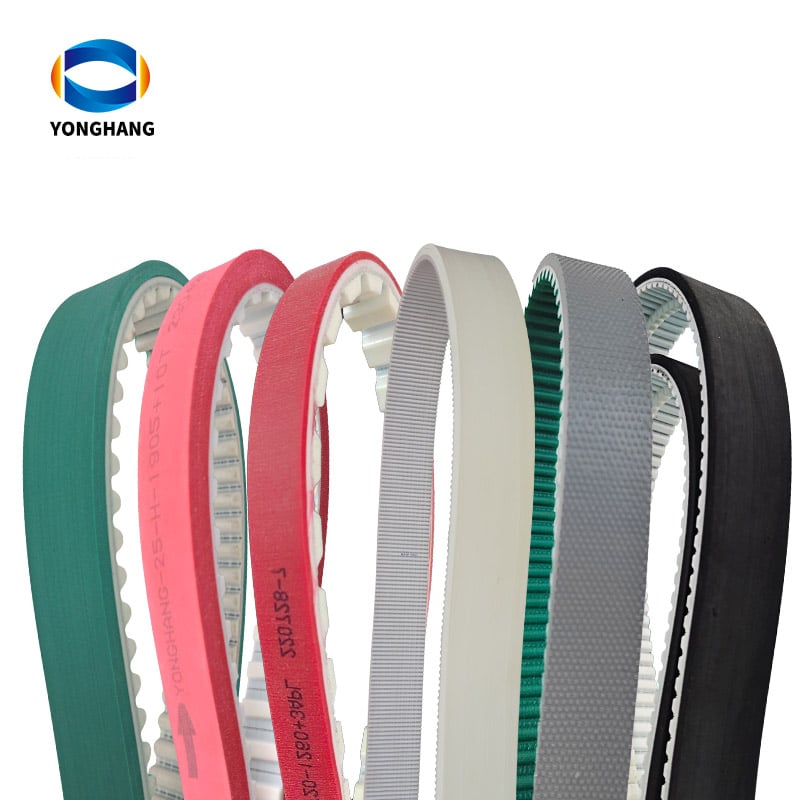
Sa mga modernong awtomatikong linya ng produksyon, ang timing belt ay hindi na ginagamit lamang para sa sinasabay na pagpapasa ng kapangyarihan. Maraming aplikasyon ang nangangailangan ng karagdagang grip, cushioning, resistance sa pagsuot, o proteksyon sa produkto mula sa ibabaw ng belt. Narito kung saan ang na timing belt na may coating na may espesyal na materyal sa ibabaw ay maaaring magbigay ng malaking pakinabang sa pagganap.
Ang coated timing belt ay nagkakaisa ng tumpak na sinasabay na pagpapasa ng kapangyarihan ng isang toothed belt at ng isang inenginyero na layer sa ibabaw na idinisenyo para sa tiyak na aplikasyon. Ayon sa kapaligiran ng trabaho at mga kinakailangan sa pagdadala, maaaring pumili ang mga tagagawa ng rubber, polyurethane, silicone, sponge, felt, PVC, o iba pang pasadyang coating.
Sa mga opsyong ito, ang PU timing belt na may coating ay naging mas popular dahil ang polyurethane ay nag-aalok ng kapaki-pakinabang na balanse sa pagitan ng katatagan, kakayahang umunlad, pagkakapansin sa sukat, at resistance sa pagsuot.
Para sa mga tagagawa na naghahanap ng pasadyang solusyon para sa transmisyon, mahalaga ang pag-unawa sa mga pagkakaiba sa pagitan ng mga coated timing belt at ng mga kumbensiyonal na timing belt.
Ano ang Coating ng Timing Belt?
A na timing belt na may coating ay isang synchronous belt na may karagdagang materyales na inilalagay sa likod na ibabaw nito o, sa ilang disenyo, sa iba pang functional na bahagi ng belt.
Ang pangunahing timing belt ay nagbibigay ng synchronized na paggalaw sa pagitan ng driving at driven na pulley. Ang karagdagang coating ay nagbabago sa mga contact characteristics ng belt, na nagpapahintulot dito na gawin ang mga tungkulin na lampas sa standard na power transmission.
Halimbawa, ang rubber coating ay maaaring dagdagan ang surface friction, samantalang ang sponge coating ay maaaring magbigay ng mas malambot na contact surface para sa mga delikadong produkto. Ang silicone ay maaaring magbigay ng kapaki-pakinabang na grip at temperature resistance, habang ang polyurethane coatings ay maaaring magbigay ng kombinasyon ng wear resistance at mechanical durability.
Ito ang nagpapagawa ng mga coated timing belts na lalo pang kapaki-pakinabang sa mga makina kung saan ang belt ay dapat parehong magpadala ng galaw at magtransporte o manipulahin ang isang produkto.
Bakit Gamitin ang Coated Timing Belt?
Ang isang karaniwang timing belt ay idinisenyo pangunahin para sa positibong pagkakasabay sa isang timing pulley. Gayunpaman, maraming industriyal na makina ang nangangailangan na ang likod ng belt ay makipag-ugnayan nang direkta sa isang produkto o sa iba pang bahagi ng makina.
Ang isang angkop na napiling coating ay maaaring mapabuti ang ilang aspeto ng sistema.
1. Pinabuting Higpit na Pagkakahawak sa Surface
Isa sa pinakamahalagang dahilan para gamitin ang na timing belt na may coating na may goma, PU, o iba pang materyal na may mataas na friction ay upang bawasan ang pagkahulog ng produkto.
Lalo itong kapaki-pakinabang sa mga aplikasyon tulad ng pagpapakain, pagdadala, pagpapakete, pag-uuri, at paghila kung saan mahalaga ang matatag na paggalaw ng produkto.
2. Mas Mabuting Proteksyon sa Produkto
Ang mga metallic o matitigas na surface ng makina ay maaaring magdulot ng mga sugat o pinsala sa mga sensitibong produkto.
Ang mas malambot na coating ay gumagawa ng protektibong contact layer sa pagitan ng timing belt at ng material na dinala. Halimbawa, ang mga timing belt na may sponge coating ay ginagamit sa mga aplikasyon kung saan kailangang hawakan ang mga produkto nang may mas mababang panganib na magkaroon ng mga uwil o depekto.
3. Nadagdagan ang Resistance sa Wear
Ang mga industrial belt ay kadalasang gumagana nang tuloy-tuloy sa ilalim ng friction, pressure, at paulit-ulit na loading.
Ang isang angkop na coating ay maaaring mapabuti ang resistance sa surface wear at tulungan na panatilihin ang pare-parehong performance ng belt sa loob ng mas mahabang operating period.
Halimbawa, ang mga rubber-coated timing belts ng Yonghang ay gumagamit ng espesyal na ibabaw na gawa sa rubber na idinisenyo para sa friction at wear resistance, na may iba’t ibang hardness at kulay para sa customized na mga aplikasyon.
4. Customized na Mga Katangian ng Ibabaw
Iba-iba ang mga kinakailangan ng friction coefficient, antas ng hardness, kapal, at istruktura ng ibabaw para sa iba’t ibang mga makina.
Kaya naman maaaring gawin ang isang belt na may coating ayon sa aktwal na kailangan ng makina imbes na pilitin ang aplikasyon na gamitin ang isang standard na disenyo ng belt.
PU Timing Belt na May Coating: Bakit Popular ang Polyurethane
A PU timing belt na may coating ang solusyon na ito ay nagkakasama ng istruktura ng polyurethane timing belt at isang karagdagang coating o paggamot sa ibabaw na may kinalaman sa pagganap.
Ang polyurethane ay ginagamit na malawakan para sa mga industriyal na synchronous belt dahil sa mga katangian nito sa mekanika at sa kahigpit ng sukat. Kapag pinagsama ito sa isang angkop na coating sa ibabaw, maaaring i-adapt ang belt para sa mga aplikasyon na nangangailangan ng parehong synchronisation at kontroladong kontak sa ibabaw.
Depende sa aplikasyon, maaaring pagsamahin ang PU timing belt sa goma, espongha, tela, silicone, o iba pang materyales sa ibabaw.
Ang Yonghang ay nag-aalok ng mga custom na PU timing belt na may iba’t ibang konpigurasyon ng coating at karagdagang opsyon sa pagpoproseso, kabilang ang mga butas, mga guhit, at iba pang espesyal na pagbabago sa ibabaw.
Mga Pangunahing Kawastuhan ng mga Solusyon na PU Timing Belt na May Coating
Matataas na Katatagan sa Dimensyon
Ang pinalakas na konstruksyon ng isang PU timing belt ay nagpapahintulot ng tumpak na synchronous transmission habang pinabababa ang hindi ninanais na paglalawig habang gumagana.
Ito ay lalo pang mahalaga para sa mga awtomatikong makina kung saan ang katiyakan ng posisyon ay nakaaapekto sa kalidad ng produksyon.
Kasalingang Resistensya Sa Pagbawas
Ang polyurethane ay angkop para sa mga mahihirap na industriyal na kapaligiran kung saan ang mga belt ay nakakaranas ng paulit-ulit na pagkukurba, kontak, at mekanikal na stress.
Kapag napili ang karagdagang wear-resistant coating, ang buong belt ay maaaring magbigay ng mas mataas na tibay ng ibabaw.
Kakayahang umangkop
A PU timing belt na may coating maaaring i-customize ayon sa tooth profile, lapad ng belt, haba ng belt, materyal ng coating, kapal ng coating, istruktura ng ibabaw, at iba pang mekanikal na kinakailangan.
Ang ganitong kakayahang umangkop ay ginagawa itong angkop para sa mga OEM machine manufacturer at para sa mga aplikasyon ng replacement belt.
Pabilis at Estable na Pagmamaneho ng Produkto
Depende sa napiling coating, ang isang PU timing belt ay maaaring magbigay ng kontroladong antas ng friction na tumutulong sa pagpapanatili ng estable na paggalaw ng produkto nang hindi umaasa lamang sa mga timing teeth.
Ito ay kapaki-pakinabang para sa mga aplikasyon na kailangan ng tuloy-tuloy na pagpapakain, paghila, pagpo-posisyon, at paglilipat.
Karaniwang Mga Uri ng Panlabas na Takip para sa Timing Belt
Walang iisang takip na perpekto para sa bawat makina. Ang tamang materyal ay nakasalalay sa timbang ng produkto, mga kinakailangan sa panlabas na pwersa, temperatura ng operasyon, sensitibidad ng ibabaw, bilis, at mga kondisyon sa kapaligiran.
Rubber coated timing belt
Ang goma ay isa sa pinakakaraniwang ginagamit na materyal para sa panlabas na takip ng industriyal na timing belt.
Ang isang timing belt na may takip na goma ay maaaring magbigay ng malakas na panlabas na pwersa at mabuting pagtutol sa pagsuot, kaya ito ay angkop para sa pagpapakain, paghila, pagdadala, pagpapakete, pagpoproseso ng kable, at iba pang industriyal na aplikasyon.
Ang Yonghang ay nag-o-offer ng mga timing belt na may takip na goma na may iba’t ibang kulay ng ibabaw at antas ng katigasan, habang ang walang hanggang seamless na konstruksyon ay maaaring piliin para sa ilang partikular na aplikasyon.
PU-Coated Timing Belt
Maaaring piliin ang PU coating kapag ang aplikasyon ay nangangailangan ng kombinasyon ng mekanikal na tibay, kontroladong panlabas na pwersa, at istruktura ng belt na batay sa polyurethane.
A PU timing belt na may coating na may karagdagang functional na surface na maaaring i-engineer para sa mga espesyalisadong aplikasyon sa pagdadala at pagpapasa.
Silicone Coated Timing Belt
Ang silicone coatings ay maaaring maging kapaki-pakinabang kung kailangan ng mas malambot o espesyalisadong gripping surface.
Kadalasan silang isinasaalang-alang para sa mga makina na may kinalaman sa pagkain, kagamitan sa pagpapakete, mga aplikasyon na may mataas na temperatura, at mga aplikasyon kung saan ang surface ng belt ay kailangang magbigay ng kontroladong contact.
Sponge Coated Timing Belt
Ang sponge coatings ay nagbibigay ng mas malambot na contact surface.
Ginagawa silang kapaki-pakinabang para sa mga produkto na madaling masugatan, maputulan, mabulok, o masira habang inililipat. Inilalarawan ni Yonghang ang mga sponge-coated timing belt para sa labeling at iba pang aplikasyon sa paghawak ng produkto na kinasasangkutan ng sensitibong surfaces.
Felt Coated Timing Belt
Ang mga felt surface ay maaaring magbigay ng mahinahon na contact sa produkto at karaniwang isinasaalang-alang para sa mga aplikasyon kung saan mahalaga ang cushioning at proteksyon ng surface.
Dapat piliin ang tamang density at kapal ng felt ayon sa produkto at konpigurasyon ng makina.
Mga Aplikasyon ng mga Belt na May Coating para sa Timing
Ang versatility ng mga coated timing belt ay nagpapahintulot sa kanilang paggamit sa maraming sektor ng industriya.
Makinang Pagpapasugo
Ang mga makina sa packaging ay kadalasang nangangailangan ng mga belt upang hilahin, i-position, o ilipat ang mga film at produkto nang may pare-parehong synchronisation.
Ang isang rubber o PU coated timing belt ay maaaring magbigay ng kinakailangang kombinasyon ng timing accuracy at surface friction.
Kagamitan sa pagproseso ng pagkain
Sa mga makina na may kinalaman sa pagkain, ang materyales ng belt at ang mga katangian ng ibabaw nito ay lalo pang mahalaga.
Depende sa aplikasyon at sa kinakailangang compliance, ang mga espesyal na coated belt ay maaaring idisenyo para sa mga operasyon ng conveying at feeding.
Ang Yonghang ay nakapag-develop ng mga solusyon para sa coated timing belt para sa mga aplikasyon tulad ng sausage processing at food packaging machinery, kung saan ang coating ay kailangang magbigay ng sapat na grip nang hindi nasasaktan ang produkto.
Makinang paglalagay ng label
Ang mga kagamitan sa labeling ay nangangailangan ng tiyak at stable na paggalaw ng produkto.
Ang isang malambot na timing belt na may panlabas na coating na gawa sa espongha ay maaaring magbigay ng mahinahon na pag-contact habang pinapanatili ang kontroladong paghahatid.
Paggawa ng Kable at Wire
Ang mga kagamitan para sa pag-alis ng balat sa wire at paggawa ng kable ay kadalasang nangangailangan ng mga belt na may maaasahang friction at matatag na pagganap sa pagpapakain.
Ang mga timing belt na may rubber coating ay maaaring idisenyo upang magbigay ng mas mataas na grip sa ibabaw para sa mga aplikasyong ito.
Kagamitan ng Optical Fiber
Ang mga kagamitan para sa paghila ng optical fiber ay nangangailangan ng tumpak at pare-parehong galaw.
Ang isang coated timing belt ay maaaring pagsamahin ang synchronized transmission kasama ang isang kontroladong gripping surface, na tumutulong sa pagpanatili ng matatag na pagpapakain ng materyal.
Ang Yonghang ay naglilista ng mga customized na PU timing belt at mga solusyon na may rubber coating para sa mga aplikasyon sa paghila ng optical fiber.
Mga VFFS Packaging Machine
Ang mga vertical form-fill-seal machine ay madalas na gumagamit ng espesyal na timing belt na may mga butas para sa vacuum, surface coating, o customized na pag-alis ng mga ngipin.
Ang mga coated VFFS timing belt ay maaaring gawin na may iba’t ibang pattern ng mga butas at iba’t ibang configuration ng ibabaw depende sa disenyo ng makina.
Belt na Panahon na Nakabalot Gamit ang Espesyal na Pagpoproseso
Ang balot ay isa lamang na bahagi ng pasadyang solusyon para sa belt na panahon.
Maaaring kailanganin ng mga modernong industriyal na aplikasyon ang karagdagang mekanikal na pagpoproseso upang eksaktong tumugma sa makina.
Karaniwang mga opsyon sa pagpapasadya ay kinabibilangan ng:
-
Mga butas na vacuum
-
Mga butas na pumapasok
-
Mga butas na pinalalim
-
Guhit
-
Pamamalas ng ngipin
-
Mga espesyal na pattern sa ibabaw
-
Cleats
-
GURO
-
Iba’t ibang kapal ng balot
-
Iba’t ibang kahigpit ng balot
-
Pasadyang lapad ng belt
-
Mga pasadyang haba ng belt
-
Mga espesyal na kulay
Ang mga pagbabagong ito ay nagpapahintulot sa isang belt na magampanan ang ilang tungkulin nang sabay-sabay.
Halimbawa, maaaring kailanganin ng isang vacuum feeder ang parehong nababalot na ibabaw at isang hanay ng mga butas na vacuum na may tumpak na posisyon. Maaaring kailanganin ng isang packaging machine ang isang ibabaw na may goma na balot kasama ang isang natatanging hugis ng ngipin. Maaaring kailanganin ng isang labeling machine ang isang malambot na ibabaw na may sponge kasama ang mga tiyak na sukat ng belt.
Sinabi ni Yonghang na ang kanilang mga coated timing belt ay maaaring i-customize gamit ang mga katangian tulad ng mga vacuum chamber, groove, slot, at perforation batay sa mga kinakailangan ng aplikasyon at mga drawing.
Seamless Timing Belt Coating laban sa Konbensyonal na Proseso
Para sa ilang aplikasyon, ang seamless construction ay maaaring mahalagang isaalang-alang.
Ang isang seamless coated timing belt ay inaalis ang konbensyonal na sambungan sa katawan ng belt, na tumutulong na magbigay ng patuloy na ibabaw para sa paggana.
Ang produksyon ng coated belt ng Yonghang ay gumagamit ng isang proseso ng one-piece molding at vulcanization para sa mga napiling coated timing belt products, na may mga customized na sukat ng belt at coating specifications na available.
Para sa mga high-speed, continuous-feed, at precision conveying applications, dapat palaging isaalang-alang ang belt construction kasama ang coating material, tooth profile, reinforcement, at operating conditions.
Paano pumili ng tamang solusyon para sa coated timing belt
Ang pagpili ng coated timing belt ay dapat magsimula sa aktwal na operating conditions kaysa sa simpleng pagpili ng pinakamura na belt.
Isaisip ang mga sumusunod na salik:
1. Anong produkto ang dadalhin ng belt?
Maaaring kailanganin ng mas mabigat na produkto ang mas matibay at mas wear-resistant na coating.
Maaaring kailanganin ng delikadong produkto ang sponge, felt, o ibang mas malambot na surface.
2. Gaano karaming friction ang kailangan?
Kung ang produkto ay madaling mas slip, maaaring mas angkop ang high-friction rubber o specialized PU surface.
Kung kailangang gumalaw nang maayos ang produkto nang may minimal na resistance, maaaring mas mainam ang lower-friction surface.
3. Ano ang Operating Temperature?
Ang temperatura ay nakaaapekto sa katawan ng timing belt at sa kanyang coating.
Kaya naman, dapat piliin ang buong konstruksyon ng belt batay sa aktwal na operating temperature, hindi lamang sa materyal ng coating.
4. Ano ang Speed at Load?
Ang mga aplikasyon na may mataas na bilis ay nangangailangan ng pansin sa balanse ng belt, pagpapalakas, kalidad ng ibabaw, at compatibility sa pulley.
Ang mga aplikasyon na may mataas na load ay nangangailangan ng angkop na tension member at profile ng belt.
5. Kailangan ba ng Special Processing ang Belt?
Kung ang makina ay nangangailangan ng vacuum holes, grooves, cleats, perforations, o iba pang modipikasyon, dapat ipagbigay alam ang mga kinakailangang ito sa yugto ng disenyo ng belt.
Bakit Mahalaga ang Customization para sa Coated Timing Belts
Isang karaniwang kamalian ay ang pagpili ng timing belt batay lamang sa haba at lapad nito.
Sa katotohanan, ang coating ay maaaring malaki ang epekto sa kung paano makikipag-ugnayan ang belt sa produkto.
Halimbawa, ang dalawang timing belt na may parehong ngipin na profile at sukat ay maaaring magpakita ng napakalaking pagkakaiba sa pagganap kung ang isa ay may makinis na PU na ibabaw samantalang ang isa naman ay may mataas na friction na rubber coating.
Para sa mga tagagawa ng OEM equipment, ang customization ay maaaring mas epektibo kaysa sa pag-aadjust ng machine para sa isang standard na belt.
Ang isang propesyonal na coated timing belt manufacturer ay dapat kayang suriin ang mga sumusunod:
-
Profile ng timing belt
-
Mga Sukat ng Belt
-
Tensile reinforcement
-
Materyales para sa coating
-
Kapal ng patong
-
Kadakuan ng Sirkwal
-
Mga kinakailangan sa friction
-
Operating Temperature
-
Mga katangian ng produkto
-
Konpigurasyon ng pulley
-
Mga espesyal na kinakailangan sa machining
Ang pamamaraang ito ay tumutulong upang matiyak na ang natapos na belt ay gumagana bilang bahagi ng buong transmission system imbes na bilang hiwalay na komponente.
Bakit Pumili ng Yonghang para sa Timing Belt Coating?
Ang Yonghang ay espesyalista sa mga pasadyang pabalat na transmission belt at nag-aalok ng iba't ibang opsyon ng pabalat para sa mga industriyal na aplikasyon.
Kasali sa kaniyang hanay ng produkto ang mga timing belt na may pabalat na goma, PU/TPU, silicone, sponge, at felt. Nagbibigay din ang kumpanya ng espesyal na proseso tulad ng mga butas, guhit, butas na pinalawak (perforations), at disenyo na may kaugnayan sa vacuum.
Ayon sa tagagawa, mayroon itong higit sa 12 taon ng karanasan sa produksyon ng coated transmission belt at nag-aalok ng pasadyang solusyon para sa iba't ibang industriya.
Para sa mga proyektong OEM, mga pampalit na belt, at espesyal na makina, maaaring ipasa ng mga customer ang mga drawing, sukat ng belt, sample, o impormasyon tungkol sa aplikasyon upang masuri ang angkop na istruktura ng coated belt.
Coated Timing Belt: Higit pa sa isang simpleng timing belt
Modern na timing belt na may coating ang solusyon ay hindi lamang isang karaniwang timing belt na may dagdag na layer sa ibabaw nito.
Ang coating ay maaaring baguhin ang friction ng belt, ang mga katangian nito sa pagsuot, ang pag-uugali nito sa pakikipag-ugnayan sa produkto, ang mga katangian nito sa pagpapabaga ng impact, at ang kabuuang kahihinatnan nito para sa isang tiyak na makina.
Para sa mga aplikasyon na nangangailangan ng sinamantalang paggalaw kasama ang maaasahang paghawak sa produkto, ang isang coated timing belt ay maaaring magbigay ng praktikal na alternatibo sa pagsasama-sama ng maraming hiwalay na bahagi.
Sa partikular, ang isang PU timing belt na may coating na may goma, silicone, sponge, tela, o iba pang functional na surface ay maaaring i-customize upang tumugon sa mga tiyak na pangangailangan sa packaging, pagproseso ng pagkain, paglalagay ng label, pagproseso ng wire, produksyon ng optical fiber, logistics, at awtomatikong paghawak ng materyales.
Ang susi ay pumili ng belt batay sa buong aplikasyon—hindi lamang sa sukat ng belt.
Kung hinahanap mo ang isang na timing belt na may coating o PU timing belt na may coating para sa isang tiyak na makina, ang pagbibigay ng profile ng belt, haba, lapad, materyal ng coating, kapal ng coating, temperatura ng operasyon, aplikasyon, at drawing o sample ay makakatulong sa tagagawa na irekomenda ang mas angkop na solusyon.
Ang Yonghang Belt ay nagbibigay ng mga pasadyang solusyon para sa coated timing belt para sa mga aplikasyon sa industrial transmission at conveying.
Talaan ng Nilalaman
- Ano ang Coating ng Timing Belt?
- Bakit Gamitin ang Coated Timing Belt?
- Mga Pangunahing Kawastuhan ng mga Solusyon na PU Timing Belt na May Coating
- Rubber coated timing belt
- PU-Coated Timing Belt
- Silicone Coated Timing Belt
- Sponge Coated Timing Belt
- Felt Coated Timing Belt
- 1. Anong produkto ang dadalhin ng belt?
- 2. Gaano karaming friction ang kailangan?
- 3. Ano ang Operating Temperature?
- 4. Ano ang Speed at Load?
- 5. Kailangan ba ng Special Processing ang Belt?